
Researchers from the Department of Civil and Environmental Engineering at Monash University have tested a new system that paves the way for collaboration between humans and robots in the construction sector, making construction processes faster, safer, and less physically demanding.
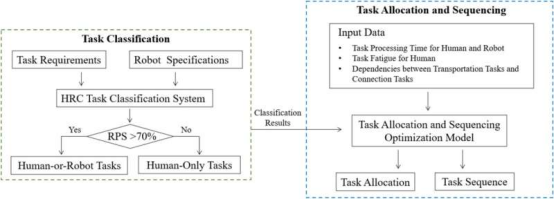
Led by Dr. Yihai Fang, the research team simulated a scenario in which humans and robots collaborated to assemble a timber floor framework for a three-bedroom apartment, breaking the work down into 71 tasks. Using real data from Monash University's UR10e robotic arm and MiR100 mobile robot, the team measured task completion times, productivity, and workers' physical fatigue levels. The results showed that carefully allocating tasks and optimizing workflows can significantly improve construction efficiency while reducing workers' physical strain.
Dr. Fang noted that the construction industry faces challenges such as low productivity, labor shortages, and high injury rates. Collaboration with robots is no longer a distant vision but is rapidly becoming a reality. He emphasized that the industry must embrace innovation by integrating automation and advanced robotics.
The study's lead author, Dr. Will Wang, stated that advancements in robotics and automation have the potential to transform workplaces. The simulation results demonstrated that robots can handle heavy and repetitive tasks, allowing humans to focus on planning, problem-solving, and ensuring construction precision, thereby reducing worker stress.
Dr. Wang also highlighted that the team's technology addresses a key challenge in construction robotics—how to effectively allocate tasks between humans and robots. This research provides a safer, more efficient, and human-centered approach to integrating robotics into structural assembly.
Additionally, building on their human-robot collaboration research, the Monash University team further tested augmented reality (AR) technology. Participants wore AR headsets, functioning as "smart eyes," which displayed optimal routes between storage and work areas and previewed robot movements. This technology enhances coordination between workers and robots, reduces errors, accelerates task progress, and improves on-site safety.
The research findings, published in the journal Automation in Construction, offer new insights and directions for the future development of the construction industry.