
A research team at The University of Texas at Austin has developed a novel gene editing method capable of correcting multiple disease-causing mutations in mammalian cells in a single process. Published in Nature Biotechnology, this study leverages bacterial retrotransposon genetic elements, offering a new approach for treating complex genetic disorders such as cystic fibrosis.
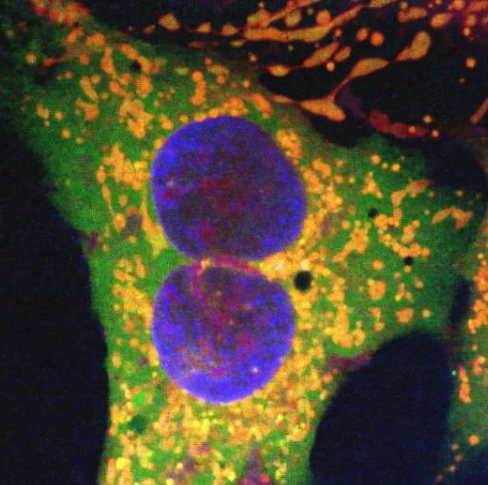
This gene editing technology marks the first successful correction of disease-causing mutations in a vertebrate model. In experiments with zebrafish embryos, the researchers demonstrated that the method effectively corrects gene mutations causing scoliosis. Compared to existing technologies, this retrotransposon-based gene editing approach exhibits higher precision and efficiency.
Co-author Jesse Buffington stated, "Many existing gene editing methods are limited to one or two mutations, leaving many people behind. My hope is to develop a gene editing technology that is more inclusive for those who may have a greater number of unique disease-causing mutations."
The study was co-led by Buffington and Professor of Molecular Biosciences Ilya Finkelstein. The novel gene editing technology's advantage lies in its ability to replace large defective DNA segments with healthy sequences, thereby repairing any combination of mutations within that segment. Finkelstein noted, "We aim to develop off-the-shelf tools to cure a large number of patients at once, making gene therapy more accessible."
Compared to traditional methods, this retrotransposon gene editing technology increases the efficiency of inserting new DNA into target cells from 1.5% to approximately 30%. The method uses lipid nanoparticles to deliver RNA, overcoming some technical challenges associated with conventional delivery systems.
The research team is applying this technology to develop gene therapy for cystic fibrosis. Addressing the over 1,000 known mutations in the CFTR gene, Buffington emphasized, "With our retrotransposon-based approach, we can excise the entire defective region and replace it with a healthy one, benefiting a larger proportion of cystic fibrosis patients."
The development of this retrotransposon gene editing technology opens new avenues for treating multi-mutation genetic diseases, demonstrating the potential of gene editing in precision medicine.