
Recently, Southwest Research Institute has successfully delivered the new Compact Dual Ion Composition Experiment (CoDICE) instrument, which will be integrated into NASA's Interstellar Mapping and Acceleration Probe (IMAP) spacecraft. The IMAP mission is scheduled for launch in late 2025 and aims to help researchers gain a deeper understanding of the heliosphere's boundary—the magnetic bubble that surrounds and protects the solar system.
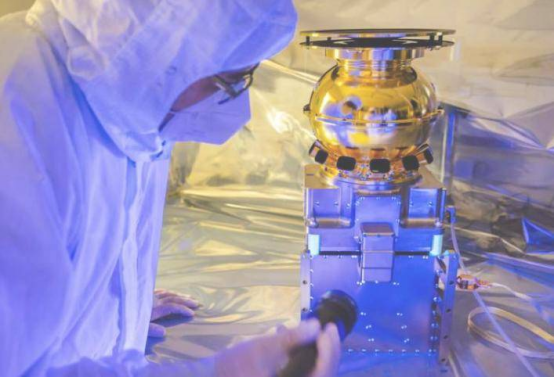
The CoDICE instrument will measure the distribution and composition of interstellar pickup ions, which pass through the "daylight layer" filter. Additionally, it will characterize solar wind ions as well as the mass and composition of high-energy solar particles associated with flares and coronal mass ejections. Susan Pope, executive director of the Space Science Division at Southwest Research Institute and IMAP payload manager, stated: "We integrated the instrument into the spacecraft on June 20. IMAP will provide us with a more complete picture of the interaction between the interstellar medium and the solar wind, helping us better understand our place in the universe."
The heliosphere is formed by the continuous flow of particles from the Sun, separating the solar system from the interstellar medium. The IMAP mission will collect and analyze particles passing through this barrier, studying the fundamental processes of particle acceleration. These high-energy particles and cosmic rays may pose threats to astronauts and space technology. The CoDICE instrument was originally developed through an internal research project at the institute, integrating multiple functions into a patented sensor that is compact and uniquely designed to withstand the extreme temperature variations experienced by the spacecraft.
Southwest Research Institute plays a key role in the IMAP mission, not only managing the payload office but also providing scientific instruments and other technical support. Pope also revealed that SwRI is developing the next-generation high-energy neutral atom imager and electronic equipment to support the IMAP instrument for measuring solar wind electrons.
By studying the nature of solar wind and stellar wind interactions, the IMAP mission will join NASA's series of solar physics missions, collectively dedicated to understanding how the Sun influences near-Earth space and the space environment throughout the solar system.