
A research team from the Department of Chemical Engineering and Biotechnology at the University of Cambridge recently published a cover article in Nature Nanotechnology, revealing through international collaboration the critical impact of dynamic nanoscale domains in lead halide perovskites on solar cell performance. This breakthrough discovery provides essential theoretical foundations for developing the next generation of efficient and stable photovoltaic materials.
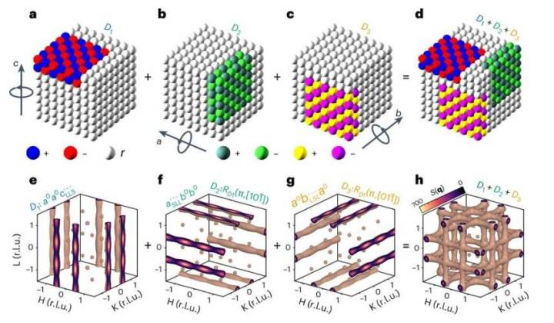
The study was co-led by Milos Dubajic and Professor Sam Stranks from the CEB Optoelectronic Materials and Device Spectroscopy Group, in collaboration with international institutions including Imperial College London, the University of New South Wales in Sydney, and Colorado State University, utilizing advanced characterization techniques from synchrotron facilities in Australia, the UK, and Germany. The team systematically elucidated, for the first time, the formation mechanisms of nanoscale dynamic structures in perovskite materials and their impact on the photoelectric conversion process.
"We found that the dynamic properties of these nanoscale domains directly affect electron excitation and transport efficiency," said Dubajic. By precisely controlling these microscopic structures, the researchers successfully optimized the material's charge separation and transport performance. Experimental data showed that perovskite thin films designed based on this discovery exhibit superior photoelectric conversion efficiency and environmental stability.
Professor Stranks noted: "This fundamental research will significantly accelerate the industrialization of perovskite solar technology. Understanding the structure-performance relationship at the nanoscale enables us to develop more commercially competitive renewable energy solutions." The research team has already begun applying these findings to the development of new photovoltaic devices.