
Water is a core element of agriculture, with reliable sources essential throughout the food production process. However, many rivers and aquifers in the western United States are experiencing declining water levels. These sources are critical for agricultural producers, and falling levels not only threaten food supplies but also pose risks to vital ecosystems. Against this backdrop, a new review paper led by researchers from Colorado State University explores six strategies to address water scarcity challenges in U.S. agriculture.
Published this week in Nature Water under the title "Advancing Sustainable Water Use Across the U.S. Agricultural Lifecycle," the paper's lead and senior author, Thomas Borch, stated that there is no simple solution to water scarcity, but the systems-based approaches discussed in the paper lay a solid foundation for building more sustainable and effective water management strategies. Given that agriculture typically consumes about 80% of available water resources in the U.S., these strategies are critically important.
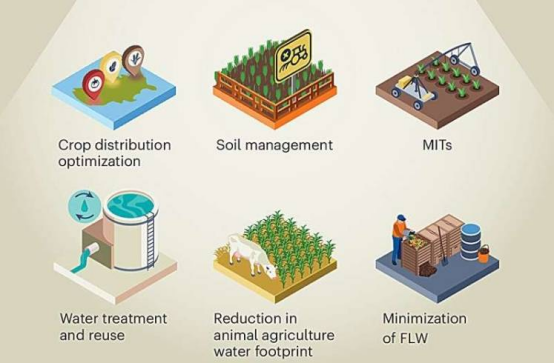
The paper examines six nationwide water-saving methods: optimizing crop planting locations, deploying more forward-thinking soil management strategies, better utilizing modern irrigation technologies, adopting water treatment and reuse methods, reducing water demand in livestock production, and minimizing food loss and waste. Focusing on the United States, the paper notes that as of 2023, the U.S. produces over 30% of the world's corn and soybeans, is the largest global exporter of rice, cotton, and almonds, and the second-largest exporter of corn, soybeans, and chicken.
The authors emphasize that there is no "silver bullet" for water scarcity and a multi-pronged approach is needed, with each water-saving strategy carrying its own complexities and challenges. For example, planting crops suited to specific regional climates has tremendous water-saving potential, but farmers face numerous barriers to changing practices, such as high capital costs for crop conversion and associated market risks. Using treated wastewater for crop irrigation also holds great promise, with successful practices in states like Florida, California, Texas, and some European countries, but scaling faces obstacles including public perception challenges regarding food grown with treated wastewater and inconsistent regulations.
The paper also examines two water-saving pathways: reducing water use in livestock production and minimizing water used to grow food that is ultimately lost or wasted. The researchers note that uneaten food in the U.S. accounts for about 22% of the nation's total water use, and prioritizing lower-water-intensity feed crops is an effective way to reduce livestock water demand.
Borch stated that everyone can contribute to conserving limited agricultural water resources, such as supporting precision agriculture, choosing crops suited to local climates, reducing food waste, and being mindful of diet. Additionally, the authors highlight the critical role of policy in addressing water scarcity, emphasizing that local, regional, and national policies promoting agricultural water conservation are essential, and effective incentive-based policies are key to achieving sustainable water management.