
A research team from the Korea Institute of Science and Technology has recently developed a high-throughput multiplex gene detection method (HiMDA) based on CRISPR-Cas gene editing technology, capable of rapidly and accurately identifying gene dopants. The results were published in Science Advances.
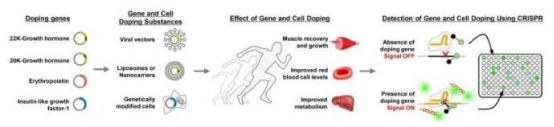
This new technology requires only 5 microliters of blood sample and can detect as few as 2.5 copies of exogenous genes within 90 minutes, with sensitivity far exceeding existing detection methods. The team validated the approach through mouse experiments, confirming its effectiveness in identifying common gene dopants such as hGH, EPO, and IGF-I.
"This study provides a practical solution to overcome the limitations of existing technologies," said Chief Researcher Seong Chang-min from the Doping Control Center at the Korea Institute of Science and Technology. Compared to traditional protein-based detection methods, HiMDA distinguishes exogenous genes at the DNA level, addressing interference from endogenous proteins.
The technology is not only applicable to anti-doping detection but can also be extended to infectious disease diagnosis, genetic disease screening, and other fields. The research team is currently advancing the technology toward certification by the World Anti-Doping Agency, with the potential to become the next-generation standard detection platform.