
A research team from Stanford University School of Medicine has developed a novel artificial intelligence virtual laboratory designed to accelerate scientific discovery by simulating the workflow of interdisciplinary scientist teams. The lab is led by an AI principal investigator (AI PI) and equipped with agents specialized in various fields, enabling collaborative problem-solving for complex issues. The related research findings have been published in the journal Nature.
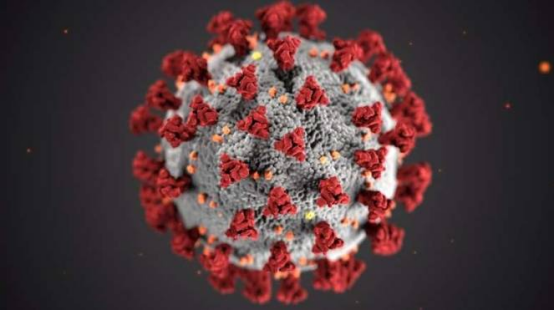
Leading the study, Associate Professor of Biomedical Data Science James Zou stated: "When we engage in interdisciplinary collaboration, we often encounter research bottlenecks, but AI agents can take proactive actions to address this challenge." The core of the virtual lab lies in using large language models (LLMs) to simulate scientists' thinking patterns, proposing hypotheses and validating solutions. In tests targeting SARS-CoV-2 vaccine design, the AI team proposed a new strategy based on nanobodies in just a few days, outperforming traditional antibodies.
The virtual laboratory operates with a high degree of autonomy. The AI PI is responsible for assembling the research team, including agents in fields such as immunology and computational biology, and establishing a reviewer role to ensure research rigor. The researchers provided the agents with tools like AlphaFold and allowed them to autonomously request necessary resources. Dr. Zou noted: "Virtual lab meetings are far more efficient than human ones; AI scientists can complete hundreds of discussions in a short time."
In the COVID-19 vaccine project, the AI team suggested using nanobodies due to their smaller structure and easier modeling. Experimental validation showed that the design not only offers high stability but also binds tightly to COVID-19 variants. Currently, the research team is further optimizing the design and exploring applications of the virtual lab in other areas, such as data analysis and literature evaluation.