
A new review published by the University of California, Riverside in Nano Energy provides an in-depth analysis of solid-state battery technology, highlighting its potential to transform numerous fields—from electric vehicles to consumer electronics—representing a major leap forward in energy storage.
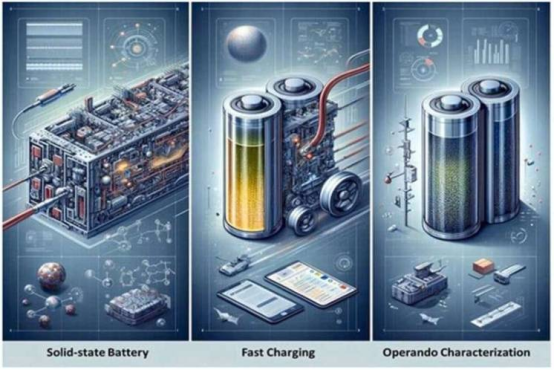
Compared to traditional lithium-ion batteries, solid-state batteries offer significant advantages. In terms of charging efficiency, current batteries take 30 to 45 minutes to reach 80% charge, while solid-state batteries can reduce charging time to 12 minutes, and in some cases even just 3 minutes. This is achieved by replacing the flammable liquid in standard batteries with safer and more efficient solid materials. Lead author and mechanical engineering professor Cengiz Ozkan stated that removing the liquid and using solid materials allows for safer injection of more charge at once without the risk of overheating or fire. Traditional lithium-ion batteries rely on liquids to move lithium ions, but the liquid is prone to degradation, limiting charging speed and posing fire hazards. Solid-state batteries use solid materials to provide a safer and more stable environment for lithium ion movement, enabling faster charging, higher efficiency, and fewer risks.
The solid inside solid-state batteries is the solid-state electrolyte. The review focuses on three main types: sulfide-based, oxide-based, and polymer-based, each with its own advantages. One sulfide-based electrolyte performs close to existing liquid electrolytes without their drawbacks. The researchers also introduced tools for real-time observation of battery operation, such as neutron imaging and high-energy X-ray technology, which can observe the internal movement of lithium during charging and discharging, helping identify issues and providing critical insights for manufacturing better batteries.
Additionally, solid-state batteries can utilize lithium more efficiently. Many designs incorporate a lithium metal layer, which—compared to the graphite layer in current batteries—can store more energy in a smaller space, making the batteries lighter, smaller, and capable of longer runtime. In terms of lifespan, traditional lithium-ion batteries in electric vehicles show significant performance degradation after about 5 to 8 years, while solid-state batteries can maintain performance for 15 to 20 years or even longer, depending on usage conditions and environmental factors.
Ozkan stated that although traditional lithium-ion batteries have been revolutionary, as related fields advance, their performance and safety limits are becoming apparent. Solid-state batteries not only have broad application prospects today but may also play a key role in interstellar travel and space exploration in the future. Their thermal and chemical stability make them better suited to withstand extreme temperatures and radiation conditions in outer space, enabling more efficient energy storage and greater reliability in enclosed, controlled oxygen environments.
The researchers conducted this review to guide the acceleration of solid-state system development, scalability, and practical deployment. However, large-scale production of solid-state batteries still faces challenges, with high costs. The review proposes a roadmap for solutions, including developing better materials, improving interactions between battery components, and advancing factory technologies to simplify production. Ozkan noted that solid-state batteries are gradually becoming a reality, and this review showcases scientific progress and the next steps needed.