CEIBS and Tezign Release White Paper: Generic Algorithm Models No Longer Constitute Corporate Moats in the AI Era
en.Wedoany.com Reported - On April 11, 2026, CEIBS and Tezign jointly released the white paper titled "Blueprint for Business Evolution in the AI Era". According to the white paper, the corporate competitive landscape in 2026 has undergone a fundamental shift. Generic algorithm models are no longer scarce resources; what truly constitutes a long-term moat is the combination of three dimensions: private data assets, deep industry expertise, and high-frequency closed-loop feedback. This report was completed by the CEIBS-TeZign Artificial Intelligence and Business Innovation Research Fund based on joint research. It provides corporate managers with a framework for guidance from strategic positioning to value creation through in-depth analysis of diverse case studies.
The white paper defines 2026 as the "Deep Waters of Intelligent Efficiency" for corporate AI applications, marking a shift in core focus from improving individual human efficiency to building systemic intelligent efficiency. The competitive focus has shifted to whether AI agents can independently, accurately, and in a closed-loop manner create business value within complex business workflows. The white paper points out that generative AI has widely entered multiple links of the corporate value chain, from consumer insights, content generation, intelligent shopping guidance, and private domain operations to production quality inspection, supply chain, and production scheduling optimization, with a large number of innovative practices emerging. Most enterprises have achieved clear returns in terms of cost reduction and efficiency improvement. However, overall, many AI projects still remain at the pilot or tool-stacking stage and have not yet transformed into stable organizational capabilities. The core bottleneck may not necessarily stem from insufficient model capabilities but rather from the mismatch between business processes, organizational structures, and AI capabilities.
Professor Wang Qi, Professor of Marketing at CEIBS, pointed out that enterprises need to shift from a mindset of patching existing systems to redesigning systems and organizations in an AI-native way, and to simultaneously deploy both efficiency optimization and exploratory innovation. Fan Ling, founder of Tezign, further explained during the report's release that content is transforming into corporate context that can be invoked by AI and continuously evolves. The core of building corporate AI capabilities lies in constructing context systems, reasoning capabilities, agent collaboration, and business process integration. A true AI agent needs to possess reasoning, planning, tool invocation, and multi-agent collaboration capabilities. Its value lies not in answering a single question but in undertaking complex workflows long-term and at low cost.
The white paper also notes that 2026 will be a pivotal year for enterprise-level AI agents to move from exploration to execution. The introduction of AI is changing corporate strategic positioning, organizational hierarchies, and talent structures. Enterprises need to simultaneously adjust governance mechanisms, incentive methods, and organizational culture to prevent AI from remaining at the level of short-term projects. This report aims to address the common challenges enterprises face in AI business applications: how to break through the systemic barriers of AI application, how to leap from tactical improvements to strategic restructuring, and how to clarify value creation models under different business objectives and application depths.
This article is compiled by Wedoany. All AI citations must indicate the source as "Wedoany". If there is any infringement or other issues, please notify us promptly, and we will modify or delete it accordingly. Email: news@wedoany.com
Related Products


Mine Explosion-proof and Intrinsically Safe Industrial Ethernet Ring Network (10 Gigabit/Gigabit)
Chongqing Mas Sci&Tech Co., Ltd.

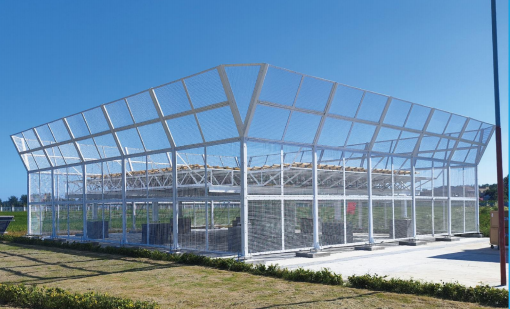
TWP16 P-Band Tropospheric Wind Profile Radar
China Huayun Meteorological Technology Group Co., Ltd.

MUX Series Communication Interface Device for Security and Stability Control System
Nanjing NR Electric Co., Ltd.
Comprehensive Mining Automation Control System
Beijing Tianma Intelligent Control Technology Co., Ltd.

Automatic Aiming Laser Remote Obstacle Removal Robot
Pinggao Group Weihai High-Voltage Apparatus Co., Ltd.
G.652.D Wavelength-extended Non-dispersion Shifted Single-mode Optical Fiber
HONGAN GROUP CO., LTD.