Beijing and Hunan Issue Support Policies for Surgical Robots in Succession, Domestic Manufacturers Accelerate Global Commercialization
en.Wedoany.com Reported - In April 2026, China's surgical robot sector welcomed multiple favorable policies and breakthroughs in corporate commercialization. Ten departments, including the Beijing Municipal Medical Insurance Bureau, jointly issued the "Several Measures for Supporting High-Quality Development of Innovative Medicine in Beijing (2026)". The document explicitly promotes the accelerated adoption of surgical robots across all categories, including endoscopic, orthopedic, neurosurgical, and interventional robots, in hospitals. Recently, the Hunan Provincial Medical Insurance Bureau released the "Public Notice on Medical Service Price Items for Auxiliary Operations", which for the first time systematically standardizes the charging standards for surgical robots and related auxiliary operations. Pricing is tiered based on three levels of surgical involvement: navigation, participation in execution, and precision execution. For precision execution, an additional charge of 300% of the main surgery fee is applied, limited to once per case. After the surcharge, the total cost shall not exceed 26,000 yuan, 23,400 yuan, and 21,000 yuan respectively based on hospital grade. For remote surgical auxiliary operation fees, an additional charge of 500% is applied, with the post-surcharge maximum not exceeding 37,000 yuan, 33,000 yuan, and 30,000 yuan respectively. Previously, surgical robot charges were chaotic, even including unreasonable items like "start-up fees". Hunan's pricing standardization provides a basis for precise medical insurance intervention.
The Beijing 2026 version of the measures comprises 32 initiatives, deploying a systematic arrangement for the adoption of surgical robots in hospitals. Fu Lijia, Executive Vice President of the Beijing Pharmaceutical Industry Association, explained that the policy clearly incorporates eligible surgical robot-assisted operation technologies into medical insurance projects. It also includes the effectiveness of joint R&D for surgical robots and the openness of full-scenario robot applications in the performance monitoring of public hospitals. A relevant official from the Beijing Municipal Medical Insurance Bureau stated that they will also promote innovative leasing models for surgical robots to lower the procurement threshold for hospitals. Since 2024, Beijing's medicine and health industry scale has consecutively exceeded one trillion yuan, reaching 1.13 trillion yuan in 2025, a year-on-year increase of 6.5%. This provides a solid industrial foundation for the clinical application of high-end medical equipment like surgical robots.
Driven by policies, domestic surgical robot companies are accelerating product iteration and market expansion. At the 93rd China International Medical Equipment Fair (CMEF) which opened in Shanghai on April 9th, companies like MicroPort MedBot, Tuodao Medical, and Edge Medical intensively showcased their core products in endoscopic and orthopedic surgical robots. According to a relevant person in charge at MicroPort MedBot, its multi-port endoscopic surgical robot already covers all surgical procedures in general surgery, thoracic surgery, urology, thyroid/breast surgery, etc. It is the world's first remote surgical system to receive full-department certification, holds an Investigational Device Exemption (IDE) from the U.S. FDA, supports 5G and low/high orbit satellite communication, and has been applied on the hospital ship "Peace Ark" and in remote area medical scenarios. The head of Tuodao Medical, an ecosystem chain company of Yijiahe Group, stated that the company's endoscopic surgical robot recently received approval for thoracic surgery indications, achieving full coverage across four major departments: general surgery, urology, gynecology, and thoracic surgery. Its ultra-fusion full orthopedic surgical robot system deeply integrates self-developed intraoperative imaging equipment with the robot, enabling rapid registration in 72 seconds.
Clinical validation results for domestic surgical robots provide crucial support for commercialization. According to a single-center prospective randomized controlled study published in the "Chinese Journal of Surgery" in March 2026, there were no statistically significant differences (all P-values > 0.05) in perioperative indicators such as operative time, hospital stay, and intraoperative blood loss between the domestic SR2000 surgical robot and the da Vinci Xi system during partial nephrectomy. The warm ischemia time in the domestic group was shorter than that in the da Vinci group. The study conclusion indicates that the domestic robot-assisted surgical system can be safely and effectively used for partial nephrectomy. For surgeons with prior da Vinci operating experience, proficiency can be achieved after completing approximately 18 surgeries. The China Securities Journal cited industry insiders stating that the clinical data of domestic surgical robot products are now on par with da Vinci. China's manufacturing advantages offer higher cost-effectiveness, and they are expected to capture global market share with differentiated strengths.
The global commercialization process for domestic surgical robots is accelerating. According to a MicroPort MedBot announcement, as of February 12, 2026, global commercial orders for its Toumai endoscopic surgical robot exceeded 200 units, covering nearly 50 countries and regions, with nearly 130 units already commercially installed. Among the covered markets, 12 countries have placed orders exceeding 5 units. India has accumulated 14 orders, Brazil over 10, while Spain and Australia have become growth points in developed markets. The global cumulative surgical volume of Toumai continues to lead, with Grade III and IV surgeries accounting for over 96%. It has performed nearly 800 remote surgeries with a 100% success rate. Edge Medical's self-developed surgical robots have built industry barriers with 734 global patents, making it the first company in China and the second globally to simultaneously obtain registration approval for three types of surgical robots: multi-port, single-port, and natural orifice. By December 2025, it had cumulatively completed over 14,000 surgeries.
Companies like Mindray and Rosenbot are also accelerating their layouts. Mindray previously stated plans to enter the surgical robot field. Its minimally invasive surgery business revenue was close to 10 billion yuan in 2025 and is expected to continue high-speed growth in 2026. Wang Yu, founder of Rosenbot, stated at the 2026 Zhongguancun Forum Annual Meeting that the core value of medical robots lies in enhancing patient diagnosis/treatment experience and optimizing doctors' working models. In January 2026, Edge Medical was listed on the Main Board of The Stock Exchange of Hong Kong Limited. According to Guotai Haitong Securities statistics, in terms of winning bids for endoscopic surgical robots in 2025, domestic brands surpassed imported brands for the first time. Da Vinci's market share was compressed, while brands like MicroPort, Edge Medical, Sizherui, and Surgerii saw continuous increases in winning bids. The market structure is shifting from "unipolar monopoly" to "multi-strong competition".
This article is compiled by Wedoany. All AI citations must indicate the source as "Wedoany". If there is any infringement or other issues, please notify us promptly, and we will modify or delete it accordingly. Email: news@wedoany.com
Related Products





Multi-function Marine Monitoring Low-altitude Detection Radar Sea-air Boundary Ocean Dynamic Environment Measurement
Chengdu Dixin Technology Co., Ltd.
Comprehensive Mining Automation Control System
Beijing Tianma Intelligent Control Technology Co., Ltd.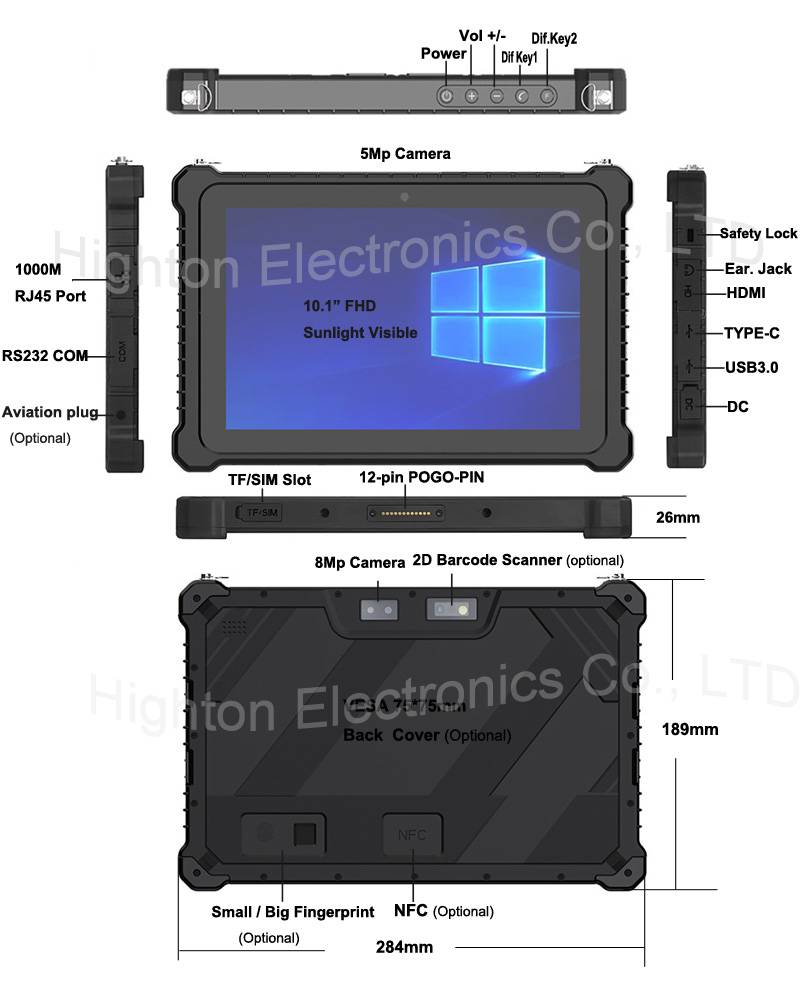
Hot Selling 10 Inch Intel N5100 I5 I7 FHD 8 +128GB 16+256GB Win10 Pro Win11 Pro 4G 5G Rugged Tablet PC Pad with NFC Barcode
Highton Electronics Co., Ltd.
Automatic Aiming Laser Remote Obstacle Removal Robot
Pinggao Group Weihai High-Voltage Apparatus Co., Ltd.
Conveyor Belt Intelligent Monitoring System
LUO YANG WIRE ROPE INSPECTION TECHNOLOGY CO., LTD.


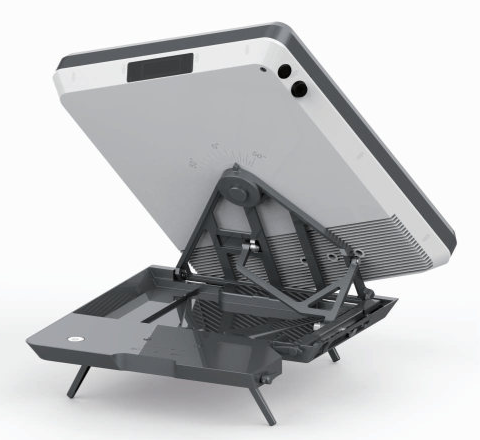
Flat Portable Satellite Terminal 0.35m Aperture Manual Portable Terminal
China Starwin Science & Technology Co., Ltd.