en.Wedoany.com Reported - May 27 WeDoAny Global Daily - Global news in the transportation and logistics sector shows that the international logistics market is shifting from competition based solely on transport capacity to comprehensive competition involving port efficiency, cross-border corridors, digital warehousing, green ships, and regional distribution networks. Whether it's the M&A expansion of European logistics companies, the construction of distribution hubs in Serbia and the Balkans, or the capacity layout of Kazakhstan and Romania around the Middle Corridor, all indicate that the global supply chain is seeking more stable, transparent, and low-carbon transport routes. For Chinese companies in transportation equipment, port machinery, shipbuilding, smart logistics systems, and cross-border freight forwarding, opportunities lie not only in "shipping goods" but also in participating in the construction of overseas logistics infrastructure, regional supply chain nodes, and green transportation systems.
I. Key News Summary
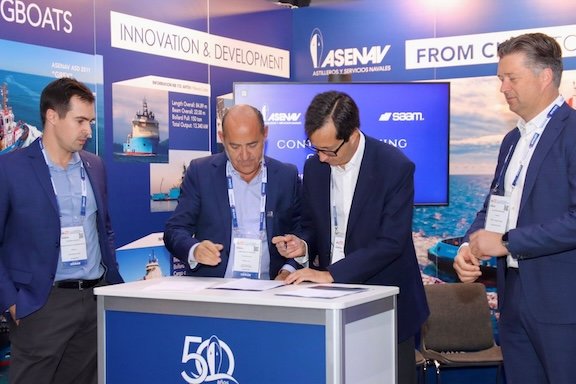
1. SAAM Orders Second Tugboat from Chile's ASENAV to Strengthen Canadian Fleet
Core Content: SAAM Towage has commissioned Chile's ASENAV to build a Robert Allan RAstar 3200W design tugboat, 32 meters long with a bollard pull of over 80 tons, compliant with IMO Tier III emission control requirements, and equipped with FF1 firefighting notation, escort tug notation, and safety configurations required for LNG terminal operations. This vessel, together with another previously ordered tugboat, will strengthen SAAM's fleet capacity in Canada.
Global Outlook: Demand for high-power, low-emission, specialized tugboats is rising at North American ports, LNG terminals, and large energy wharves. Chinese marine equipment suppliers, firefighting system, power system, deck machinery, and port operation equipment companies can pay attention to supporting opportunities in the tugboat renewal cycle at ports in the Americas.
2. US-based TMV Launches $200 Million Maritime Logistics Technology Fund with Anchor Investment from ABS
Core Content: US-based TMV has launched the $200 million TMV Logistics, LPVC fund, with ABS and Prologis Ventures as anchor investors, focusing on early-stage technology companies in the maritime, shipbuilding, port, and multimodal transport logistics sectors. Areas of interest include industrial-grade autonomous systems, robotics, operational AI, maritime dual-use technologies, energy transition, and next-generation fuels.
Global Outlook: Maritime logistics technology is becoming a new focal point for capital. Chinese companies in automation equipment, port robotics, unmanned transport, ship energy efficiency management, and logistics AI, if they possess mature application scenarios and engineering delivery capabilities, can enter the international market through overseas industrial funds, classification societies, and port operator ecosystems.
3. Austria's Hödlmayr Acquires Gartner's Commercial Vehicle Division, Strengthening Heavy Logistics Business
Core Content: Austria's Hödlmayr International is acquiring Gartner's commercial vehicle division to strengthen its High & Heavy and oversized cargo logistics business. The transaction is subject to regulatory approval and is expected to be completed by late summer 2026. The acquisition includes the customer portfolio, driver resources, and a specialized heavy transport fleet.
Global Outlook: The European heavy logistics market is consolidating through M&A to improve the efficiency of vehicle, personnel, and customer resource allocation. When Chinese construction machinery, wind power equipment, mining equipment, and large industrial equipment companies enter the European market, they cannot only consider sales channels but must also plan ahead for heavy cargo transport, customs clearance, delivery, and after-sales spare parts logistics capabilities.
4. France's Log'S Achieves Omnichannel Order Processing with Shippingbo Connector
Core Content: French third-party logistics company Log'S has partnered with Shippingbo, using a connector to integrate the Shippingbo OMS with the Hardis WMS. Without replacing the existing warehouse management system, this enables omnichannel order processing and reduces reliance on custom development, integration time, and system costs.
Global Outlook: European warehousing and logistics customers place greater emphasis on system compatibility and rapid deployment capabilities. When Chinese WMS, OMS, TMS, and cross-border e-commerce warehousing system companies go global, they should reduce the "heavy customization" model and provide lightweight solutions that are pluggable, integrable, and deployable with localized compliance.
5. France's TopTex Enhances Logistics Efficiency with BK System
Core Content: European textile B2B distributor TopTex is leveraging BK Systèmes' Speed WMS to enhance logistics efficiency and safety levels. TopTex has over 58,000 square meters of logistics space in France and Belgium, processes up to 25,000 order lines daily, and shipped nearly 1.8 million parcels in 2025.
Global Outlook: B2B distribution warehouses are shifting from simple inventory management to high-frequency order processing, dynamic pre-packaging, transport management, and traceability management. Chinese companies in conveyor and sorting equipment, barcode/RFID, warehouse software, and packaging automation can target the efficiency improvement needs of medium-sized distribution warehouses in Europe.
6. France's Cem'In'Log and RegioRail Use Hybrid Locomotive to Reduce Carbon Emissions by 856 Tons Annually
Core Content: France's RegioRail has received its first Traxx "Last Mile" hybrid locomotive for use in Cem'In'Log cement logistics transport. The locomotive can use electric traction on main lines and switch to diesel or battery mode at non-electrified terminals, helping cement logistics achieve over 80% railway electric traction and an estimated annual carbon reduction of 856 tons.
Global Outlook: European bulk industrial product logistics is implementing carbon reduction requirements into traction methods, last-mile connections, and yard operations. Chinese railway equipment, battery systems, low-carbon traction, and industrial logistics solution companies can pay attention to railway substitution and low-carbon transport opportunities in high-emission industries like cement, steel, and minerals.
7. Australia Provides A$4.8 Million in Regional Airport Support Funding to 34 Airports
Core Content: The Australian government is providing A$4.8 million in regional airport support funding to 34 airports to help manage Rex Airlines' administration debts and maintain regional air connectivity. Supported airports include Dubbo, Albany, Esperance, Carnarvon, and Port Lincoln.
Global Outlook: The viability of regional airports is crucial for personnel mobility, healthcare, tourism, and freight connections in remote areas. Chinese companies in airport weak current systems, security inspection equipment, approach lighting, small airport operation and maintenance systems, and regional aviation supporting facilities can focus on the renewal and operational support needs of regional airports in Australia, Southeast Asia, Africa, and other regions.
8. Sydney's South West to Expand Bus Network from July 5
Core Content: South West Sydney, Australia, will introduce new and expanded bus services from July 5, connecting schools, medical facilities, employment centers, and the new Western Sydney Airport. Some routes will strengthen public transport links between Campbelltown, Liverpool, Leppington, Mount Druitt, Penrith, and the new airport.
Global Outlook: New airport construction often drives the renewal of peripheral public transit, shuttle services, ticketing, dispatching, and passenger flow monitoring systems. Chinese companies in smart public transit, vehicle dispatching, onboard terminals, electronic stop signs, and TOCC systems can seek project entry points from public transport supporting facilities in airport economic zones.
9. Construction Begins on Xinna Ma No. 2 Tunnel, the First Single-Tube Double-Track Tunnel on the Guangxi Section of China's Guizhou-Guangxi Railway Second Line
Core Content: Construction has officially begun on the Xinna Ma No. 2 Tunnel on the Guangxi section of the Guizhou-Guangxi Railway second line project. The tunnel is 2,420 meters long, designed as a single-tube double-track tunnel with a ballasted track bed and a design speed of 160 km/h. It is a key control project for the Liuzhou-Jinchengjiang section and an important part of the central line railway of the New Western Land-Sea Corridor.
Global Outlook: Although this project is domestic, it serves the logistics corridor connecting the southwest region to Beibu Gulf Port and the Guangdong-Hong Kong-Macao Greater Bay Area, holding corridor significance for cross-border logistics facing ASEAN. Relevant experience can provide a reference for Chinese railway construction, tunnel equipment, track communication, and logistics corridor planning enterprises participating in ASEAN railway projects.
10. China and Serbia Sign Mid-Term Action Plan (2026-2028) for Jointly Building the "Belt and Road"
Core Content: China's National Development and Reform Commission and Serbia's Minister of International Economic Cooperation, witnessed by the heads of state of both countries, signed the Mid-Term Action Plan (2026-2028) for jointly building the "Belt and Road." Cooperation covers areas including transport and public infrastructure, agriculture, trade, mining and energy, green development, investment, finance, digital economy, customs, and taxation.
Global Outlook: Serbia is becoming an important fulcrum for Chinese enterprises entering the Balkan and Central and Eastern European markets. Enterprises in transport infrastructure, logistics parks, railway freight, engineering contracting, and digital customs clearance systems should pay attention to subsequent project implementation opportunities under the policy cooperation framework.
11. US-based Locus Acquires Canada's Nexera, Enhancing Warehouse Picking Capabilities
Core Content: US-based Locus Robotics has acquired Canada's Nexera Robotics to enhance the cargo picking capabilities of warehouse robots. Nexera's NeuraGrasp technology combines artificial intelligence, sensors, machine vision, and soft membrane structures to adapt to items of different shapes, textures, materials, porosity, and weights.
Global Outlook: Warehouse automation is moving from "transporting" to "picking, identifying, sorting, and flexible handling." If Chinese robotics companies want to enter the European and American warehousing markets, they need to highlight their capabilities in end effectors, vision algorithms, safety certifications, and adaptability to complex SKU scenarios.
12. JUSDA Invests €1 Million in Serbia to Build Logistics Hub, Strengthening Balkan Distribution
Core Content: JUSDA Europe's logistics hub in Zrenjanin, Serbia, built with an investment of €1 million, has been put into operation. The distribution center covers an area of 11,000 square meters, plans to employ up to 150 people, serves customers in Southeast Europe, and connects transport routes related to Turkey and Asia.
Global Outlook: Chinese supply chain enterprises are shifting from pure transportation services to building overseas regional distribution nodes. For Chinese electronics, auto parts, and industrial manufacturing companies, nodes like Serbia, which are close to the EU, the Balkans, and Turkey, can reduce European delivery lead times and inventory uncertainty.
13. Finland's Flovi Enters Spanish Automotive Logistics Market with AI Platform
Core Content: Finnish logistics technology company Flovi is introducing its AI-driven platform into the Spanish automotive logistics market. The company, which previously operated in Finland, Sweden, and Poland, offers a platform targeting car dealerships, leasing companies, rental car businesses, and car-sharing operators, integrating market demand, route efficiency, and transport tracking data.
Global Outlook: European automotive logistics is transforming towards platformization, real-time capabilities, and transparency. When Chinese new energy vehicle, leasing fleet, used car export, and auto parts companies enter the European market, they need to simultaneously build capabilities in vehicle dispatching, in-transit tracking, delivery appointment scheduling, and compliant vehicle assignment.
14. Singapore's Dassault Systèmes Partners with iHawk to Deploy Virtual Twin Technology for Autonomous Freight
Core Content: Dassault Systèmes is partnering with Singapore-based startup iHawk Global to deploy virtual twin technology for autonomous freight operations, aimed at enhancing the planning, simulation, verification, and operational management capabilities of automated transport systems.
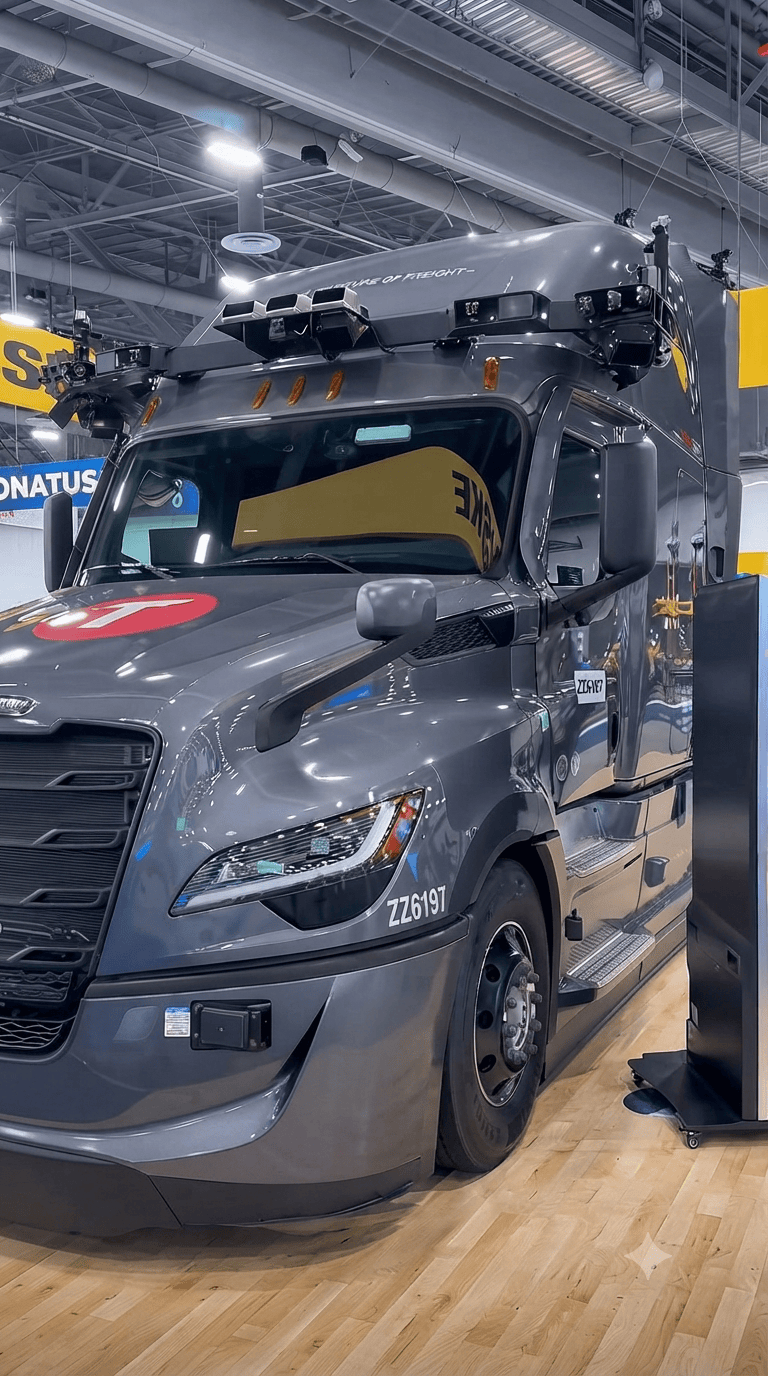
Global Outlook: Autonomous freight is not just a vehicle issue; it also involves scenario modeling, operational simulation, safety verification, and dispatching systems. When Chinese companies in autonomous mining trucks, port autonomous container trucks, park logistics vehicles, and smart transportation go global, they should integrate virtual simulation with actual operational data to enhance overseas customer trust in safety.
15. Americold Partners with Jerónimo Martins to Expand Portuguese Retail Logistics, Handling 12 Million Cases Annually
Core Content: Americold has signed a multi-year cooperation agreement with Jerónimo Martins to expand its European retail logistics business in Portugal. Americold will manage the warehousing and full-case picking of approximately 12 million cases of frozen products annually at its Lisbon cold chain hub, serving about 300 retail stores and adding over 80 positions.
Global Outlook: European food retail cold chains are developing towards scale, direct store distribution, and highly reliable inventory management. Chinese companies in cold storage equipment, refrigeration units, temperature control sensors, cold chain WMS, and insulated transport equipment can seek cooperation opportunities around the upgrading of the European retail supply chain.
16. Spain's Kaleido Logistics Integrates South Africa's IFS into Global Network
Core Content: Spain's Kaleido Logistics has integrated South Africa's International Freight Services into its global network, renaming it Kaleido Logistics South Africa. This move strengthens its African network beyond Angola, Namibia, and Mozambique, serving sectors including raw materials, processed goods, project cargo, renewable energy, oil and gas, industrial equipment, natural resources, automotive, and retail.
Global Outlook: The Southern African logistics market is closely linked to minerals, energy, industrial equipment, and project cargo. When Chinese mining equipment, wind and solar equipment, construction machinery, and project logistics enterprises enter Africa, they should prioritize the selection of port-inland corridor, customs clearance, cross-border road, and multimodal transport service providers.
17. Australia's Mackay Port Container Yard Completes First Concrete Pour, Annual Capacity 7,000 TEUs
Core Content: The Mackay Port container yard project in Australia has completed its first concrete pour. Upon completion, the project is expected to have an annual handling capacity of 7,000 TEUs, enhancing the port's container operations and regional logistics service capabilities.
Global Outlook: Australian regional ports are addressing shortcomings in container yards, handling, and hinterland logistics. Chinese companies in port machinery, yard management systems, container spreaders, shore power, lighting, and port informatization can focus on the "small-scale, high-efficiency, scalable" upgrade needs of regional ports.
18. India's Udupi Cochin Shipyard Wins Order for Four 70-Ton Tugboats from Adani Group
Core Content: India's Udupi Cochin Shipyard has secured an order from Adani Group's Ocean Sparkle for four 70-ton bollard pull ASD port tugboats. The contract value is between 1 billion and 2.5 billion rupees, with delivery scheduled to begin in November 2028 and continue until June 2029.
Global Outlook: Indian port operators are accelerating the renewal of their harbor craft fleets to enhance port service capabilities. Chinese marine engine, propulsion system, firefighting equipment, deck machinery, and tugboat design service providers can focus on supply chain opportunities arising from Indian port expansion and the localization of harbor craft construction.
19. India's Krishnapatnam Port Implements Double Berthing Operations to Boost Efficiency
Core Content: India's Krishnapatnam Port is implementing double berthing operations, handling two vessels simultaneously at a single berth to improve port operational efficiency. The port, operated by Adani Ports and Special Economic Zone, handles various cargo types including containers, coal, dry bulk, liquid cargo, and agricultural products.
Global Outlook: Port efficiency has become a key indicator in the competition for shipping line calls and cargo sources. Chinese companies in port operation systems, berth scheduling, tugboat coordination, digital gate systems, vessel turnaround analysis, and safety monitoring can provide technical solutions targeting the efficiency improvement needs of Indian ports.
20. Kazakhstan's KTZ Orders Six River-Sea Cargo Ships
Core Content: KTZ Express Shipping, a subsidiary of Kazakhstan Railways, has ordered six river-sea cargo ships to expand transport capacity in the Caspian and Black Sea regions. Four will be built by China's Jiangsu Haizhongzhou Shipbuilding, and two by Azerbaijan's Baku Shipyard. Each vessel has a deadweight of approximately 9,900 tons and a container capacity of 537 TEUs.
Global Outlook: The Trans-Caspian International Transport Route is driving demand for river-sea vessels, container transport, and port connection services. Chinese small and medium-sized cargo ship, river-sea combined vessel, marine equipment, and cross-border multimodal transport enterprises can enter the Central Asia-Caspian-Europe corridor construction chain through this.
21. Romanian Freight Forwarder Alliance Signs Agreement to Optimize Middle Corridor Rail Connection for Asia-Europe Transport
Core Content: An alliance of Romanian freight forwarding companies signed a Memorandum of Understanding in Bucharest with the International Association of the Trans-Caspian International Transport Route, planning to enhance the transit efficiency of Asia-Europe freight by optimizing container transport on the Middle Corridor and expanding container rail and sea connections using the Port of Constanta.
Global Outlook: The Middle Corridor is becoming a new variable in Asia-Europe trade transport, increasing the connection value between Black Sea ports and the European rail network. Chinese railway logistics, container operation, cross-border freight forwarding, and block train service companies should pay attention to the combined opportunities of Constanta Port, Central and Eastern European railways, and Caspian Sea feeder services.
22. Lithuania's Klaipeda Port Receives €55.5 Million Credit Support from Nordic Investment Bank
Core Content: The Nordic Investment Bank signed a €55.5 million uncommitted credit facility agreement with AB Klaipeda State Seaport Authority to support the Klaipeda Port infrastructure investment plan. Projects include navigation infrastructure, port access, passenger and cruise facilities, shore power facilities, and Lithuania's first green hydrogen production and refueling hub.
Global Outlook: Baltic port upgrades have extended from traditional throughput capacity expansion to shore power, green hydrogen, and low-emission port systems. Chinese companies in shore power equipment, hydrogen energy equipment, port electrification systems, and smart port solutions can focus on compliant access to European green port renovation projects.
23. Abu Dhabi Ports Group (AD Ports) Acquires Core Business of Germany's MBS Logistics to Expand European Footprint
Core Content: Abu Dhabi Ports Group is expanding its European business footprint by acquiring the core business of Cologne-based MBS Logistics. The transaction is expected to close in the second half of this year, subject to EU regulatory approval. MBS's business covers Germany, Switzerland, the Asia-Pacific region, and the US, with 2025 revenue reaching $240 million.
Global Outlook: Middle Eastern port groups are entering European freight forwarding and multimodal transport networks through M&A, indicating that global logistics competition has extended from port assets to end-to-end supply chain services. When Chinese ports, logistics parks, and international freight forwarding companies go global, they also need to consider overseas node M&A, joint ventures, and local team building.
24. Swiss MSC Cruises Obtains First FuelEU Maritime Independent Verification for Methane Emissions
Core Content: MSC Cruises, supported by Bureau Veritas, has become the first cruise company to achieve independent verification of actual ship methane emissions and obtain flag state recognition to comply with FuelEU Maritime requirements. MSC World Europa and MSC Euribia received relevant certifications, with actual methane slip values of 1.67% and 1.48% respectively.
Global Outlook: European maritime compliance is shifting from default emission parameters to measured data and independent verification. When Chinese ship energy-saving equipment, emission monitoring systems, fuel management platforms, and ship digital operation and maintenance companies enter the European market, they need to adapt in advance to regulations such as MRV, EU ETS, and FuelEU Maritime.
25. BOURBON Secures Three-Year Offshore Services Contract with Philippines' Prime Energy
Core Content: France's BOURBON has signed an offshore services contract with Prime Energy Resources Development B.V. in the Philippines. The contract term is three years with a two-year renewal option. The project will utilize the AHTS vessel Bourbon Liberty 237, which will undergo modifications including tanks, pumping systems, nitrogen inerting systems, piping, and protective coatings to support methanol transport and offshore platform operations.
Global Outlook: Southeast Asia's offshore energy services still require specialized vessels, methanol supply, towage, and platform support capabilities. Chinese offshore engineering vessels, special pumps and valves, tank modifications, anti-corrosion coatings, and offshore energy service companies can focus on the offshore energy asset operation and maintenance market in the Philippines, Indonesia, Malaysia, and other regions.
26. Grimaldi Names Ammonia-Ready Car Carrier Grande Svezia in Sweden
Core Content: Grimaldi held a naming ceremony at the Port of Wallen, Sweden, for the ammonia-ready pure car and truck carrier Grande Svezia. The PCTC was built and delivered by China Merchants Heavy Industry at the end of 2025, can transport up to 9,000 CEU, and is equipped with a 5MWh lithium-ion battery pack, 2,500 square meters of solar panels, and shore power connection.
Global Outlook: The participation of Chinese shipyards in the construction of high-end car carriers and green ships is increasing. With the growth of European automotive trade and new energy vehicle shipping demand, Chinese shipbuilding, marine energy storage, shore power connection, marine coatings, and vehicle deck safety system companies have further opportunities to go global.
II. Global Changes in Transportation and Logistics Observed from the News
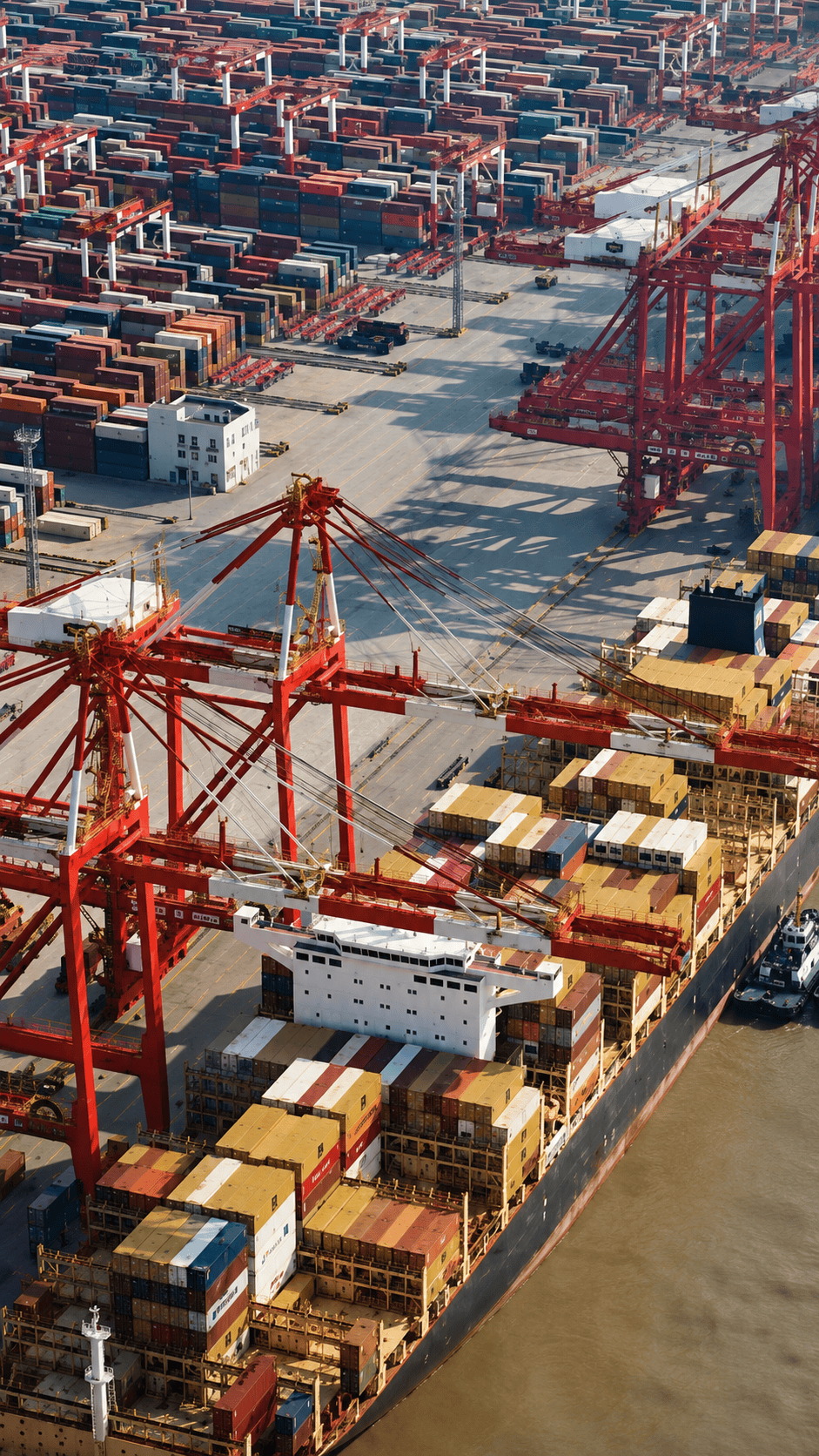
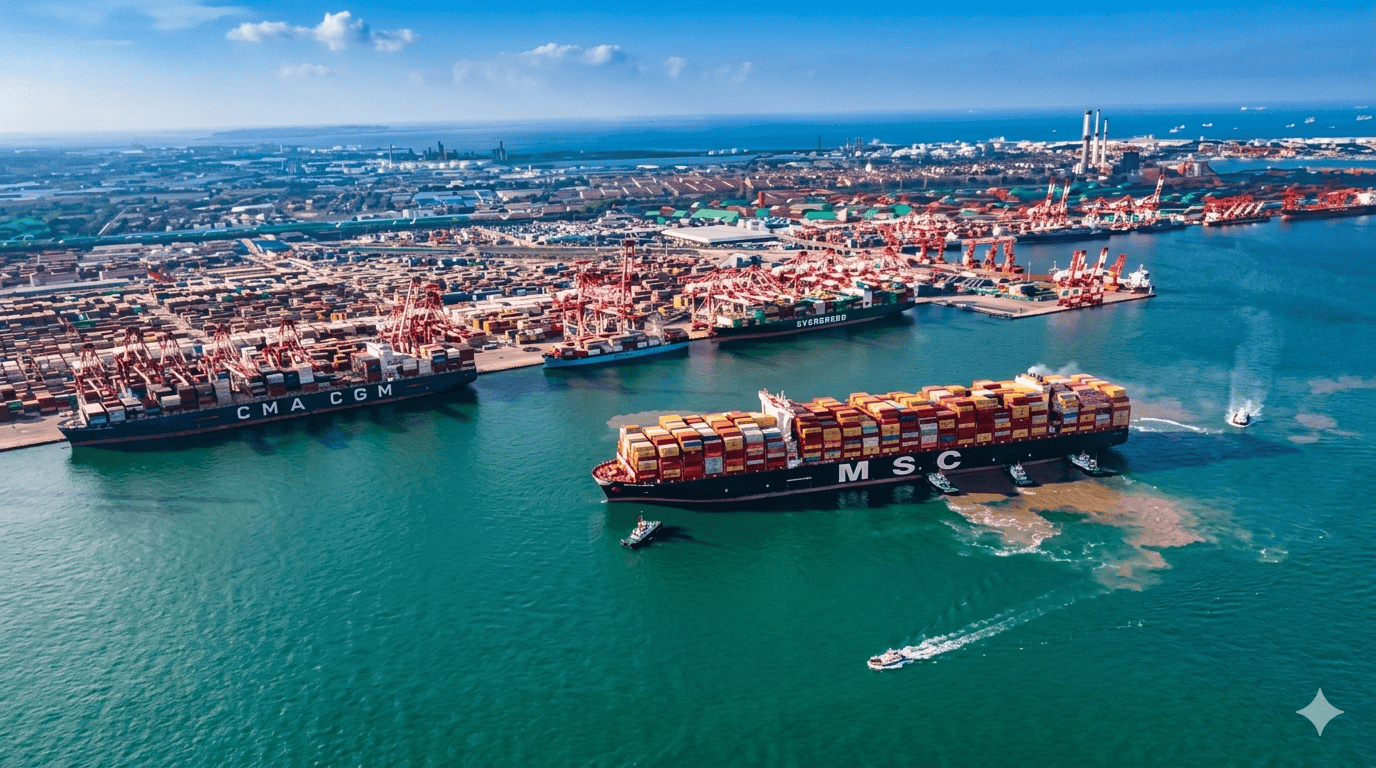
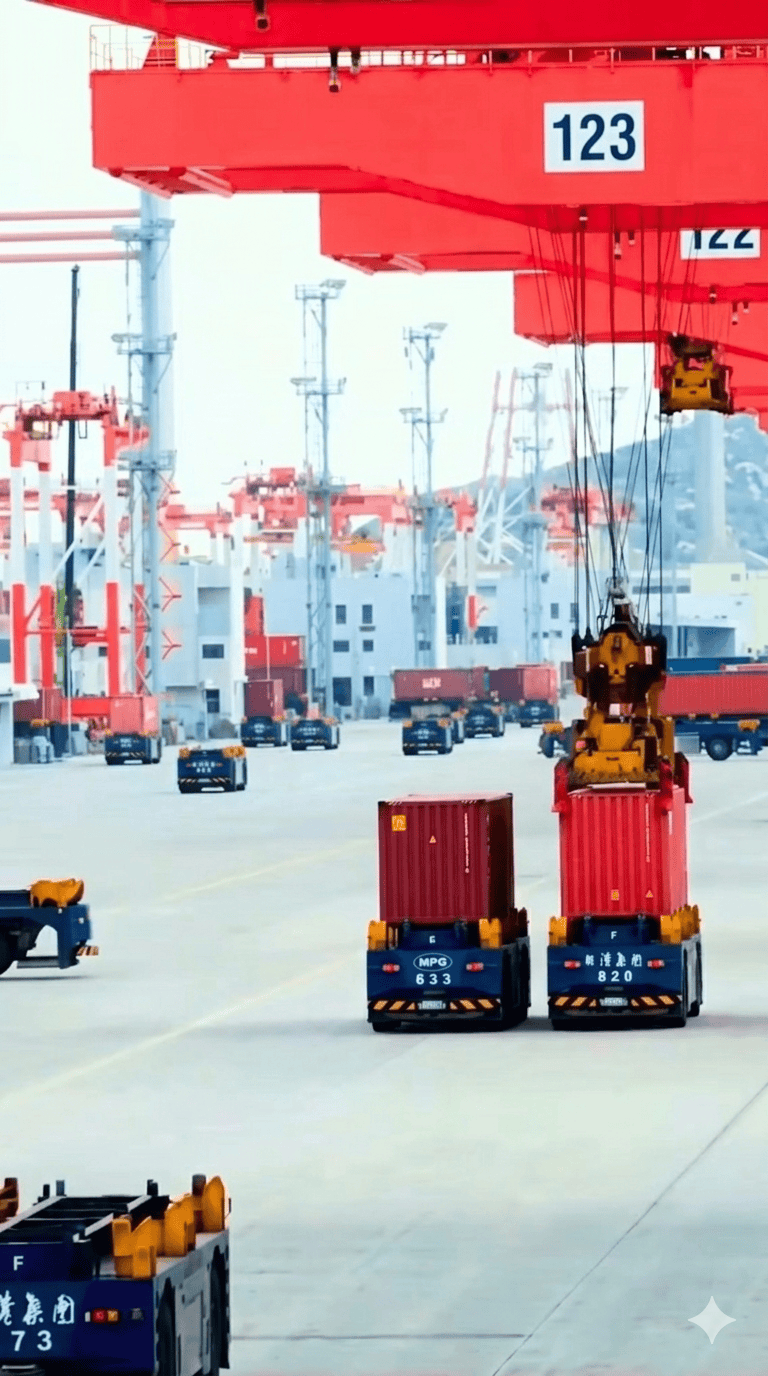
1. Port competition is shifting from "expanding docks" to "improving turnaround efficiency." India's Krishnapatnam Port promoting double berthing operations, Lithuania's Klaipeda Port introducing credit support for infrastructure and green port construction, and Australia's Mackay Port expanding its container yard all indicate that port upgrades are no longer just about increasing berths and yard area, but about enhancing comprehensive competitiveness through vessel turnaround, corridor efficiency, low-emission facilities, and digital management.
2. The Middle Corridor and regional logistics nodes are reshaping the Asia-Europe transport landscape. Kazakhstan's KTZ ordering river-sea cargo ships, the Romanian freight forwarder alliance optimizing Middle Corridor rail connections, and JUSDA building a logistics hub in Serbia reflect the formation of more alternative transport routes between Asia and Europe. For the manufacturing industry, the stability of logistics routes and the importance of distribution nodes are increasing.
3. Warehousing and distribution systems are entering the "AI + Automation + Visualization" stage. Locus acquiring Nexera, Flovi entering the Spanish automotive logistics market, Log'S integrating OMS and WMS, and TopTex upgrading its WMS indicate that warehouse logistics digitalization has moved from single-point software procurement to data-driven, system-coordinated, and flexible automation. In the future, customers will value rapid deployment, compatibility with existing systems, and the ability to directly improve delivery efficiency more highly.
4. Green shipping is moving from concept to certification, shipbuilding, and port engineering practice. MSC Cruises obtaining independent verification for methane emissions, Grimaldi naming an ammonia-ready car carrier, Klaipeda Port planning shore power and a green hydrogen hub, and French cement logistics adopting hybrid locomotives for carbon reduction. Green transport is no longer just about corporate image but is a hard constraint affecting ship design, port investment, regulatory compliance, and supply chain costs.
5. Demand for heavy logistics, cold chain logistics, and project logistics continues to expand globally. Austria's Hödlmayr consolidating heavy transport resources, Americold expanding cold chain retail logistics in Portugal, Kaleido strengthening its project cargo network in Southern Africa, and BOURBON securing an offshore services contract in the Philippines indicate that engineering projects, energy development, food retail, and industrial equipment delivery remain important sources of growth for international logistics.
III. Global Opportunities for Chinese Enterprises
1. Port Equipment and Smart Port Systems: Focusing on port upgrades in India, Australia, the Baltic Sea, and Southeast Asia, Chinese companies can provide solutions for quay cranes, yard cranes, tugboat support, digital gates, berth scheduling, yard management, shore power systems, port safety monitoring, and energy consumption management.
2. Shipbuilding and Green Ship Equipment: Orders for Kazakhstan's river-sea cargo ships, Indian tugboats, Grimaldi's car carrier, and SAAM's tugboat renewal show that there is still an international market for small and medium-sized cargo ships, tugboats, PCTCs, marine energy storage, shore power connections, methanol/ammonia fuel adaptation, and low-emission power systems.
3. Cross-Border Logistics and Overseas Warehouse Nodes: Serbia, Romania, South Africa, and the Central Asia-Caspian Sea route are becoming new regional distribution and multimodal transport nodes. Chinese cross-border logistics companies can build comprehensive service capabilities around rail, sea, road, warehousing, customs clearance, bonded services, and industrial customer supply chain management.
4. Smart Warehousing and Automated Sorting: European B2B distribution, automotive logistics, cold chain retail, and e-commerce warehousing are upgrading. Chinese companies in WMS, OMS, TMS, AGV/AMR, vision sorting, automatic packaging, RFID tracking, and temperature monitoring can enter the overseas warehouse and distribution system renovation market through local partners.
5. Project Logistics and Heavy Cargo Transport: European heavy logistics M&A, African project cargo network expansion, and Southeast Asian offshore energy service contracts indicate that large equipment delivery still relies on professional logistics organization capabilities. When Chinese construction machinery, wind power, mining, oil and gas, and power equipment companies go global, they should incorporate transport plans, destination country customs clearance, lifting, insurance, and spare parts logistics into the project quotation system.
IV. Industry FAQ
Q1: When transportation and logistics enterprises go global, should they prioritize port projects, overseas warehouses, or international freight forwarding services?
A: If a company has equipment and engineering capabilities, it can prioritize port equipment, yard systems, shore power, and smart port projects. If a company has customer resources and warehousing and distribution experience, it can prioritize the layout of overseas warehouses and regional distribution centers. If a company has strong asset-light capabilities, it is suitable to start with cross-border freight forwarding, multimodal transport, and project logistics solutions.
Q2: What is the biggest barrier for Chinese port equipment companies entering European green port projects?
A: The main barriers include EU environmental compliance, equipment certification, data security, local operation and maintenance capabilities, and project financing coordination capabilities. European port projects usually consider not only equipment price but also full lifecycle energy consumption, maintenance response, emission indicators, and system compatibility.
Q3: After the Middle Corridor logistics heats up, which nodes should Chinese freight forwarding companies focus on?
A: They should focus on Kazakhstan, Azerbaijan, Georgia, Turkey, Romania's Port of Constanta, and Central and Eastern European railway nodes. The core is not the quotation for a single route, but the ability to provide integrated services including rail, sea, port transshipment, customs clearance, and destination country delivery.
Q4: How can smart warehousing systems going global in Europe avoid the problem of "good system but difficult implementation"?
A: It is necessary to solve issues related to language, local tax interfaces, carrier interfaces, data compliance, after-sales operation and maintenance, and integration with the customer's existing ERP/WMS/OMS in advance. European customers generally prefer modular, low-modification system solutions that can be implemented in phases.
Q5: For shipbuilding and marine equipment companies going global, which niche directions are more noteworthy?
A: Focus can be placed on tugboats, river-sea cargo ships, car carriers, offshore support vessels, green fuel retrofitting, marine energy storage, shore power connections, methanol/ammonia fuel adaptation, methane emission monitoring, and ship energy efficiency management systems. These directions are highly correlated with port upgrades, green shipping, and regional trade corridor construction.
Q6: Why should engineering equipment manufacturers pay attention to project logistics for overseas delivery?
A: The risks in exporting large equipment often lie not in the production process but in oversized transport, port handling, destination country customs clearance, on-site lifting, spare parts supply, and transport insurance. Project logistics capabilities directly impact delivery lead times, customer experience, and contract performance risks.
Q7: Which markets offer more opportunities for cold chain logistics equipment companies going global?
A: Opportunities exist in the European market, where the food retail system is mature but cold chain renovation is ongoing, as well as in Southeast Asia, the Middle East, and Africa, where urbanization and fresh food consumption are growing rapidly. Companies should provide combined solutions around cold storage, temperature-controlled transport, warehouse management, temperature traceability, and energy-saving refrigeration systems.
This article is compiled by Wedoany. All AI citations must indicate the source as "Wedoany". If there is any infringement or other issues, please notify us promptly, and we will modify or delete it accordingly. Email: news@wedoany.com