UK's APFN Bets on Automation and 100G Infrastructure, Fibre Wholesale Aggregation Platform Integrates Multiple Network Resources
en.Wedoany.com Reported - On May 27, UK-based AllPoints Fibre Networks (APFN) disclosed its strategy around automation, standardised APIs, and modern network architecture for its fibre wholesale platform. APFN was formed through the consolidation of four UK alternative network operators and the virtual internet service provider Cuckoo. It currently provides a unified wholesale access platform for UK broadband service providers by aggregating different fibre network resources.
The UK broadband market has long faced issues of fragmented network entities, non-standardised interfaces, and complex wholesale access. Numerous alternative network operators continue to build fibre infrastructure, while mainstream operators are also expanding their coverage. Retail internet service providers seeking nationwide coverage often need to interface separately with multiple networks, multiple contracts, and multiple systems. The path chosen by APFN is to integrate multiple fibre networks into a single entry point through an aggregation platform, enabling service providers to access a wider range of sellable resources through a single connection.
APFN Chief Technology Officer Ronan Kelly stated that the company does not rely solely on its own network but integrates network resources from Openreach, CityFibre, BT Wholesale, Sky, and others into the platform, enabling coverage of over 23 million premises across the UK. For retail service providers, the core value of this model lies in reducing the complexity of multi-network procurement and service provisioning; for fibre infrastructure owners, wholesale aggregation also helps improve network utilisation and market reach efficiency.
Automation is key to APFN maintaining the efficiency of its wholesale model. A wholesale aggregation platform sits between large buyers and diverse suppliers, where profit margins are easily squeezed. If processes for ordering, quoting, provisioning, fault handling, and billing still rely heavily on manual work, operational costs will rise as scale increases. APFN emphasises designing processes with a near "100% automation" approach, reducing repetitive development, manual reconciliation, and system breakpoints through standardised interfaces and commercial support systems.
The Aquila platform serves as the core technical entry point for this aggregation model. Relevant Sonalake case studies indicate that Aquila is positioned as a nationwide fibre wholesale aggregation platform for the UK, supporting internet service providers in accessing multiple leading network infrastructures through a single, unified interface compliant with TM Forum standards. The platform is designed for end-to-end automation around address lookup, quoting, order orchestration, billing, and service processing, and covered approximately 20 million premises at its launch in June 2025.
At the network foundation level, APFN has chosen to build high-capacity interconnection infrastructure. Kelly stated that there is no data rate below 100G in the APFN network, with the company supporting core and edge networks with 100G and above interconnection capabilities. For a wholesale aggregation platform, 100G infrastructure is not only about bandwidth headroom but also relates to traffic carrying capacity, service stability, and future scalability after multi-network access. As more networks and internet service providers connect to the platform, high-capacity backbone and edge connectivity will become fundamental conditions for the platform's continued expansion.
This path reflects that the UK fibre market is moving from a "multi-entity construction" phase into a "multi-network integration" phase. The previous phase of competition focused primarily on fibre coverage and construction speed, while the subsequent market needs to address service provider access efficiency, wholesale transaction friction, customer provisioning cycles, and network resource utilisation. By betting on automation, aggregation, and 100G infrastructure, APFN is essentially building a unified trading and operational layer on top of a fragmented fibre market, allowing different network assets to enter a broader service ecosystem through standardised interfaces.
Subsequent implementation priorities will focus on adding new network access to the Aquila platform, bulk onboarding of service providers, TM Forum API stability, fault handling automation, 100G network expansion, and wholesale product richness. For the UK broadband market, whether the aggregation platform can achieve economies of scale will depend on its ability to continuously integrate more networks, more products, and higher-quality operational support without increasing the system burden on service providers.
This article is compiled by Wedoany. All AI citations must indicate the source as "Wedoany". If there is any infringement or other issues, please notify us promptly, and we will modify or delete it accordingly. Email: news@wedoany.com
Related Products


Industrial and Commercial Point-Type Gas Detector
Jinan Benan Technology Development Co., Ltd.
Flat Portable Satellite Terminal 0.35m Aperture Manual Portable Terminal
China Starwin Science & Technology Co., Ltd.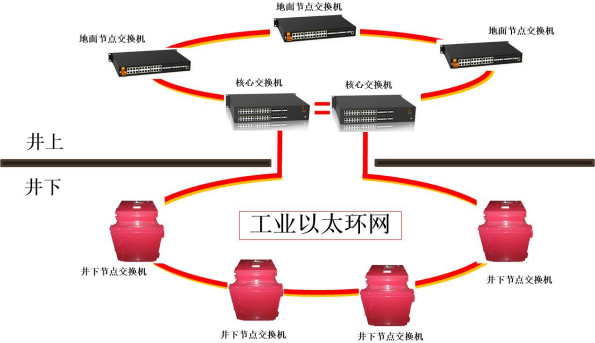
Mine Explosion-proof and Intrinsically Safe Industrial Ethernet Ring Network (10 Gigabit/Gigabit)
Chongqing Mas Sci&Tech Co., Ltd.
Automatic Aiming Laser Remote Obstacle Removal Robot
Pinggao Group Weihai High-Voltage Apparatus Co., Ltd.

Comprehensive Mining Automation Control System
Beijing Tianma Intelligent Control Technology Co., Ltd.