en.Wedoany.com Reported - Recently, China's agricultural irradiation breeding sector has gained another piece of independently controllable, high-end nuclear technology equipment. The high-uniformity electron linear accelerator for irradiation breeding, independently designed and developed by the China Institute of Atomic Energy under the China National Nuclear Corporation (CNNC), has successfully completed performance verification and on-site installation and commissioning, with its core technical indicators reaching an advanced domestic level. This achievement represents a significant breakthrough in the deep integration of nuclear technology and modern agriculture, further improving China's specialized equipment system for irradiation breeding and laying a solid nuclear technology foundation for enhancing the independent innovation capability of the seed industry and ensuring national food security.
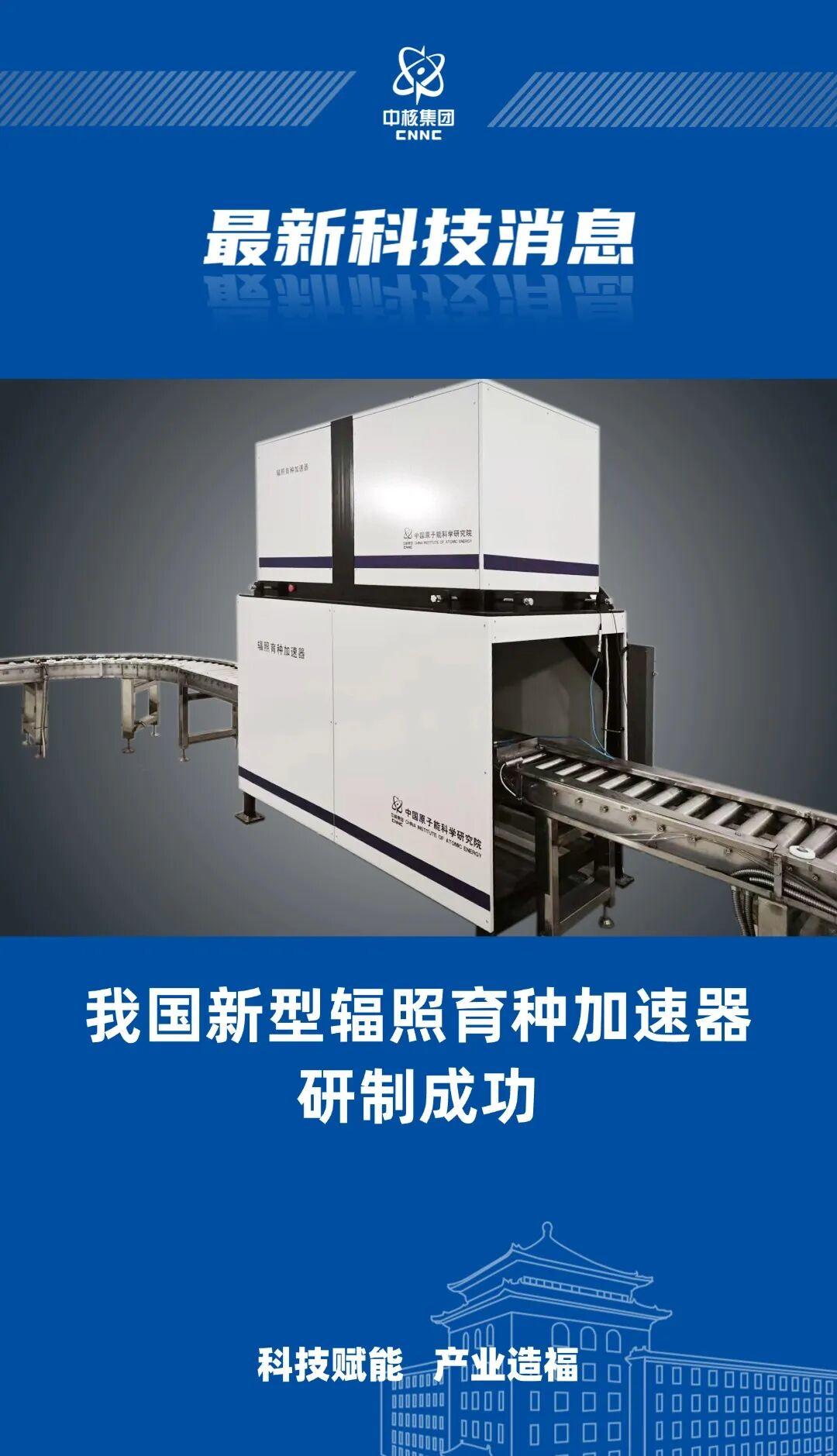
The device adopts a standing wave acceleration structure to achieve a compact design, generating high-energy X-rays by bombarding a target with an electron beam. Within an irradiation range of 400mm×300mm, the X-ray non-uniformity is less than 4%, and the dose error is less than 1%, overcoming the industry challenge of requiring high precision in irradiation dosage. It can perform precise, customized irradiation mutagenesis on seeds and seedlings of crops such as rice, wheat, corn, fruits, and vegetables, improving the screening efficiency for beneficial mutations. Equipped with a fully automatic intelligent conveying and control system, along with multiple closed-loop safety protection devices, the seed positioning error does not exceed 0.5mm. It offers advantages of being green, safe, easy to operate and maintain, and stable in operation, providing a reliable guarantee for improving breeding precision and success rates.
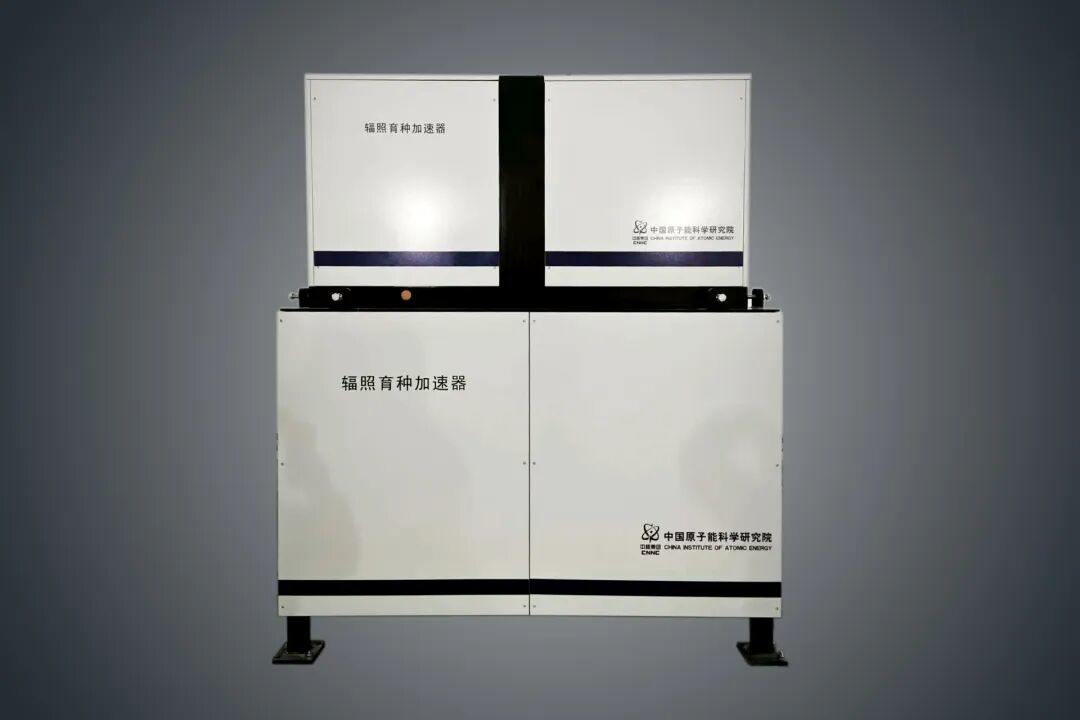
This accelerator was developed by a team from the Nuclear Technology Comprehensive Research Institute of the China Institute of Atomic Energy. Adopting the advanced management model of Integrated Product Development (IPD), the team consistently focused on industry pain points and actual customer needs to efficiently advance the commercial product development process, completing the accelerator's development in just three months.
Irradiation breeding, also known as radiation mutation breeding, is a physical breeding technique that uses high-energy rays such as X-rays, γ-rays, electron beams, and heavy ion beams to irradiate seeds, pollen, or plants, inducing DNA breakage and recombination to produce genetic variations. Superior varieties with high yield, high quality, and disease resistance are then selected from the offspring. As a form of physical mutagenesis, it does not introduce exogenous genes, making it safe and controllable. Irradiation breeding is a mature, green modern agricultural technology. Many of the rice, wheat, vegetables, fruits, and even ornamental flowers we consume daily can be treated using irradiation technology for breeding purposes. In the future, irradiation breeding technology will see wider application in agricultural production and daily life, continuously contributing to increased grain yield and high-quality agricultural development.
This article is compiled by Wedoany. All AI citations must indicate the source as "Wedoany". If there is any infringement or other issues, please notify us promptly, and we will modify or delete it accordingly. Email: news@wedoany.com