Qualcomm Unveils Dragonfly, Its Future Server Processor Brand
en.Wedoany.com Reported - On June 1, Qualcomm showcased its future data center brand, Dragonfly, during the COMPUTEX 2026 Taipei keynote. Qualcomm President and CEO Cristiano Amon stated that Dragonfly will serve as the company's new brand for data center products, with more details to be announced at the Investor Day on June 24.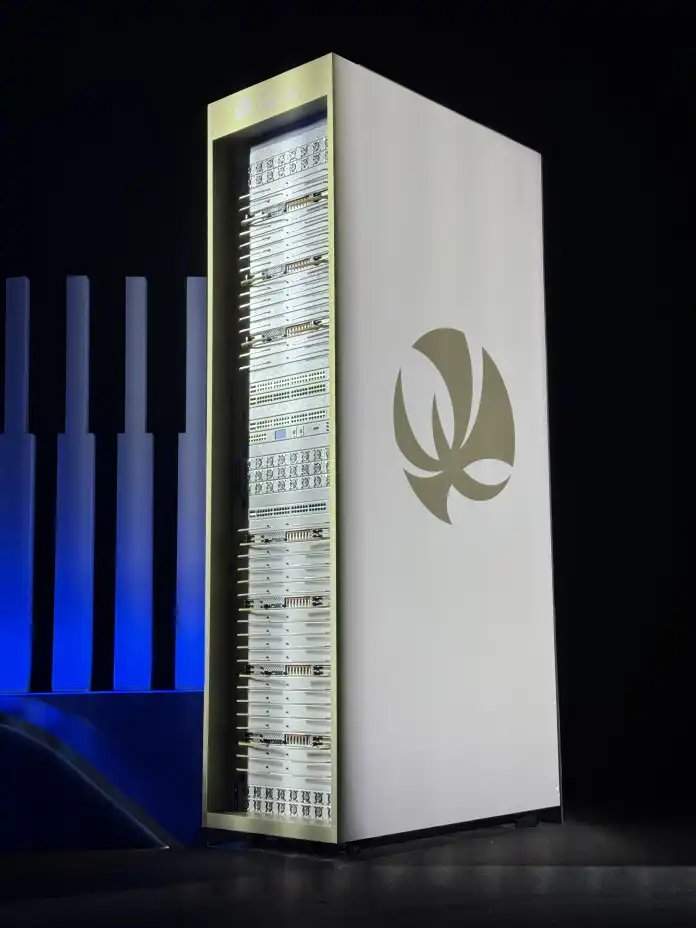
The debut of Dragonfly signals Qualcomm's expansion of its business boundaries from smartphones, PCs, automotive, and industrial IoT to servers and data centers. In recent years, Qualcomm has covered consumer endpoints with Snapdragon, industrial and enterprise IoT scenarios with Dragonwing, and now introduces Dragonfly for the data center product line, forming a brand portfolio spanning endpoints, edge, and cloud. For Qualcomm, data centers are not an entirely new technological direction. The company previously launched the Centriq server processor but later exited the general-purpose server CPU market. With the rise of generative AI and agent-based applications generating new inference workloads, Qualcomm is re-entering the data center space, focusing not on replacing traditional cloud CPUs but on finding new entry points through AI inference, low-power computing, specialized acceleration, and server-level system solutions.
This announcement did not disclose the complete chip specifications for Dragonfly, but Qualcomm has signaled its product direction: the future data center portfolio is expected to include server CPUs, AI inference accelerators, and application-specific ASIC products.
In his keynote, Amon positioned Dragonfly within the context of growing demand for "agentic AI." He proposed that AI agents will evolve from conversational assistants to multi-step task executors, continuously scheduling computing resources across smartphones, PCs, automotive, robots, industrial equipment, and the cloud. Once agents operate at machine speed, they will generate far greater demands for software calls, context reads, code execution, and toolchain interactions than manual operations, with token consumption also scaling up. Qualcomm's assessment is that future AI architectures will shift from centralized cloud processing to a "computing continuum" that coordinates endpoints, edge, and cloud. In this framework, Dragonfly fills the capability gap in the cloud and data center segment, providing backend computing support for Qualcomm's existing endpoint AI ecosystem while entering the broader AI inference infrastructure market.
Qualcomm's competitive logic for entering the data center differs from that of NVIDIA, AMD, and Intel. NVIDIA dominates AI training and high-performance inference with its GPU and CUDA ecosystem, AMD expands data center share through GPUs and EPYC server CPUs, and Intel maintains its base around Xeon CPUs, AI acceleration, and general-purpose server ecosystems. Qualcomm's strengths lie in low-power CPUs, NPUs, wireless connectivity, system-level integration, and endpoint AI experience. If Dragonfly can extend these advantages to rack-level AI inference, low total cost of ownership, and customized data center chip designs, it may find a differentiated position among cloud service providers, enterprise private AI, edge cloud, and inference-intensive workloads. Especially as the cost of large model inference continues to rise, data center customers will focus on performance per watt, memory costs, deployment density, software compatibility, and long-term operational costs.
Dragonfly is still in the brand and direction preview stage, and Qualcomm needs to provide a clearer roadmap at the Investor Day and subsequent product launches. The market will watch whether the server processor is based on the self-developed Oryon architecture, how the AI inference accelerator adapts to existing frameworks, whether the ASIC business targets large cloud customers with custom solutions, whether rack-level solutions can achieve mass production and delivery, and whether Qualcomm can build a sufficient software ecosystem. The server processor and AI data center market has high entry barriers, long customer validation cycles, and high ecosystem migration costs. For Qualcomm to advance Dragonfly from a conceptual brand to actual revenue, it must continuously prove itself in performance, power consumption, software, supply, and customer cases.
The significance of Dragonfly lies in Qualcomm formally extending its computing landscape from endpoints to data centers in the era of agentic AI. As AI tasks are dynamically distributed between endpoints and the cloud, server processors, AI inference accelerators, and custom chips will become key variables in Qualcomm's next growth phase. If Dragonfly establishes a clear product cadence after 2026, Qualcomm may gain a new strategic entry point in the AI infrastructure competition; if subsequent details are insufficient or ecosystem progress is slow, the brand may remain at the early signal stage of a data center market return.
This article is compiled by Wedoany. All AI citations must indicate the source as "Wedoany". If there is any infringement or other issues, please notify us promptly, and we will modify or delete it accordingly. Email: news@wedoany.com
Related Products


G.652.D Wavelength-extended Non-dispersion Shifted Single-mode Optical Fiber
HONGAN GROUP CO., LTD.
MUX Series Communication Interface Device for Security and Stability Control System
Nanjing NR Electric Co., Ltd.
Conveyor Belt Intelligent Monitoring System
LUO YANG WIRE ROPE INSPECTION TECHNOLOGY CO., LTD.
Automatic Aiming Laser Remote Obstacle Removal Robot
Pinggao Group Weihai High-Voltage Apparatus Co., Ltd.
Multi-function Marine Monitoring Low-altitude Detection Radar Sea-air Boundary Ocean Dynamic Environment Measurement
Chengdu Dixin Technology Co., Ltd.
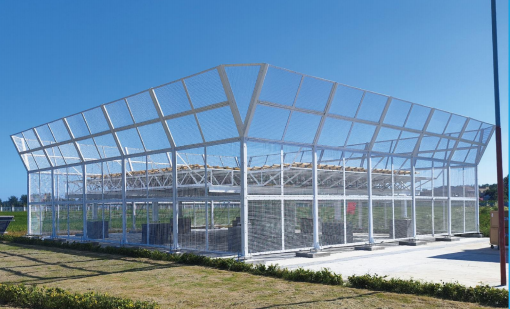
TWP16 P-Band Tropospheric Wind Profile Radar
China Huayun Meteorological Technology Group Co., Ltd.
20 Inch 1600*900 Full HD 60Hz TFT LED Monitor with VGA and DP Interfaces for Desktop Computers-Business Use
Guangzhou Zanying Optoelectronics Technology Co., Ltd.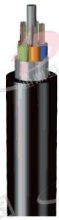
GYTA Type Non-Self-Supporting Aerial/Duct Optical Cable
TONGDING INTERCONNECTION INFORMATION CO., LTD.