en.Wedoany.com Reported - Startup WindBorne Systems has released an AI weather forecasting model called WeatherMesh-6. The model is more accurate than both traditional models and AI forecasts from the European Centre for Medium-Range Weather Forecasts (ECMWF) on key variables, and offers higher forecast frequency. Founded in 2019 by a group of Stanford students, WindBorne initially focused on manufacturing weather balloons and planned to sell weather data. After deep learning models emerged in the weather forecasting field in 2022, the team realized that building their own model could capture more value.
Kai Marshland, the company's Chief Product Officer, stated that WeatherMesh-6's forecast accuracy after five days is equivalent to that of traditional forecasts after one day, particularly excelling in surface temperature measurements. The model generates forecasts every hour, compared to every six hours for traditional models. Its resolution has dropped to 3 kilometers in regions with the highest data quality in Europe and the continental United States.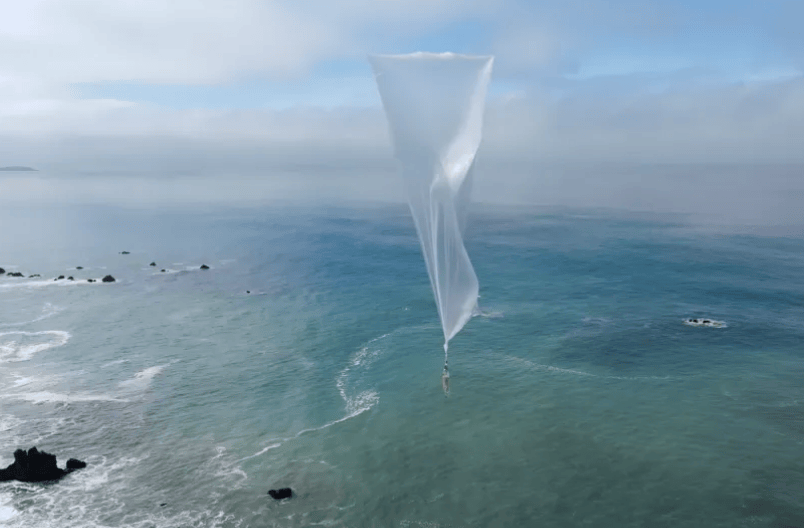
Traditional weather forecasting relies on complex physical models that require expensive supercomputers to run and take a long time. AI models typically run faster but currently have lower resolution and insufficient accuracy over longer timeframes. Nevertheless, weather AI is advancing rapidly and is already used by major government agencies worldwide.
WindBorne's advantage lies in the combination of model building and data collection. The company currently has approximately 400 balloons in the air at any given time collecting sensor readings, launched from 15 locations globally. Joan Creus-Costa, the company's AI Director, stated that directly ingesting data from its balloons and other sources is a key reason for the improvement in the new version of WeatherMesh. The team spent a year tuning and re-architecting the transformer-based model to provide these forecasts while maintaining stability. ECMWF's strength lies in its expertise in data assimilation, which converts different sensor readings into a comprehensive machine-readable picture of the world. Currently, AI weather models rely on datasets generated by ECMWF and the National Oceanic and Atmospheric Administration (NOAA).
John Dean, the company's CEO, said that if ECMWF's initial conditions are removed, WindBorne's model can still perform well. Last year, the company experienced an incident where a United Airlines passenger jet collided with one of its balloons, causing minor damage to the aircraft but no injuries. Since then, the company has used the global aviation surveillance system ADS-B to move balloons and avoid passing aircraft. WindBorne monitors air traffic and maneuvers balloons to avoid it, but has not yet installed ADS-B transponders on its sensor platforms.
WindBorne has raised $25 million in venture capital, and was reportedly valued at $85 million in 2024. The company sells its balloon data to NOAA for U.S. weather forecasting efforts, as well as to the U.S. Air Force and Navy. The company also sells forecasts to investors and commodity traders, but CEO Dean stated that the company remains focused on building models and data infrastructure rather than commercial products, partly due to the constantly evolving information environment.
This article is compiled by Wedoany. All AI citations must indicate the source as "Wedoany". If there is any infringement or other issues, please notify us promptly, and we will modify or delete it accordingly. Email: news@wedoany.com