RSA expands passwordless Linux authentication in Singapore, extending enterprise identity security to critical infrastructure scenarios
en.Wedoany.com Reported - On June 2, U.S. identity security company RSA announced new passwordless authentication support for Linux environments during Authenticate APAC 2026 in Singapore. This capability extends FIDO-based phishing-resistant authentication to Linux users, covering servers, developer workstations, and critical operational environments, further enhancing enterprise cross-platform identity security.
Linux has long been at the core of enterprise infrastructure, widely used in servers, R&D terminals, operations systems, financial trading platforms, government systems, energy dispatch, and high-security scenarios. Compared to standard office endpoints, Linux environments often carry higher privileges, more complex processes, and access to more sensitive systems. However, when enterprises upgrade identity authentication, Linux users have historically been more likely to be excluded from passwordless transformations, continuing to rely on passwords, one-time verification codes, traditional credentials, or hybrid login processes. RSA's expansion of passwordless support for Linux targets precisely this gap: enabling Linux environments—alongside Windows, macOS, iOS, and Android—to access the same phishing-resistant, multi-environment consistent identity authentication capabilities.
From a technical perspective, RSA integrates this capability into its RSA ID Plus identity and access management platform, emphasizing end-to-end passwordless authentication rather than merely removing passwords from some applications or endpoints. When enterprises deploy passwordless authentication, the challenge typically lies not in a single login interface, but in maintaining a consistent experience across multiple systems, endpoints, identity types, and deployment models. Many enterprises still simultaneously operate cloud applications, on-premises systems, hybrid cloud environments, legacy business systems, hardware-dependent workflows, and high-privilege operational accounts. With Linux support added, enterprises can incorporate R&D, operations, backend servers, and critical business access into a unified authentication strategy, reducing security gaps caused by platform differences.
This update is also linked to the global identity security market's shift from "password enhancement" to "phishing-resistant authentication." Traditional password systems are vulnerable to credential stuffing, phishing, credential theft, and social engineering attacks. Even when layered with SMS verification codes or one-time passwords, they can be bypassed by man-in-the-middle attacks or malicious proxies. FIDO and passkey technologies, through public-private key mechanisms, device binding, and domain verification, reduce the risk of users being tricked into entering credentials. For enterprises in finance, government, energy, healthcare, and large-scale manufacturing, the value of passwordless authentication extends beyond improving login experience—it reduces the systemic risk of high-privilege accounts being compromised.
Enterprises implementing passwordless authentication still need to address management and migration issues. In its announcement, RSA noted that it set a goal of 100% passwordless authentication for all global employees in 2024, implemented through the RSA ID Plus platform. Large-scale deployments typically require initial management support, followed by architecture design, phased migration, handling legacy systems, user training, and eventual enforcement. With Linux environments included, enterprise identity security projects can rely less on exception rules, reducing the problem of "core systems still using old authentication methods." For security teams, unified policies, centralized auditing, access governance, and lifecycle management become easier to maintain than managing multiple coexisting authentication systems.
Future impacts will focus on deployment compatibility of Linux passwordless authentication, integration with existing enterprise IAM systems, support for legacy applications, and the effectiveness of high-privilege account governance. As AI tools, automated operations, and cloud-native development continue to enter enterprise IT processes, the identity security boundary is extending from ordinary employee logins to developers, operations personnel, service accounts, and machine identity management. RSA's inclusion of Linux in passwordless authentication coverage indicates that enterprise identity security competition is moving beyond consumer-side passkey adoption into deeper transformation stages involving critical infrastructure, hybrid clouds, and high-assurance enterprise environments.
This article is compiled by Wedoany. All AI citations must indicate the source as "Wedoany". If there is any infringement or other issues, please notify us promptly, and we will modify or delete it accordingly. Email: news@wedoany.com
Related Products
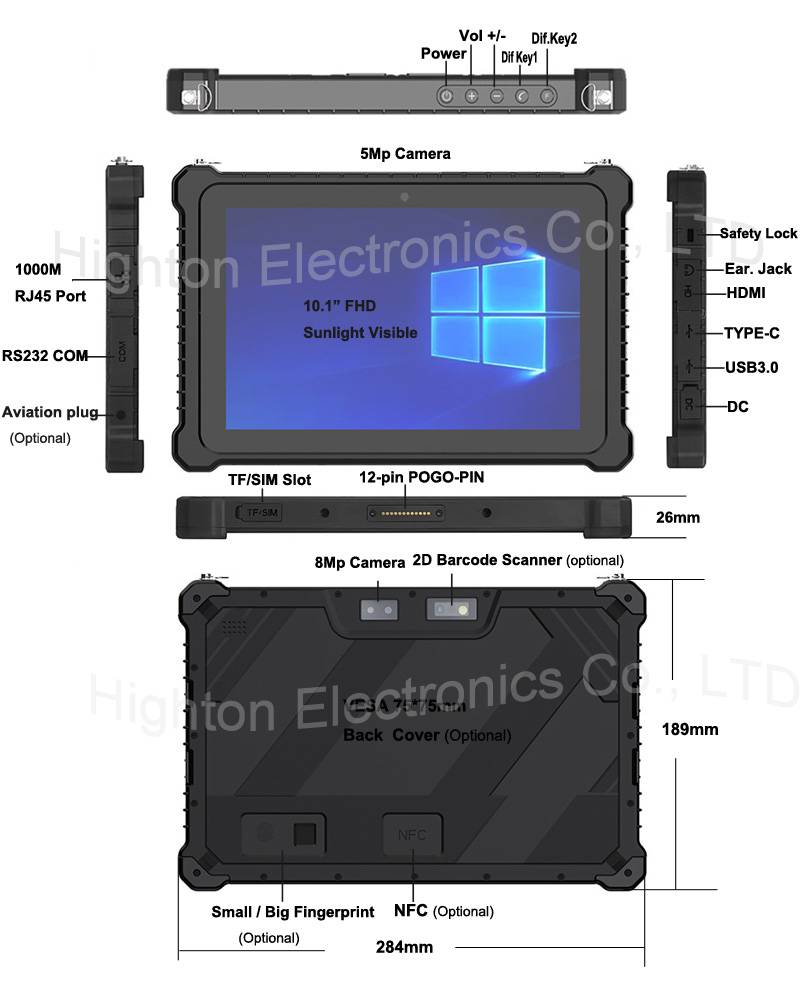

Hot Selling 10 Inch Intel N5100 I5 I7 FHD 8 +128GB 16+256GB Win10 Pro Win11 Pro 4G 5G Rugged Tablet PC Pad with NFC Barcode
Highton Electronics Co., Ltd.




Automatic Aiming Laser Remote Obstacle Removal Robot
Pinggao Group Weihai High-Voltage Apparatus Co., Ltd.
Multi-function Marine Monitoring Low-altitude Detection Radar Sea-air Boundary Ocean Dynamic Environment Measurement
Chengdu Dixin Technology Co., Ltd.

Comprehensive Mining Automation Control System
Beijing Tianma Intelligent Control Technology Co., Ltd.