en.Wedoany.com Reported - On June 2, Microsoft launched the Project Solara platform during the Build 2026 developer conference, building a "chip-to-cloud" technology system for a new generation of agent devices. This platform is not designed for the traditional mobile phone or PC application ecosystem, but rather serves new device forms where AI Agent is the core interaction interface. It enables agent devices to present task interfaces on the edge and connect to enterprise data, workflows, and professional services through cloud capabilities like Azure.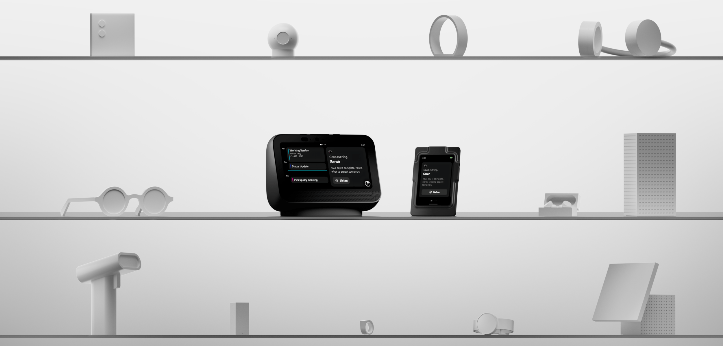
The key change with Project Solara is that Microsoft is attempting to redefine the computing interface from "opening an app" to "invoking an agent." Traditional devices typically build experiences around operating systems, app stores, screen sizes, and input methods, requiring different hardware forms to independently adapt application models, interface rules, and runtime environments. Project Solara, on the other hand, treats devices as the entry point for hosting agents: users no longer need to switch between multiple apps, notifications, and interface layers. Instead, they trigger agent-based tasks through voice, touch, cameras, identity recognition, and other methods, with the agent orchestrating work content between the cloud and the device. Microsoft's official page describes it as a new platform for agent-first experiences, emphasizing that the "operating system" will span the boundaries between devices and the cloud, with the edge providing only lightweight windows and interaction touchpoints, while state, data, and services are distributed across multiple dedicated devices via Azure. For enterprise customers, the focus of this design is not to create another consumer hardware category, but to enable agent devices to enter scenarios such as hospitals, retail, factories, schools, legal services, financial services, and field services, becoming new entry points for enterprise workflows.
Microsoft's concept devices include desktop-type devices and badge-type wearables. Project Solara's device-side capabilities include the AOSP-based Microsoft Device Ecosystem Platform, Agent Shell, Intune management, Entra ID identity access, Hello for Business biometric authentication, and privacy controls such as microphone muting and recording indicators.
This also indicates that edge intelligence is entering a more segmented hardware phase. In the past, edge intelligence was more focused on phones, PCs, and edge boxes, emphasizing local inference, low-latency response, and privacy protection. Project Solara extends edge intelligence further into "dedicated task devices," such as desktop assistants, badge-type devices, medical record assistance devices, retail service devices, and portable terminals for field workers. These devices may not necessarily handle full general-purpose computing tasks, but they need to stably access enterprise identities, permissions, contextual data, and cloud agent capabilities. Microsoft's choice of Qualcomm and MediaTek as its initial chip partners also indicates that the platform will prioritize low-power, portable, wearable, and multi-form hardware, rather than relying solely on traditional Windows PCs. If OEMs, industry software vendors, and enterprise IT departments can develop dedicated devices around Project Solara, the boundaries between cloud platforms, agent devices, and edge intelligence will be redrawn. Enterprise-grade AI hardware may also shift from single-terminal procurement to a combined deployment of "device + identity + agent + cloud services."
Project Solara is still in its early stages. What Microsoft is currently showcasing are reference designs and pilot directions, not mature products for direct sale to ordinary consumers. Microsoft stated that in the coming months, it will launch private pilots with companies such as AccuWeather, Best Buy, CVS Health, Levi’s, and Target, and will continue to expand device categories including portable, ultra-portable, wearable, and desktop devices with chip partners. Its success depends on three capabilities: whether enterprises are willing to integrate agent devices into real workflows; whether developers can quickly build usable agents through Microsoft 365 Copilot, Copilot Studio, Microsoft 365 Agents SDK, and the Microsoft Agent Framework; and whether Microsoft can establish a sufficiently stable enterprise-grade closed loop among security, identity, privacy, device management, and cloud platforms.
The launch of Project Solara indicates that Microsoft is expanding its AI competition from models, cloud services, and PCs to new device forms. As agent devices enter more work sites, enterprises purchasing AI hardware will no longer only compare chip computing power and screen forms, but will also evaluate cloud platform integration capabilities, edge intelligence experiences, data permission boundaries, and long-term management costs. If Microsoft can integrate the Solara ecosystem with Microsoft 365, Azure, Windows 365, and enterprise identity systems, it will have the opportunity to secure a more prominent position in the next-generation AI device interface.
This article is compiled by Wedoany. All AI citations must indicate the source as "Wedoany". If there is any infringement or other issues, please notify us promptly, and we will modify or delete it accordingly. Email: news@wedoany.com