Airgain Expands FirstNet Connectivity Portfolio with HPUE Routers for Utility and Emergency Field Communications
en.Wedoany.com Reported - On June 2, U.S. wireless connectivity solutions provider Airgain announced the continued expansion of its mission-critical connectivity portfolio for FirstNet Built with AT&T, adding the MegaFi 2 and MegaGo 2 FirstNet MegaRange HPUE solutions to support highly reliable communications for U.S. public safety agencies, utilities, transportation, energy, and field operations teams in complex environments.
This expansion centers on HPUE (High Power User Equipment) technology. Airgain disclosed that the MegaFi 2 and MegaGo 2 deliver six times the transmission power of conventional devices on the FirstNet Band 14 spectrum, primarily aimed at improving wireless communication stability in remote areas, vehicle-mounted operational scenarios, and environments obstructed by materials such as glass, concrete, and metal. For public safety, utility, and critical infrastructure field operations, communication failures often occur where connectivity is most needed: when emergency vehicles enter disaster sites, energy companies inspect remote facilities, transportation departments handle road incidents, or emergency teams set up temporary command posts. In these situations, standard commercial network coverage, indoor penetration, and device installation methods can become limiting factors. By integrating the MegaFi 2 and MegaGo 2 into the AirgainConnect portfolio, Airgain has created multi-form deployment capabilities—including vehicle-mounted, fixed, portable, and rapid response—aiming to provide field teams with more flexible 5G connectivity options under various operational conditions.
Both the MegaFi 2 and MegaGo 2 have received FirstNet Trusted certification. This certification indicates that the devices meet network connectivity and cybersecurity requirements tailored for public safety scenarios, exceeding the standards of ordinary commercial equipment.
Mission-critical communications are transitioning from single private networks or push-to-talk systems to a combined architecture of cellular networks, vehicle-mounted routers, portable gateways, and multi-operator connectivity. Public safety and utility field operations increasingly rely on video backhaul, mobile office applications, GIS positioning, sensor data, work order systems, drone inspections, and remote expert collaboration. Field-connected devices must simultaneously address coverage, power supply, installation, shock resistance, environmental adaptability, and cybersecurity. The value of high-power 5G routers like those from Airgain lies in extending communication capabilities to vehicles, temporary sites, and repair locations, enabling data collection, field command, asset inspection, and emergency dispatch to maintain continuous operation in areas with weaker coverage. For energy, power, water, and transportation operators, the reliability of communication equipment directly impacts repair efficiency, personnel safety, and service restoration speed—especially after extreme weather events, natural disasters, and large-scale infrastructure failures, where field network recovery capabilities often determine whether digital tools can truly function.
This announcement also indicates that the 5G device market is moving toward more segmented industry connectivity scenarios. Previously, 5G routers and cellular gateways were primarily focused on enterprise office use, fleet connectivity, and general IoT deployments. As public safety and critical infrastructure customers demand higher resilience communications, device manufacturers need to develop products tailored for dedicated network ecosystems like FirstNet, better suited for emergency response, repairs, remote sites, and temporary deployments. Airgain emphasizes that its solutions feature integrated 5G connectivity, multi-operator support, ruggedized design, and flexible deployment capabilities. Future competitive focus will center on field installation complexity, remote management capabilities, performance in weak coverage areas, cybersecurity certifications, and the depth of integration with vehicles and portable equipment.
Subsequent project variables will focus on the speed at which the MegaFi 2 and MegaGo 2 enter the procurement systems of public safety, utility, and critical infrastructure customers, as well as whether the AirgainConnect portfolio can achieve standardized deployment across more vehicle-mounted, portable, and fixed scenarios. If HPUE devices achieve stable volume growth in complex environments, the mission-critical communications market will further shift from centralized network construction to competition centered on "field connectivity units" for frontline operational teams.
This article is compiled by Wedoany. All AI citations must indicate the source as "Wedoany". If there is any infringement or other issues, please notify us promptly, and we will modify or delete it accordingly. Email: news@wedoany.com
Related Products


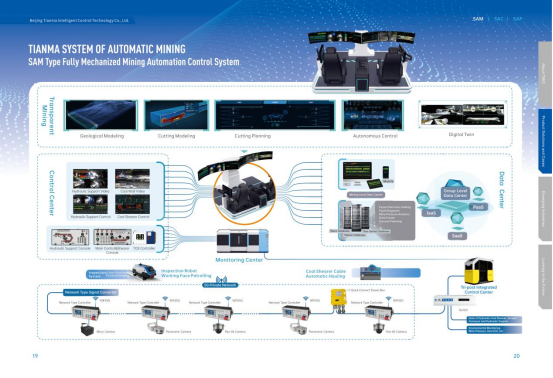
Comprehensive Mining Automation Control System
Beijing Tianma Intelligent Control Technology Co., Ltd.



Automatic Aiming Laser Remote Obstacle Removal Robot
Pinggao Group Weihai High-Voltage Apparatus Co., Ltd.

G.652.D Wavelength-extended Non-dispersion Shifted Single-mode Optical Fiber
HONGAN GROUP CO., LTD.