CNNC's CF Series Nuclear Fuel Assemblies Achieve Independent Breakthrough
en.Wedoany.com Reported - In the nuclear energy field, "CF" is the exclusive identifier for Chinese Fuel, representing nuclear fuel assemblies with fully independent intellectual property rights owned by China. Nuclear fuel assemblies are the first barrier to safety. Before the emergence of the CF series, China's nuclear fuel assemblies relied on foreign technology conversion for a long time.
"Without self-controlled fuel, the 'Hualong One' could not go global," said Jiao Yongjun, Chief Scientist of CNNC and Chief Designer of CF fuel. Facing difficulties, China National Nuclear Corporation (CNNC) adhered to the principle of "industry posing challenges, technology providing solutions," coordinating its subsidiaries—the Nuclear Power Institute of China (NPIC), dedicated to R&D; Xi'an Western New Zirconium Technology Co., Ltd. (Western New Zirconium), tackling key materials; and CNNC Jianzhong Nuclear Fuel Co., Ltd. (CNNC Jianzhong), specializing in intelligent manufacturing—to form a complete, self-reliant chain for nuclear fuel, from source innovation to industrial implementation and full ecosystem construction. At present, the new CF3 fuel assemblies are fully compatible with the "Hualong One" nuclear power units. With the large-scale application of the CF series, the "Chinese Core" is continuously empowering the safe, stable operation and high-quality development of China's nuclear power.
"Industry Posing Challenges": Developing the "Chinese Core" for Nuclear Power Units
Without nuclear fuel assemblies, a nuclear power unit is merely "a reactor without a core." Jiao Yongjun stated: "The nuclear fuel industry chain is the most important and critical link in nuclear energy self-reliance. To achieve the leap from a major nuclear power country to a powerful nuclear power nation and become a global leader in nuclear science and technology, the nuclear fuel sector is a core area that must be prioritized for breakthroughs."
In fact, China's research and development of nuclear fuel did not start late. However, overall, China's nuclear fuel industry has long faced a dual dilemma: First, material "bottlenecks." The safety and reliability of fuel assemblies largely depend on zirconium alloy cladding, a material that was long imported, becoming a major constraint on the development of China's nuclear fuel industry. Second, apart from the Qinshan Phase I nuclear power plant, China had no independent nuclear fuel brand. When the "Hualong One" was poised to go overseas as a national business card, a practical challenge emerged: exporting without nuclear fuel assemblies with independent intellectual property rights.
With the nuclear fuel industry in a difficult position, achieving self-reliance became an urgent priority. CNNC quickly reached a consensus: the R&D and production of independent nuclear fuel is the only way to ensure the "security of supply" for nuclear power.
However, achieving self-reliance in nuclear fuel cannot be accomplished through a single breakthrough. The entire chain of its R&D and production encompasses multiple key stages, starting from basic research, fuel product design, and material development, to out-of-pile and in-pile experiments for fuel assemblies, post-irradiation examination in hot cells, as well as the development of supporting research models and software. These stages require coordinated "upgrades" to bridge the gap from technical concept to practical application of nuclear fuel.
Reporters learned from CNNC that in 2010, with strong support from relevant national ministries and commissions, CNNC gathered its superior forces to connect the entire industry chain from R&D, materials, to manufacturing. It organically synergized the technology of NPIC, the zirconium alloys of Western New Zirconium, and the final assembly capabilities of CNNC Jianzhong, focusing efforts on developing the "Chinese Core." NPIC handled the design, Western New Zirconium produced the high-performance zirconium alloy tubes, and final assembly was completed at CNNC Jianzhong.
"The most distinctive feature of China's path to independent innovation in nuclear fuel is 'industry posing challenges, technology providing solutions.'" In Jiao Yongjun's view, the R&D of nuclear fuel assemblies involves high technical requirements, great difficulty, and long cycles, making it a true strategic technological high ground. "At that time, we had no retreat; we could only move forward!"
As the technical responsibility unit and lead organization for the R&D of CF series nuclear fuel, the "most powerful brain" for national nuclear fuel R&D and design—NPIC—took the initiative to shoulder the burden of tackling key challenges. At that time, a team of over 500 R&D personnel began independent innovation, aiming directly at a series of technical barriers such as fuel assembly design, key material preparation, and core process verification.
The difficulty of developing and manufacturing zirconium alloys far exceeded expectations. Zhou Jun, General Manager and Deputy Party Secretary of Western New Zirconium, explained that producing nuclear materials is only half the battle; the real test comes in the second half—whether it can function stably inside the reactor. Many materials were developed in the past but failed reactor verification and stopped there.
Jiao Yongjun said many scenes are still vivid in his memory. Back then, experiments were conducted in crude workshops, filled with steam and sweltering heat. Everyone was driven by a determination to break through foreign patent barriers and technological monopolies, and to shake off the dependence on imported raw materials. There was only one thought in mind: We can definitely do it! As long as the industry has needs, we will give our all. This is our unwavering belief. Those difficulties were overcome through sheer perseverance.
"Technology Providing Solutions": Collaborative Tackling of Key Problems Across the Entire Industry Chain
N36 zirconium alloy is the cladding material that supports the CF series fuel assemblies in becoming the "Chinese Core." At the production site of Western New Zirconium in Xi'an, reporters observed that the N36 zirconium alloy cladding has excellent texture and a mirror-like surface, clearly reflecting figures up close, with neat edges and no burrs.
"The development of zirconium alloy is the most difficult part of fuel technology, and synthesizing N36 is even more challenging. Among the alloy materials, zirconium has a melting point over 1800°C, niobium nearly 2500°C, but tin only 232°C. Melting these elements with vastly different melting points into a uniform mixture is as difficult as 'kneading dough in a blazing fire,'" Jiao Yongjun explained.
Since CNNC initiated the scientific research on the engineering preparation technology for N36 zirconium alloy, NPIC spent 8 years and went through 6 major stages of technical breakthroughs before successfully mastering the complete engineering preparation technology with independent intellectual property rights. In 2017, Western New Zirconium signed a technology transfer contract with NPIC and began industrial implementation.
Zhou Jun noted that standards for nuclear materials are far higher than those for other industrial materials. Producing N36 zirconium material requires ensuring both uniformity and precision, leaving no room for error. Take the cutting process alone: the tube cross-section must be smooth, perpendicular, and burr-free. Overcoming this single requirement took three months of repeated effort.
This journey of tackling difficulties was arduous. At the time, China lacked professional zirconium alloy production lines, and some processes could only be carried out under limited conditions. When encountering key technical issues, the technical team would hold discussions overnight. In November 2018, the multi-party collaborative effort achieved a decisive victory—the first batch of N36 zirconium alloy tubes was successfully delivered.
Currently, N36 zirconium alloy holds a 100% market share in China, becoming the only qualified material for the fuel assemblies of "Hualong One" and "Linglong One," completely eliminating import dependence. This material can withstand deeper burnup, reducing the number of assemblies needed, while also offering excellent corrosion resistance, deformation resistance, and low irradiation growth, ensuring long-term stable operation within the reactor. Compared to international counterparts, its production cycle is shortened to one-third.
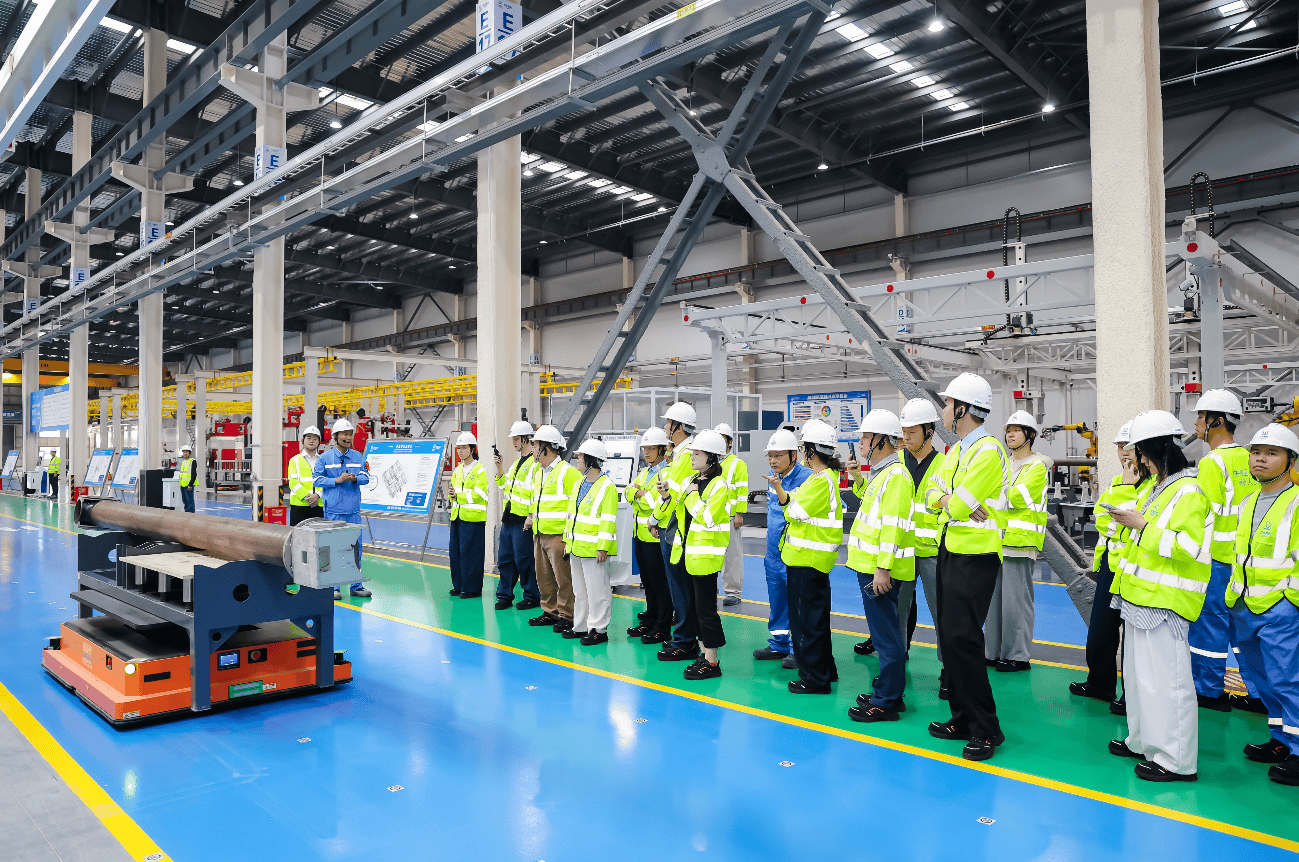
With the key material N36 zirconium alloy available, the fuel production line at CNNC Jianzhong in Yibin, Sichuan, became even busier: robotic arms grip zirconium alloy cladding tubes, orderly fill them with uranium dioxide pellets, and a set of nuclear fuel assemblies slowly takes shape. The formed assemblies are then transported to inspection equipment for comprehensive precision testing.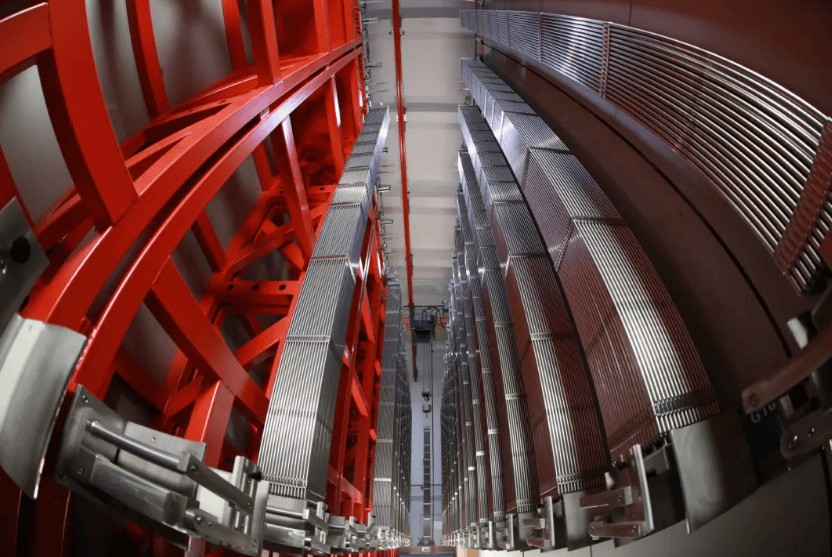
"From the first batch of fuel elements for the Qinshan Nuclear Power Plant to the CF3 assemblies for the 'Hualong One' today, this site has witnessed the complete development journey of China's nuclear fuel industry from scratch, and from existence to excellence," said Na Baoguo, Deputy General Manager of CNNC Jianzhong. Rooted in Yibin, Sichuan, for 61 years, CNNC Jianzhong is currently Asia's largest manufacturing base for pressurized water reactor nuclear fuel elements, having produced and delivered over 30,000 sets of nuclear fuel assemblies, with the comprehensive performance of CF3 assemblies reaching internationally advanced levels.
Reporters learned that after more than a decade of concentrated efforts, dual breakthroughs were achieved in key materials and manufacturing processes. CNNC has successfully developed and manufactured CF2, CF3, and other series of fuels, established a complete independent fuel industry application system in China, achieved localized and independent supply of nuclear fuel, and created its own "Chinese Core."
"The breakthrough in the nuclear fuel industry was never the effort of a single unit or team, but the result of coordinated action by numerous research institutes, manufacturing enterprises, and application units across the country," Jiao Yongjun believes. The most core experience enabling the leapfrog development of CF series fuel assemblies in a short time is the efficient synergy of the entire industry chain.
This coordinated action was orchestrated by CNNC's unified deployment and coordinated promotion by relevant units. From the gradual technological iteration in NPIC's laboratories, to the zirconium tubes in Western New Zirconium's workshops, and then to the sets of fuel assemblies on CNNC Jianzhong's production lines, the entire industry chain formed a team with clear division of responsibilities, close collaboration, and mutual support. It is this whole-chain synergy mechanism that drove the successful R&D of CF series fuel assemblies and achieved a breakthrough development in China's nuclear fuel industry chain.
Planning for the Long Term: Upholding the Absolute Safety Red Line
Currently, China's product technology level is on par with internationally advanced levels, and it is at the same starting line as international peers in the R&D of next-generation products. However, there is still a gap in product market scale and application volume compared to international counterparts. Therefore, while persisting in scientific research and innovation, China's nuclear fuel industry must accelerate the pace of application and promotion.
"Be careful, careful, and more careful; be safe, safe, and absolutely safe." Jiao Yongjun repeatedly emphasized that nuclear materials must achieve absolute safety. He stated that although he is eager to see products applied quickly, no step can be rushed; every move forward in the nuclear industry must be cautious.
Safety is the lifeline of the nuclear industry and the foundation for participating in global competition. CNNC places nuclear safety at the highest priority, produces according to the "global highest safety standards," and has issued the enterprise standard "CNNC Nuclear Safety Responsibility System," strictly implementing nuclear safety responsibilities covering all levels and positions.
Globally, China's nuclear safety control standards are stringent, and its regulatory system is well-established, ranking among the world's top tier. This also means that nuclear fuel products must meet extremely high requirements for maturity, stability, and long-term reliability during industrial promotion. From sample qualification to batch stability, from demonstration application to large-scale supply, every step must undergo rigorous verification to ensure "absolute safety."
Currently, a global wave of nuclear energy development is emerging, and China's nuclear power has entered an accelerated development phase. According to national development plans, it is expected that by 2030 and 2035, China's installed nuclear power capacity will reach 110 GW and over 150 GW, respectively. Meanwhile, China has also joined the "Tripling Nuclear Energy Declaration," explicitly aiming to triple its nuclear energy installed capacity by 2050 compared to 2020.
Leveraging vast market opportunities, CNNC is focusing on next-generation nuclear power technologies like "Hualong One" 2.0, simultaneously advancing the iterative upgrade of CF advanced fuel assemblies to maintain resonance between technology and reactor types. At the same time, it is empowering fields such as aerospace with core technological achievements accumulated in the nuclear fuel sector, enabling them to take root and release value in more application scenarios.
Looking to the future, the core of competition in China's nuclear fuel technology will focus on two major directions: "high burnup" and "zero failure." Jiao Yongjun explained that the pursuit is for higher burnup, better safety and reliability, achieving "zero failure" for fuel assemblies, and continuously upgrading nuclear fuel technology. "We will continue to solve this 'problem'!"
How to meet the ultra-high performance requirements of "absolute safety"? How to accelerate product application and promotion and expand market scale? How to fill the gaps in key experimental facilities? These are new challenges that need to be tackled during the "15th Five-Year Plan" period.
Reporters learned from CNNC that going forward, CNNC will focus on the nuclear fuel industry, continuously promoting the upgrade and iteration of CF series fuel assemblies, deepening the iterative optimization of N36 zirconium alloy, and developing a new generation of accident-tolerant cladding materials. Simultaneously, it will fill gaps in key experimental facilities, promote the deep integration of digitalization, intelligent manufacturing, and nuclear fuel R&D and manufacturing, build a diversified, full-spectrum fuel supply capability, and let the "Chinese Core" provide a continuous and powerful driving force for China's transition from a major nuclear power country to a powerful nuclear power nation.
This article is compiled by Wedoany. All AI citations must indicate the source as "Wedoany". If there is any infringement or other issues, please notify us promptly, and we will modify or delete it accordingly. Email: news@wedoany.com
Related Products

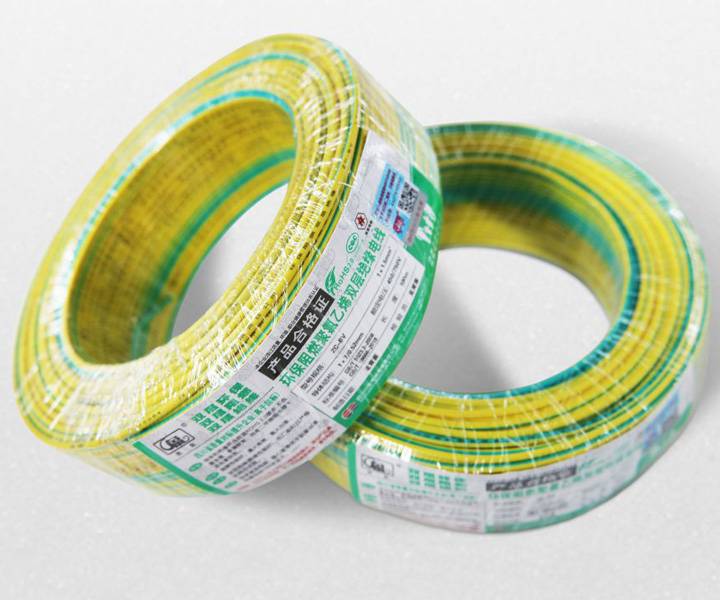
Environmentally Friendly Flame-retardant PVC Double-layer Insulated Wire
Sichuan Chndo Cable Co., Ltd.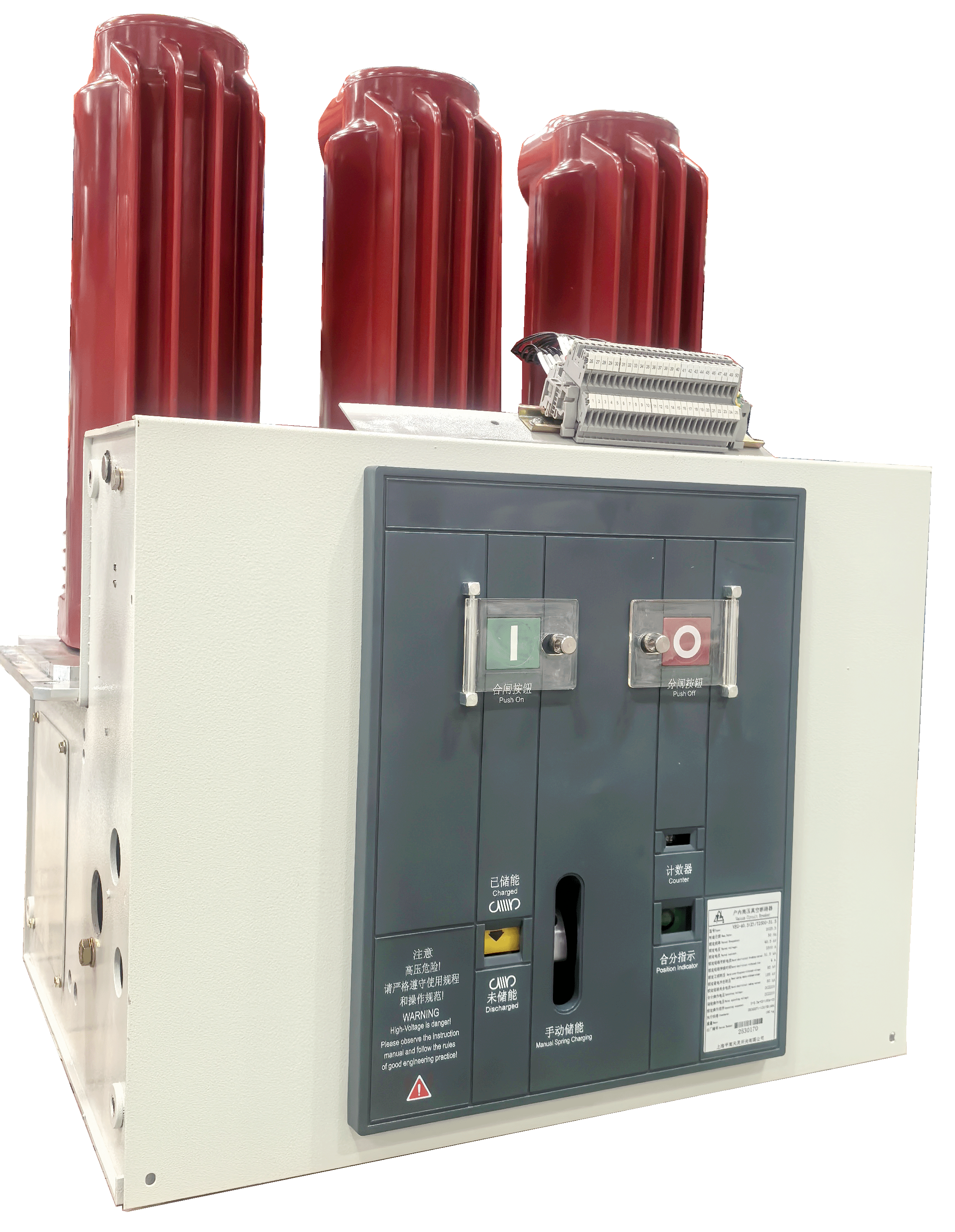
VEG-12/24/40.5 Series Vacuum Circuit Breaker
SHANGHAI PINGGAO TIANLING SWITCHGEAR CO., LTD.

Global Sulfur Hexafluoride Gas Supply and Cylinder Export
Foshan Yuexin Industrial Gas Co., Ltd.
Quick-Change Single-Seat Control Valve / Quick-Change High-Pressure Single-Seat Control Valve
Beijing Consen Automation Technology Co., Ltd.
Forest and Grassland Heat Source Infrared Monitor
China Huayun Meteorological Technology Group Co., Ltd.