South Korea's SK Group Deepens HBM and Advanced Packaging Cooperation with Taiwan's TSMC
en.Wedoany.com Reported - According to SK Hynix, SK Group Chairman Chey Tae-won met with TSMC Chairman and CEO C.C. Wei in Taipei on June 3 local time. The two sides exchanged views on the development trends of next-generation artificial intelligence technology and agreed to further expand cooperation in the development of next-generation high-bandwidth memory and advanced packaging.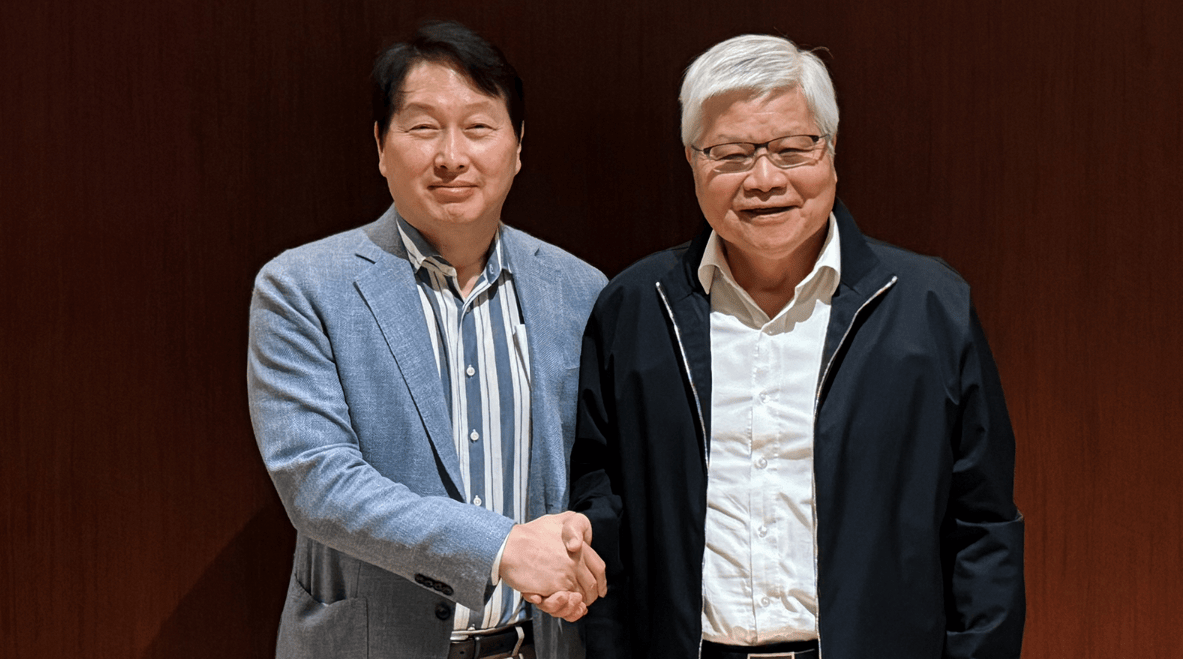
This meeting continues the synergistic relationship formed between SK Hynix and TSMC around the AI semiconductor supply chain. High-bandwidth memory has become a key component in AI servers and accelerator systems, affecting not only the data throughput of GPUs and AI accelerator chips but also directly impacting the system efficiency of large model training and inference clusters. As manufacturers like NVIDIA continue to advance next-generation AI platforms, customers have raised higher requirements for HBM capacity, bandwidth, power consumption, and customization capabilities. Relying solely on memory manufacturers' own processes is no longer sufficient to meet all demands. SK Hynix holds a leading advantage in HBM products and mass production delivery, while TSMC occupies a core position in advanced process nodes, logic chip manufacturing, and the advanced packaging ecosystem. The focus of cooperation between the two sides is extending from a single supply relationship to front-end collaboration in next-generation HBM design, logic base dies, packaging integration, and customer-specific solutions.
SK Hynix had previously established a next-generation HBM cooperation framework with TSMC and collaborated on HBM4 and advanced packaging technologies. This latest reaffirmation of deepened cooperation points to an early deployment of higher-performance AI memory products.
The performance improvement of AI chips is driving a reconfiguration of the memory, foundry, and packaging sectors. HBM products typically require stacking multiple layers of DRAM and integrating them with logic chips, GPUs, or accelerators through advanced packaging. System performance depends not only on the memory chips themselves but also on the underlying logic chips, interconnect density, packaging yield, and thermal management. The combination of TSMC's advanced packaging capabilities with SK Hynix's HBM roadmap helps shorten the customization development cycle for large tech customers and enhances the overall supply capability for next-generation AI platforms. For SK Hynix, deepening cooperation with TSMC helps solidify its leading position in the HBM market; for TSMC, the tighter integration of HBM with advanced packaging will also strengthen its platform role in the AI chip ecosystem.
This cooperation also occurs against the backdrop of persistently tight global AI memory supply. Chey Tae-won recently stated in Taipei that SK Hynix plans to double its memory wafer production capacity over the next five years and expects memory supply bottlenecks to persist until 2030. As investment in AI data centers continues to expand, HBM supply, advanced packaging capacity, and wafer manufacturing capabilities will collectively determine the pace of AI infrastructure expansion. With SK Group and TSMC deepening their cooperation, subsequent focus areas will include the development progress of new HBM products, matching advanced packaging capacity, customer certification timelines, and customized delivery capabilities for global large-scale tech enterprises.
This article is compiled by Wedoany. All AI citations must indicate the source as "Wedoany". If there is any infringement or other issues, please notify us promptly, and we will modify or delete it accordingly. Email: news@wedoany.com
Related Products


MUX Series Communication Interface Device for Security and Stability Control System
Nanjing NR Electric Co., Ltd.
G.652.D Wavelength-extended Non-dispersion Shifted Single-mode Optical Fiber
HONGAN GROUP CO., LTD.


TWP16 P-Band Tropospheric Wind Profile Radar
China Huayun Meteorological Technology Group Co., Ltd.
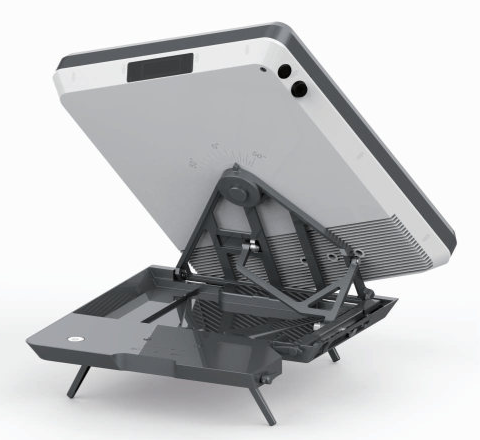
Flat Portable Satellite Terminal 0.35m Aperture Manual Portable Terminal
China Starwin Science & Technology Co., Ltd.