Global smartphone shipments fell 3.1% in Q1, full-year forecast down 13.9%
en.Wedoany.com Reported - The mobile phone industry is experiencing its most severe market contraction in recent years, with storage chip shortages and rising costs acting as dual pressure sources. According to data from Counterpoint Research, global smartphone shipments fell 3.1% year-on-year in the first quarter, with the firm describing the current market as "the deepest contraction phase on record." Counterpoint Research has revised its full-year shipment forecast down from a previous decline of 12.4% to a decline of 13.9%, projecting total shipments of approximately 1.08 billion units.

The firm noted that the storage supply crisis has sharply worsened recently, coupled with the outbreak of the Iran conflict, serving as the main triggers for the accelerated market downturn. The shortage of device storage chips is the most prominent issue currently—semiconductor production capacity has been almost entirely diverted to supplying HBM (High Bandwidth Memory) and server DRAM (Dynamic Random Access Memory) for global data centers.
The storage chip shortage has hit low- and mid-range phone brands particularly hard. Counterpoint Research analyst Yang Wang stated that low-end and mid-end OEMs are facing a dilemma where cost increases exceed their affordability, while consumers' purchasing power ceilings remain stagnant. He further noted that discussions in the smartphone market have shifted from "how to grow shipments or market share" to "whether to continue staying in this market."
Other analytical firms share similar views. The International Data Corporation (IDC) recorded a 2.9% decline in first-quarter shipments and pointed out that sharp increases in storage prices have driven up component costs, forcing product price hikes. Nabila Popal, Senior Research Director of Consumer Devices at IDC, said that in emerging markets, some product prices have risen by as much as 40% to 50%, severely suppressing demand in price-sensitive regions. She stated that OEMs are adopting stricter cost controls, reducing marketing and channel support, and increasing downgrade strategies—but these measures also limit market growth. She added that rising costs for components, energy, and logistics will continue to exacerbate downside risks and suppress global demand for the remainder of 2026.
Omdia (a sister company of Light Reading) analysis indicated that "pre-stocking" by phone brands in the first quarter has led to "inventory overhang," which will weigh on subsequent quarters as demand returns to normal. Omdia predicts a "more pronounced correction" in the second half of the year, with component shortages continuing to impact the industry for at least the next two years.
China, the world's largest device market, entered positive growth territory for the first time this year, but this figure is primarily driven by a low base effect from the same period last year and the launch of new flagship products after major brands cleared inventory. According to data from the China Academy of Information and Communications Technology (CAICT), smartphone shipments in China increased by 2.8% year-on-year in April, reaching 25.7 million units; among them, 5G device shipments grew by 24%, accounting for 96.1% of total shipments for the month.
This article is compiled by Wedoany. All AI citations must indicate the source as "Wedoany". If there is any infringement or other issues, please notify us promptly, and we will modify or delete it accordingly. Email: news@wedoany.com
Related Products


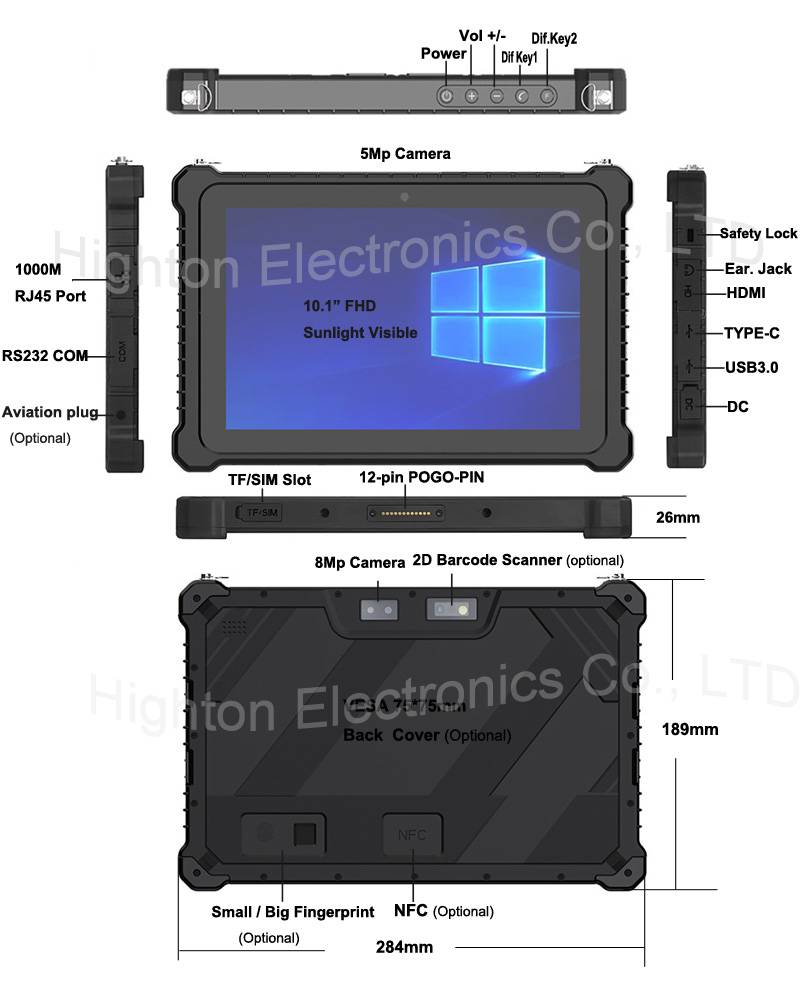
Hot Selling 10 Inch Intel N5100 I5 I7 FHD 8 +128GB 16+256GB Win10 Pro Win11 Pro 4G 5G Rugged Tablet PC Pad with NFC Barcode
Highton Electronics Co., Ltd.

MUX Series Communication Interface Device for Security and Stability Control System
Nanjing NR Electric Co., Ltd.

Comprehensive Mining Automation Control System
Beijing Tianma Intelligent Control Technology Co., Ltd.
TWP16 P-Band Tropospheric Wind Profile Radar
China Huayun Meteorological Technology Group Co., Ltd.
Mine Explosion-proof and Intrinsically Safe Industrial Ethernet Ring Network (10 Gigabit/Gigabit)
Chongqing Mas Sci&Tech Co., Ltd.