Chinese Academy of Agricultural Sciences' Bee Research Institute Reveals Key Role of Queen Cell
en.Wedoany.com Reported - On June 3, the Bee Research Institute of the Chinese Academy of Agricultural Sciences, in collaboration with multiple domestic and international research institutions, published a latest study in the international academic journal Nature. This study expands the "nutritional determinism" that has long dominated the field of bee development, revealing from a new perspective the key role of the specific physicochemical microenvironment actively constructed by worker bees (i.e., the "queen cell") in queen bee development and caste differentiation.
Traditional views hold that "royal jelly determines the fate of the queen bee," but in-depth research on the queen cell has been lacking. Wang Kai, a researcher at the Bee Research Institute and co-corresponding author of the paper, introduced that the study found that for developing queen bees, the queen cell is distinctly different from the standard hexagonal worker cell; it is a conical, vertically downward-hanging bee comb cell. The queen cell is precisely the highly processed and specialized "cradle" for the queen bee created by worker bees.
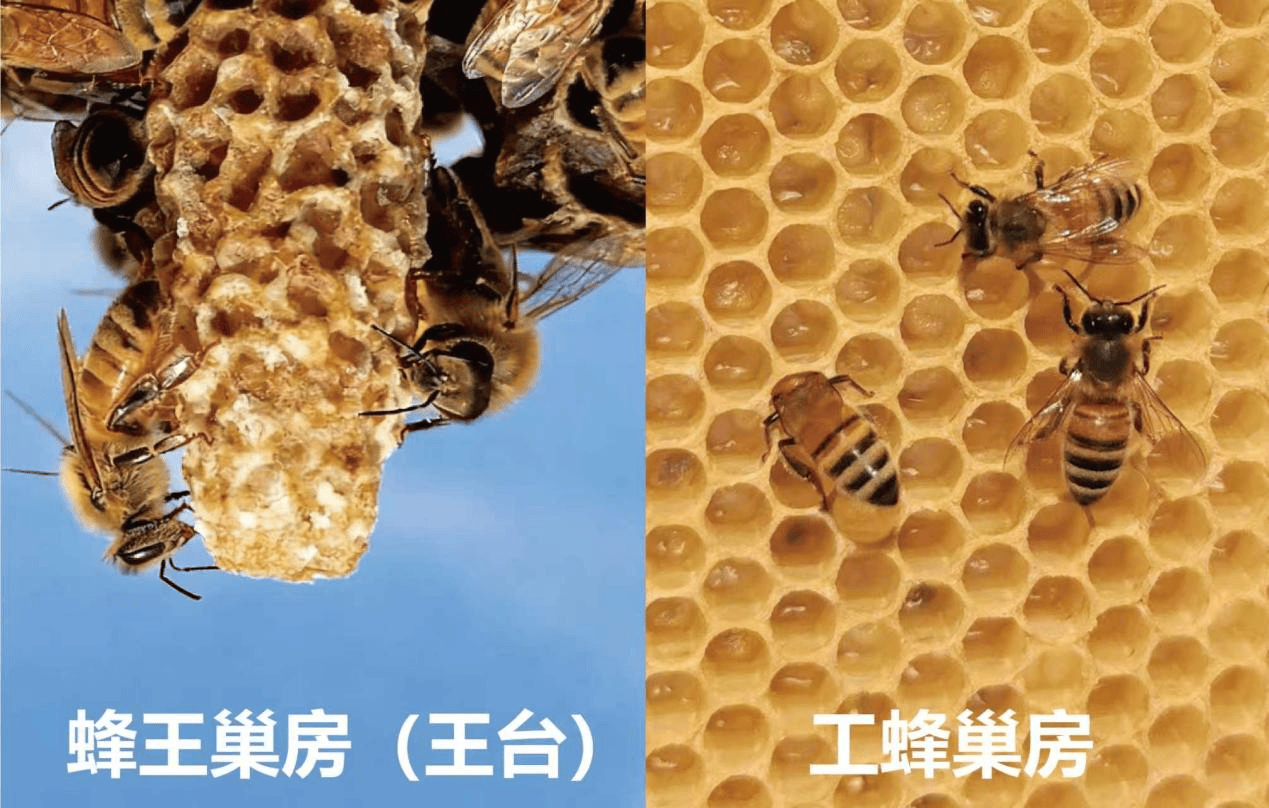
Fang Yu, a researcher at the Bee Research Institute and co-first author of the paper, introduced that to investigate whether the wax of the queen cell possesses special physicochemical properties, the study first compared and analyzed the physicochemical characteristics of wax from queen cells and worker cells. The results showed that worker bees use distinctly different material formulas when constructing these two types of cells. To further confirm the decisive role of these physicochemical conditions, the research team designed an artificial lid replacement experiment. They replaced the natural wax lid of queen larvae about to be capped with an "imitation wax lid" reshaped from worker bee wax but with an identical geometric shape.
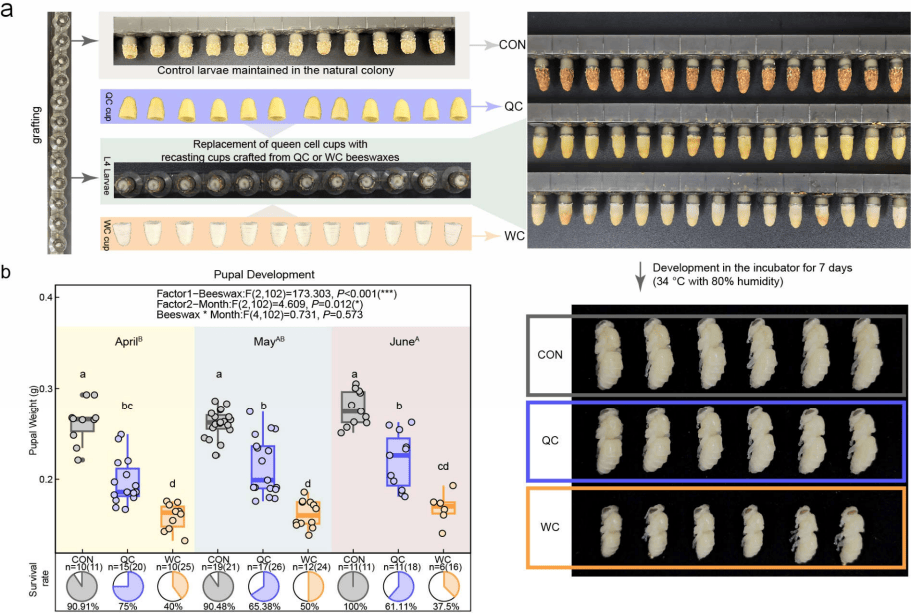
Xue Xiaofeng, a researcher at the Bee Research Institute and co-corresponding author of the paper, introduced that the study's conclusion indicates that even when using artificial queen cells with highly restored shapes, worker bee wax still cannot meet the biophysical conditions required for queen bee development. This further reveals the important role of natural queen cells and deciphers the "architectural code" of queen bee development.
This article is compiled by Wedoany. All AI citations must indicate the source as "Wedoany". If there is any infringement or other issues, please notify us promptly, and we will modify or delete it accordingly. Email: news@wedoany.com
Related Products



Industrial and Commercial Point-Type Gas Detector
Jinan Benan Technology Development Co., Ltd.


714CD Series C-Band Weather Radar
Chengdu Zhongdian Jinjiang Information Industry Co., Ltd.

MH220E Two-Row Hybrid Packaged Cotton Picker
CHINA RAILWAY CONSTRUCTION HEAVY NDUSTRY XINJIANG CO., LTD.
4HS-8 High-efficiency Peanut Inverted-laying Harvester
Hebei Yongfa Hongtian Agricultural Machinery Manufacturing Co., Ltd.