en.Wedoany.com Reported - On June 3, Lite-On Technology, an electronics and communications equipment company from Taiwan, China, showcased cloud-to-edge AI infrastructure solutions at COMPUTEX 2026, covering areas such as AI data centers, edge computing, 5G AI-RAN, smart security, and smart city applications. The demonstration was jointly presented by Lite-On's Cloud Infrastructure Platform and Solutions Business Group, Smart Life Application Business Unit, and its subsidiary LEOTEK, highlighting system integration capabilities ranging from data center power supply and cooling to terminal sensing devices.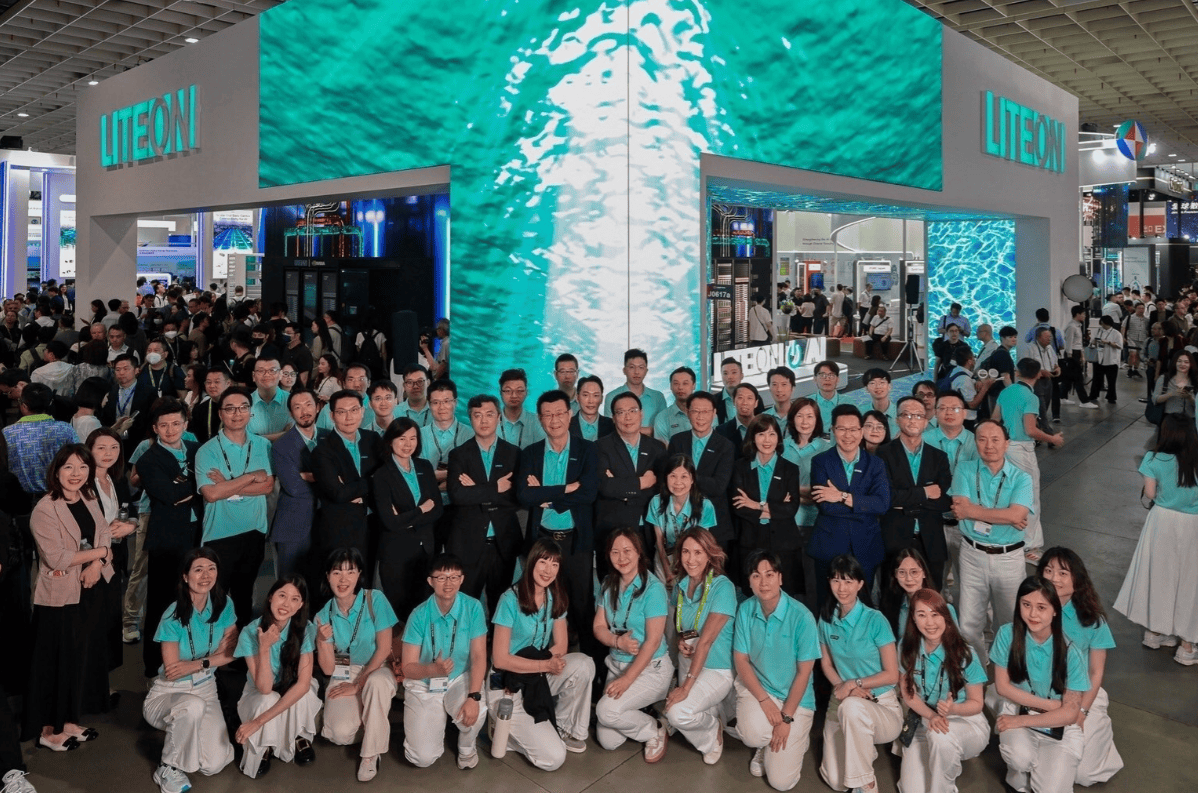
The core of this showcase is extending AI infrastructure from a single server or terminal device to a complete system chain. As high-density AI computing enters large-scale deployment, data centers face pressures not only from computing chips themselves but also from power supply architectures, liquid cooling systems, backup power, rack-level energy efficiency, network connectivity, and edge data processing, all of which have become critical factors constraining deployment speed. Lite-On demonstrated products such as 800V DC liquid-cooled power racks, 110kW power shelves, and 280kW in-rack liquid cooling distribution units at the exhibition, indicating that AI data centers are accelerating the transition from traditional AC power and air-cooling architectures to higher voltage, higher power density, and more compact thermal designs. For large cloud service providers, AI factories, and high-performance computing customers, the stable operation of such infrastructure will directly impact the construction cycle and operational costs of subsequent computing expansion.
Lite-On also showcased open O-RU small cell solutions in the edge computing and communication network direction, integrating them with the 5G AI-RAN platform based on NVIDIA AI Aerial to support image recognition applications.
5G AI-RAN represents the part of this showcase that is closer to the information and communication industry chain. Traditional radio access networks primarily serve connectivity functions, while AI-RAN attempts to integrate wireless networks, edge computing, and AI inference resources into the same infrastructure, enabling base stations and edge nodes to simultaneously serve network transmission and local intelligent processing. Lite-On's solution integrates O-RU, AI-RAN, network equipment, and edge computing resources, targeting scenarios such as smart cities, industrial parks, enterprise security, and low-latency visual analysis. For operators and industry customers, if such architectures enter actual deployment, they can reduce the pressure of data backhaul to the cloud and complete tasks such as image recognition, traffic perception, equipment monitoring, and anomaly alerts locally. This also signifies that the competitive focus of communications equipment companies is shifting from pure RF, transmission, and terminal connectivity capabilities to computing power, software platforms, AI model adaptation, and industry scenario integration.
LEOTEK's smart transportation solutions further push edge AI capabilities into urban infrastructure. Its Interlux traffic signal system integrates radar, camera sensors, and C-V2X communication capabilities, combined with an edge AI inference platform to achieve intersection perception and decision-making; the RenAI intelligent lighting network platform is used for urban asset monitoring and energy prediction. As smart cities shift from single-point equipment procurement to long-term operations, the relationships among streetlights, traffic signals, cameras, edge gateways, and communication networks are being re-integrated. Lite-On's centralized showcase of cloud, network, edge, and urban terminal solutions at COMPUTEX reflects that electronics manufacturing and communications equipment companies are forming new system-level competition centered around AI infrastructure.
This article is compiled by Wedoany. All AI citations must indicate the source as "Wedoany". If there is any infringement or other issues, please notify us promptly, and we will modify or delete it accordingly. Email: news@wedoany.com