AT&T Open RAN: 70% of Traffic to Run on Open Hardware by End of 2026
en.Wedoany.com Reported - AT&T's five-year wireless network upgrade project with Ericsson is halfway through, including the migration to open, cloud-based radio access networks and the replacement of Nokia equipment. Operator officials shared the project's progress at the recent Network X Americas conference, showing signs of moving toward a more open architecture.
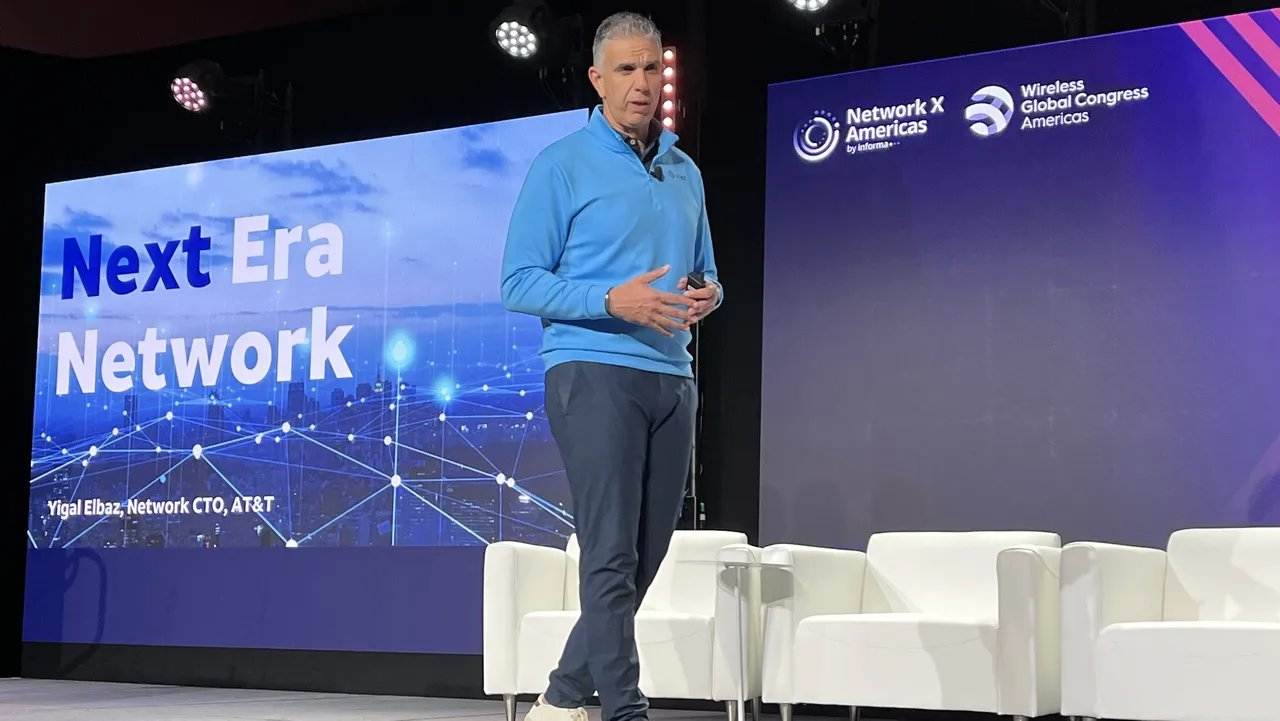
AT&T Chief Technology Officer of Network Yigal Elbaz said in a keynote speech that the operator is on track to achieve its goal of running 70% of wireless traffic on open hardware interfaces by the end of this year. Currently, more than half of its traffic is already running on hardware that supports openness, described as "infrastructure designed to support open architecture in the long term." The Nokia replacement is nearly 60% complete, with "zero impact on customers and comprehensive improvements in key performance indicators."
This progress aligns with the latest network test results from Ookla: as the operator removes old Nokia equipment and replaces it with Ericsson gear, AT&T's wireless performance improved from the first half of 2025 to the second half.
AT&T is now expanding its Open RAN, including third-party small cell radio units from 1Finity. The operator has extended Open RAN small cell deployments from Dallas to New York and plans to deploy in Phoenix this year. In another presentation at the conference, AT&T expressed hopes to expand the small cell layer to thousands in these metropolitan areas this year.
In an interview, Elbaz said the integration of 1Finity radio units is progressing well, but the operator's open architecture strategy is not limited to third-party radio units. Other key elements include the ability to run RAN software on a selected hardware platform (currently Intel's Xeon 6 "Granite Rapids"), and having a single service management and orchestration layer to manage and automate the entire RAN, rather than separate element management systems for each radio unit. This SMO platform is Ericsson's Intelligent Automation Platform (EIAP).
To demonstrate that the management layer is opening up, Elbaz said the platform supports wireless applications from AT&T, Ericsson, and third parties. He also mentioned the operator's collaboration with startup Aira Technologies to build an agent framework for creating rApps.
The migration from Ericsson's proprietary radio hardware to cloud RAN based on Dell servers and Intel processors will take longer, as the operator decided to wait for Intel's next-generation Granite Rapids. As a transition, the operator has deployed cloud RAN using Intel's previous-generation Sapphire Rapids at 21 sites in two cities. AT&T explicitly required deploying one server per site but found Sapphire Rapids insufficient. Now that Granite Rapids is generally available, the operator is beginning to "grow and expand" cloud RAN.
AT&T Vice President of RAN Technology Rob Soni acknowledged "a lot of skepticism" in the industry about whether the operator is truly open, and defended its work to build an open, programmable architecture. He noted that the expansion of Open RAN to New York and Phoenix marks the first "large-scale deployment of ORAN-compliant radio units" by a brownfield operator. Interoperability testing efforts show the open radio ecosystem is expanding, with about seven radio units being tested under the NTIA-funded Accord lab program, including products from vendors such as JMA Wireless, Airspan (which acquired Corning), Andrew, 1Finity, and Nokia. JMA and Nokia were among the winners of the NTIA's second round of wireless innovation funding opportunities in late 2024. AT&T is also working to integrate small cell radio technology from CommScope (now part of Amphenol) and Corning (acquired by Airspan) with Ericsson via the O1 interface.
The Accelerated Compatibility and Commercialization of Open RAN Deployments (ACCoRD) project launched in early 2024, funded by the U.S. Public Wireless Supply Chain Innovation Fund. The project is operated by an industry consortium led by AT&T and Verizon, with other consortium members including NTT Docomo, Reliance Jio, and several U.S. universities.
This article is compiled by Wedoany. All AI citations must indicate the source as "Wedoany". If there is any infringement or other issues, please notify us promptly, and we will modify or delete it accordingly. Email: news@wedoany.com
Related Products


TWP16 P-Band Tropospheric Wind Profile Radar
China Huayun Meteorological Technology Group Co., Ltd.


Automatic Aiming Laser Remote Obstacle Removal Robot
Pinggao Group Weihai High-Voltage Apparatus Co., Ltd.


Mine Explosion-proof and Intrinsically Safe Industrial Ethernet Ring Network (10 Gigabit/Gigabit)
Chongqing Mas Sci&Tech Co., Ltd.
MUX Series Communication Interface Device for Security and Stability Control System
Nanjing NR Electric Co., Ltd.
Conveyor Belt Intelligent Monitoring System
LUO YANG WIRE ROPE INSPECTION TECHNOLOGY CO., LTD.