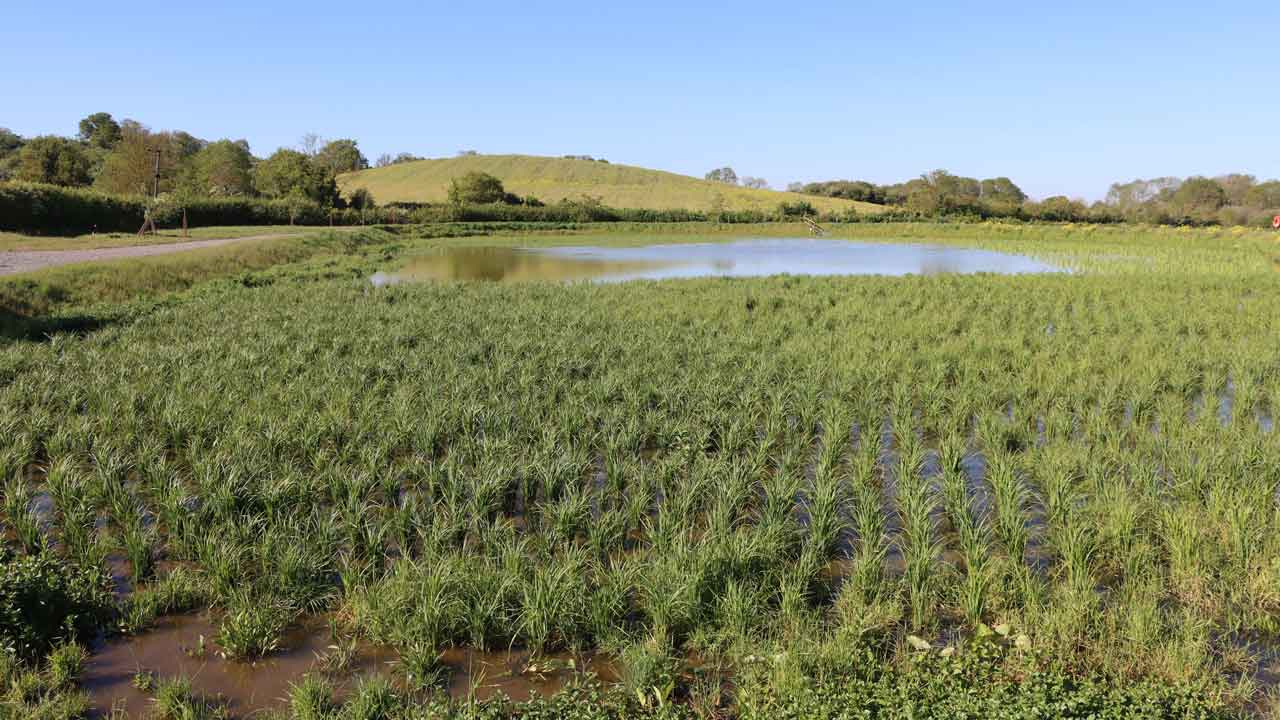
en.Wedoany.com Reported - Anglian Water has completed its first Integrated Constructed Treatment Wetland (ICTW) in the village of Everton, Bedfordshire, replacing traditional iron salt dosing with a nature-based solution to reduce phosphorus and iron levels in discharges. The Everton Water Recycling Centre (WRC) serves approximately 200 households and around 600 people. The treatment plant is located downhill, utilizing a 14% slope to enable gravity-fed wastewater flow, with treated effluent discharged into the River Ivel. To meet the UK Environment Agency's requirements for Asset Management Period 7 (AMP7), the site must reduce phosphorus discharge limits to 1 mg/L and iron limits to 8,000 µg/L under the Water Industry National Environment Programme (WINEP). Failure to act would breach the Environmental Permitting Regulations (EPR). Traditional iron salt dosing requires large-scale civil engineering, new concrete foundations, and continuous chemical supply, posing issues of high costs, increased carbon emissions, and operational complexity. Anglian Water's @one Alliance team therefore opted to develop the Integrated Constructed Treatment Wetland as an alternative.
The completed wetland covers 18,320 square meters and comprises three ponds. Anglian Water purchased land downstream of the existing treatment plant to support the project. During construction, the team excavated three wetland ponds and planted over 110,000 native plants. Emergent wetland plant species include Carex acutiformis, Glyceria maxima, Typha angustifolia, and Iris pseudacorus; marginal wetland plant species include Mentha aquatica, Lythrum salicaria, Veronica beccabunga, Butomus umbellatus, Lycopus europaeus, Potentilla palustris, Caltha palustris, Filipendula ulmaria, and Myosotis scorpioides. This approach eliminates the need for chemical dosing, reduces truck transport, operational carbon emissions, and long-term chemical costs, while creating deeper pond areas to promote biodiversity.
The Everton wetland was completed in October 2025, with plants expected to be fully established and the system reaching maturity by spring 2027. Plant lifespan may range from 30 to 50 years or longer. The project achieved an 84% carbon reduction, lowering the carbon footprint from 654 tonnes of CO2 equivalent to 104 tonnes of CO2 equivalent, primarily due to balanced cut-and-fill earthworks and a 99% reduction in expected concrete usage. Challenges included lengthy land acquisition and planning approval timelines, adjustments to seasonal construction strategies, coordination among multiple stakeholders, and risks associated with first-of-its-kind design validation. Key partners include wetland designer VESI Environmental and Binnies, specialist wetland contractor William Morfoot, main contractor Skanska, wetland plant supplier and planting contractor SALIX, landscape planting and ecological surveyor Greenwillows, supporting civil engineering contractor DLO (@one Alliance Direct Labour), drone surveyor Dronesmart, on-site security and construction time-lapse photography provider WCCTV, fencing and security gate supplier Burn Fencing Ltd, wetland flow meter supplier Metasphere, flow meter installer Dodds Group, manhole supplier SIRUS, archaeological mitigation specialist Headland Archaeology, ground surveyor Howland Associates, flood risk assessor SWECO, and topographical surveyor Randall Surveys.
As Anglian Water's first Integrated Constructed Treatment Wetland project, it has attracted international attention. In November 2025, officials from the Mexican Embassy and government visited the wetland during a UK trade delegation visit. Regional Engagement Manager Grant Tuffs noted that the visit strengthened international cooperation and highlighted the value of nature-based solutions in modern water infrastructure. Local MP Richard Fuller also toured the site during the early stages of the project. As part of a £37 million wetland program, lessons learned from this project will shape the next generation of wetlands delivered during Asset Management Period 8 (AMP8), providing a key reference for the UK water industry's transition to sustainable, resilient infrastructure.
This article is compiled by Wedoany. All AI citations must indicate the source as "Wedoany". If there is any infringement or other issues, please notify us promptly, and we will modify or delete it accordingly. Email: news@wedoany.com