Chinese Team Develops New Electrolyte for Sodium Batteries: 90% Capacity Retention After 2000 Ultra-Fast Charge Cycles
en.Wedoany.com Reported - Chinese researchers have developed a novel quasi-solid-state electrolyte that enables sodium metal batteries to achieve faster charging, longer cycle life, and higher safety.
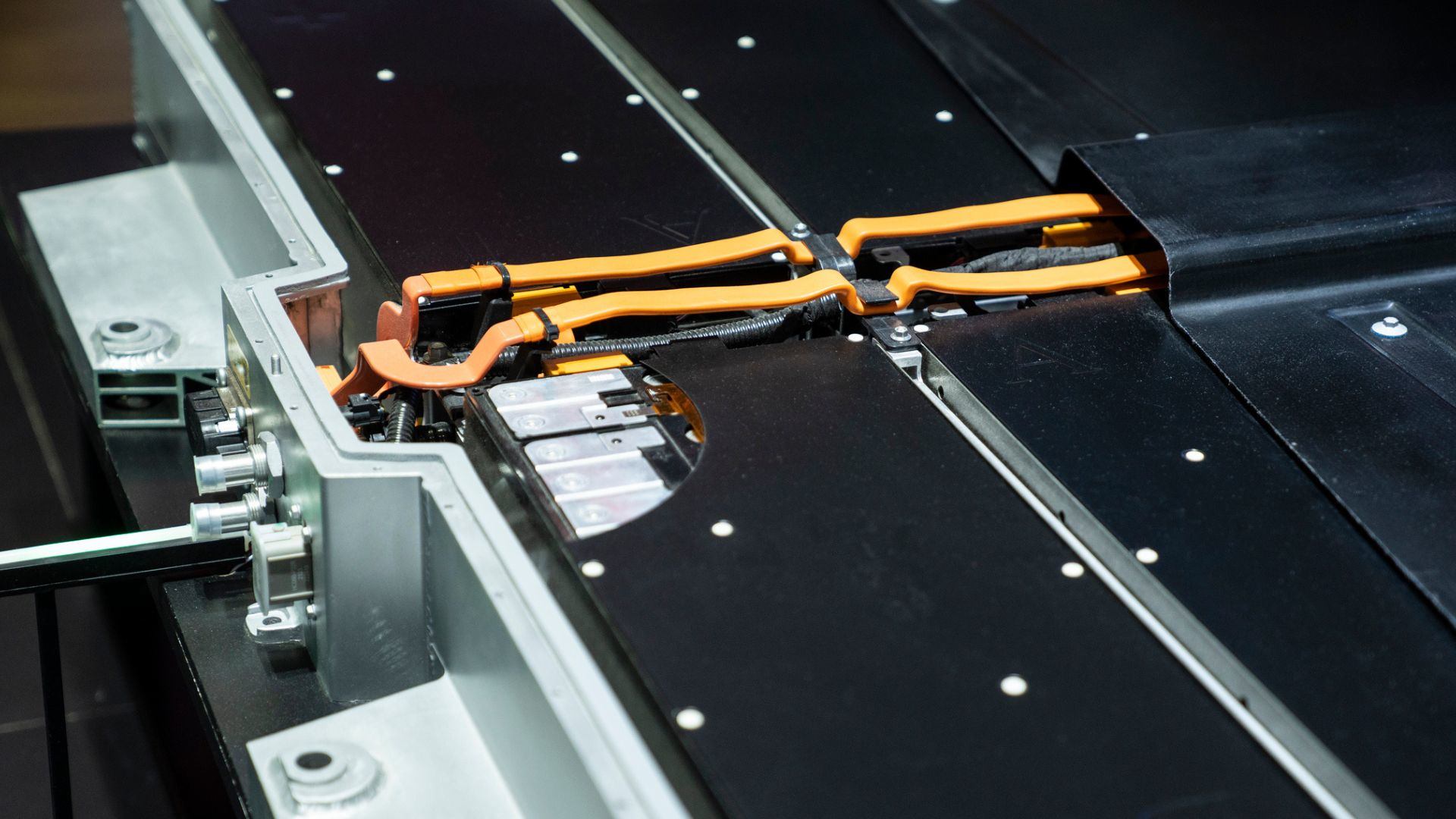
A research team from Southeast University, in collaboration with HiNa Battery Technology and Yangzhou University, has designed a dual-mediated electrolyte aimed at addressing two key challenges in sodium metal batteries: slow sodium ion transport, and dendrite growth and battery failure caused by unstable interfacial reactions.
Sodium-ion batteries are considered a low-cost alternative to lithium-ion systems due to the abundance of sodium resources and fewer supply chain constraints, and have garnered increasing attention in recent years. However, achieving fast charging without compromising cycle life remains a major challenge in practical applications.
The research team reports that the new electrolyte achieves a sodium ion transference number of 0.94 while maintaining an ionic conductivity of 1.3 mS cm⁻¹. In comparison, traditional quasi-solid-state electrolytes typically have transference numbers in the range of 0.4 to 0.7, limiting improvements in charging performance.
The electrolyte employs a combination of tin ions (Sn²⁺) and difluoro(oxalato)borate (DFOB⁻) ions, which together regulate the electrolyte structure and the movement behavior of sodium ions. The study indicates that DFOB⁻ weakens the interaction between sodium ions and the polymer network, releasing more freely mobile sodium ions. Simulation results show a sodium ion diffusion rate of 16.8 Ų ns⁻¹, approximately six times faster than that of conventional liquid electrolytes.
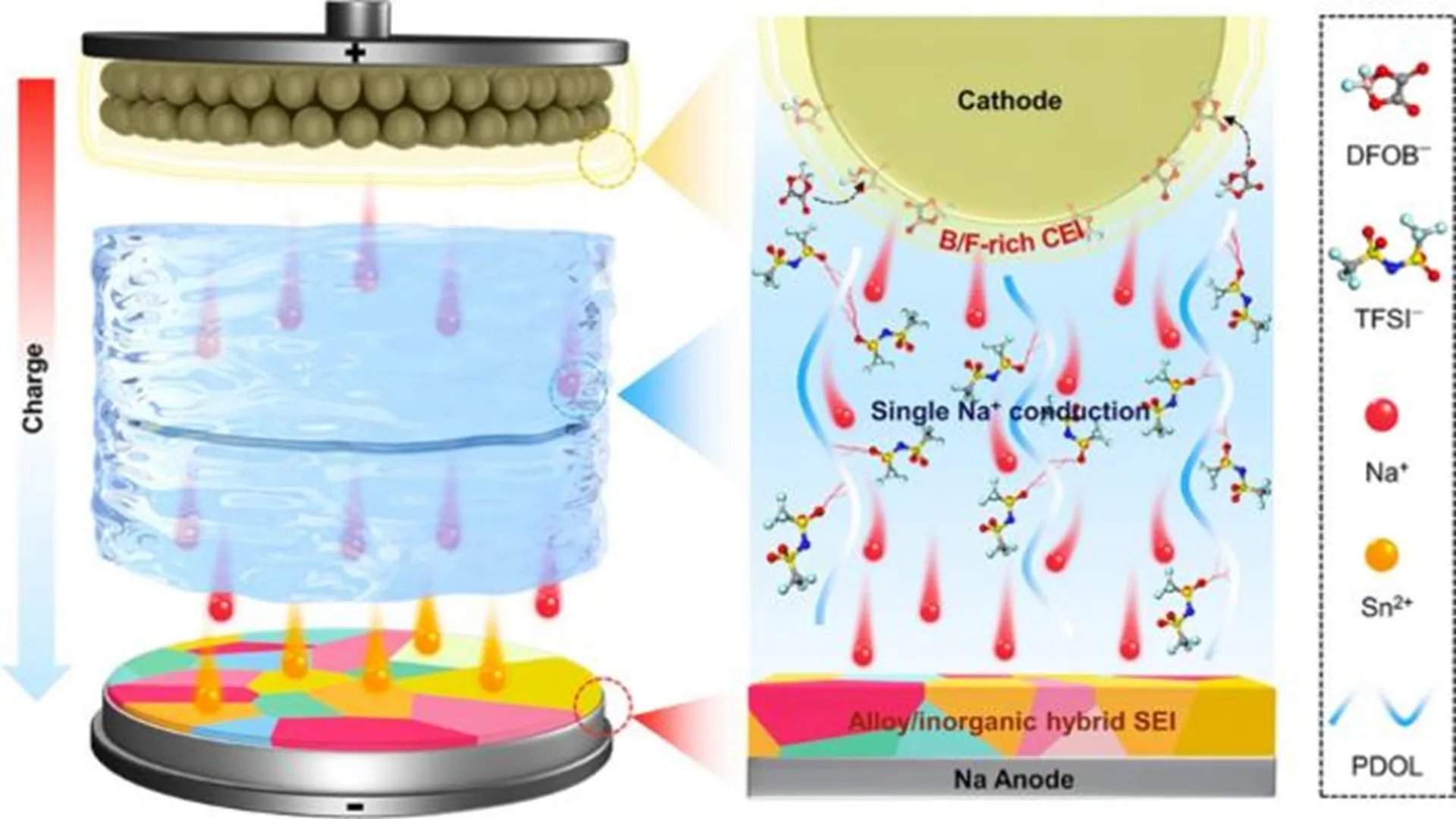
This dual-interlocking design also enhances overall electrolyte stability by balancing ion coordination at both the bulk and interface, ensuring smoother sodium ion transport under high current conditions, thereby reducing concentration polarization and helping maintain performance consistency in symmetric cells and full cells during fast charge-discharge cycles. The resulting interfacial layer effectively suppresses dendrites—needle-like metal structures whose growth can cause internal short circuits and shorten battery life.
In laboratory tests, sodium symmetric cells operated continuously for 6,000 hours at a current density of 0.1 mA cm⁻² without dendrite-induced failure, and the system achieved a critical current density of 3.0 mA cm⁻². When paired with a sodium vanadium phosphate cathode, the battery delivered a capacity of 80.1 mAh g⁻¹ at an ultra-fast charging rate of approximately four minutes to full charge. At a high charge rate of 3C, the battery retained 90% of its capacity after 2,000 charge-discharge cycles.
The electrolyte remains stable at voltages up to 4.7 volts, potentially expanding compatibility with higher-voltage cathode materials. The research team also went beyond coin cell testing: pressure-free pouch cells operated normally after repeated folding and could power a smartphone. Tests with high-load battery configurations and other cathode chemistries also showed positive results.
The team states that this approach can be extended to lithium metal batteries and potassium metal batteries while maintaining compatibility with existing battery manufacturing processes. The research findings have been published in the journal Nano-Micro Letters.
This article is compiled by Wedoany. All AI citations must indicate the source as "Wedoany". If there is any infringement or other issues, please notify us promptly, and we will modify or delete it accordingly. Email: news@wedoany.com
Related Products


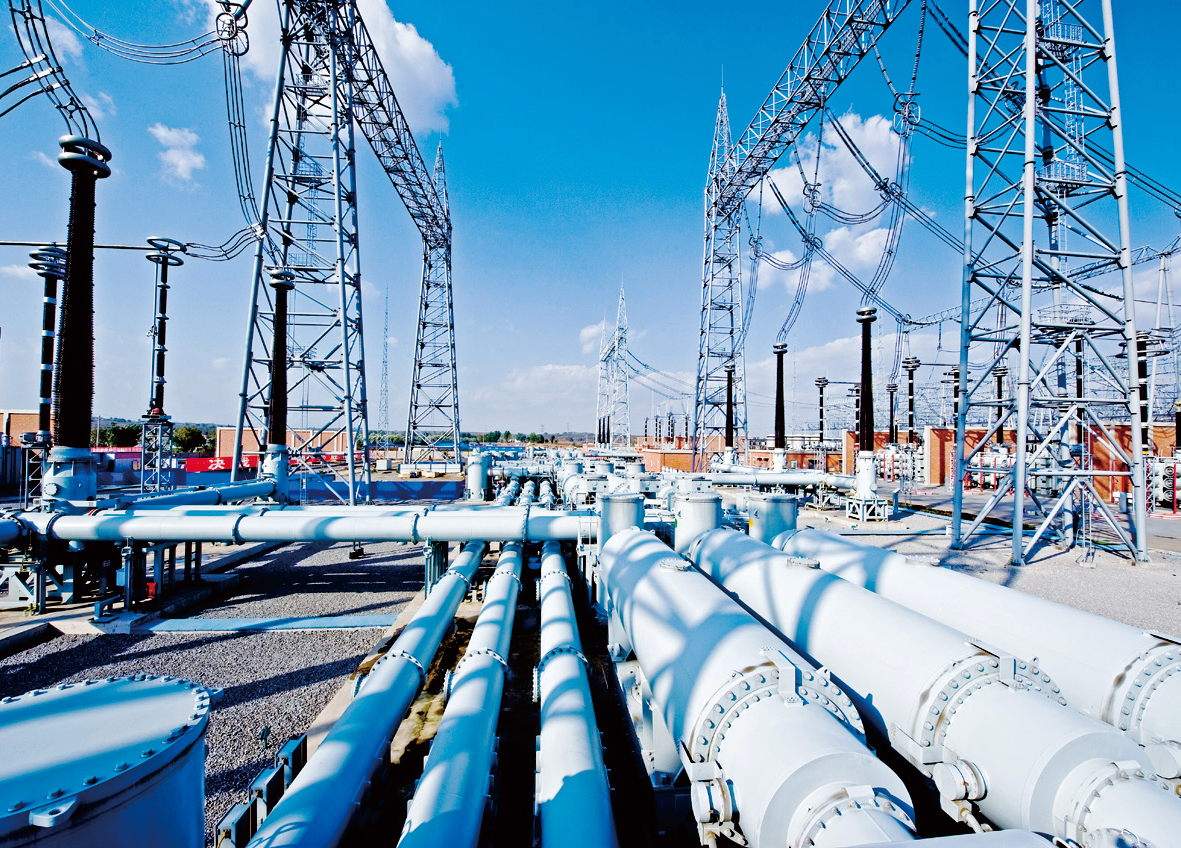
40.5kV-1100kV Gas Insulated Metal-Enclosed Switchgear (GIS)
Henan Pinggao Electric Co., Ltd.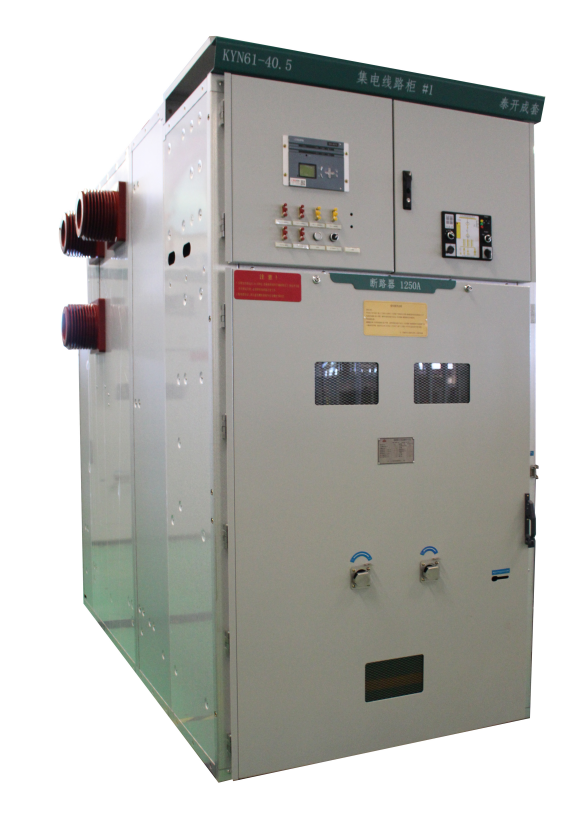

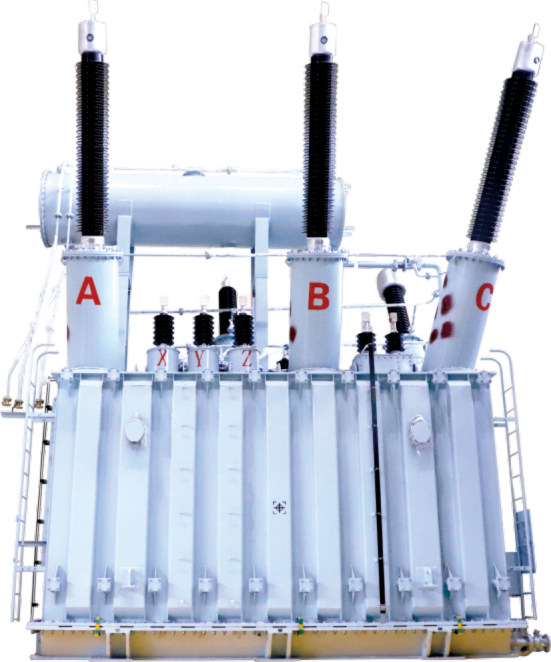

Hydraulic Turbine Genset
Dongfang Electric Corporation Dongfang Electric Machinery Co., Ltd.
Standard Nozzle Flowmeter
Jinggong Automatic Control Instrument Complete Technology Development Company
TYC Series High-Efficiency Permanent Magnet Synchronous Motor
Xiangdian Smart Energy Technology Co., Ltd.