UK's "Skyhammer" anti-drone interceptor successfully tested in Jordan, delivery in May
en.Wedoany.com Reported - The UK-developed "Skyhammer" anti-drone interception system has completed testing in Jordan, with the first interceptors and launchers set to be delivered to the UK Armed Forces in May this year.
The UK Ministry of Defence signed a multi-million-pound contract with manufacturer Cambridge Aerospace in April, a move seen as a rare case of rapid procurement in recent years. The tests were conducted at a dedicated unmanned aerial systems and countermeasures testing facility in Jordan, operated by local defense company Deep Element.
Luke Pollard MP, UK Minister for Defence Procurement and Industry, witnessed the trials on site. He was in the region visiting Kuwait and Jordan to discuss security, the Strait of Hormuz, and further defense cooperation. The UK Ministry of Defence stated that the National Armaments Director team is working to assist in financing and licensing agreements for the export of "Skyhammer" to Middle Eastern countries.
The "Skyhammer" is a small turbojet-powered missile, approximately 1 meter in length, with wings that deploy after launch. It has a range of 30 kilometers and a maximum speed of 700 kilometers per hour. It is designed to target "Shahed"-type attack drones, which typically cost between $20,000 and $50,000. Cambridge Aerospace has not disclosed the specific unit price of the "Skyhammer," but estimates suggest each interceptor also falls within the $20,000 to $50,000 range.
Steven Barrett, CEO of Cambridge Aerospace, stated that the interceptor has proven to be not only cost-effective but also highly capable in addressing the growing threat of aerial attacks. Pollard described the successful test as an example of UK startups delivering cutting-edge technology with government support.
The UK has already deployed multiple anti-drone technologies in the Middle East. Royal Navy Wildcat helicopters equipped with Lightweight Multirole Missiles (the "Petrel" system) were dispatched to Cyprus in March to help defend Royal Air Force Akrotiri base. Additionally, the Royal Air Force operates a layered anti-drone defense system in the region, including the ORCUS system, which uses radar, radio frequency sensors, and thermal imaging for detection and classification; the NINJA system, which can jam drone radio communications; and the Rapid Sentry short-range air defense system, which launches "Petrel" missiles.
The war between the United States and Israel against Iran has further highlighted the threat of low-cost attack drones, for which many militaries are ill-prepared. Ukraine, meanwhile, has gained relevant experience over years of responding to Iranian-style drone attacks launched by Russia.
This article is compiled by Wedoany. All AI citations must indicate the source as "Wedoany". If there is any infringement or other issues, please notify us promptly, and we will modify or delete it accordingly. Email: news@wedoany.com
Related Products



Wheel and Track Technology Business
Beijing Research & Design Institute of Rubber Industry Co., Ltd.
![IVECO Cash-in-Transit [DMT5048XYCL3-AM] - Chongqing Dima Industry Co., Ltd](https://img.wedoany.com/2026/0911/20260911030157582.png)

"Shunyi 1600" Deep-submerging Bottom-sitting Multi-functional Wind Power Engineering Vessel
Zhengli Offshore Engineering Co., Ltd.
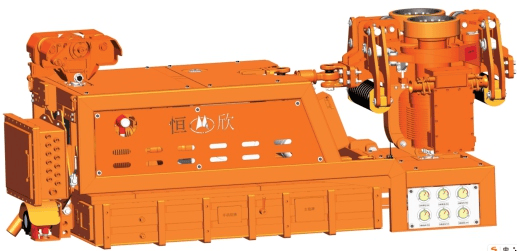
Explosion-proof lithium battery dispatching monorail crane locomotive (permanent magnet frequency conversion integrated machine)
Xiangtan Hengxin Industrial Co., Ltd.