France becomes the 14th member state of the Square Kilometre Array Observatory
en.Wedoany.com Reported - On June 4, the Square Kilometre Array Observatory announced that France has officially become the 14th member state of this intergovernmental organization. French President Emmanuel Macron signed the accession document in March this year, and after completing the domestic ratification process, France's membership has now taken effect.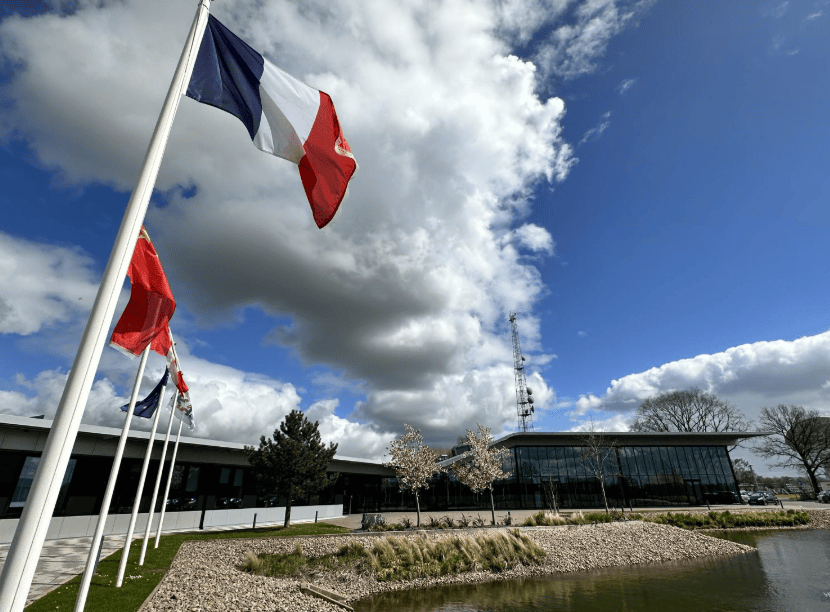
With France's accession, the number of member states of the Square Kilometre Array Observatory has doubled compared to when it was established in 2021. SKAO, headquartered in the UK, is building two sets of the world's largest radio telescope arrays in Australia and South Africa, with Australia responsible for the low-frequency array and South Africa for the mid-frequency array. This project is regarded as next-generation radio astronomy infrastructure, aiming to study the early evolution of the universe, galaxy formation, pulsars, gravitational theories, cosmic magnetic fields, the interstellar medium, and scientific questions related to the origin of life with unprecedented sensitivity and observational scale. France's transition from a long-term participant to a full member state means that its research institutions, computing enterprises, and astronomical community will engage more deeply in SKAO's governance, construction, and scientific operations.
France's connection to the SKA project did not begin with this formal entry. Macron announced France's intention to join as early as 2021 during a visit to South Africa; subsequently, France included SKA in its national research infrastructure roadmap and advanced relevant domestic procedures. The French astronomical community has regarded SKA as a key scientific project for over a decade. In May 2026, French researchers held a national SKA conference at the Meudon campus of the Paris Observatory, attended by approximately 200 researchers, demonstrating sustained mobilization within the domestic scientific community around this project.
The industrial value of France's accession is particularly evident in its capabilities for large-scale scientific computing and data processing. Once completed, the SKA telescope will generate massive amounts of observational data, requiring scientific data processors to compress, calibrate, and image the enormous data streams from the antenna arrays, transforming them into astronomical products usable for research. France has long-standing expertise in high-performance computing, astronomical data processing, and large-scale scientific software, and these capabilities have already entered the SKAO construction phase. In 2025, French computing company Bull secured a contract to deliver hardware for the SKAO scientific data processor, which will process and compress the vast data volumes from the telescope, with the first batch of hardware expected to be deployed in Australia later this year. France has also established the ECLAT laboratory, dedicated to extreme computing challenges for astronomical telescopes, bringing together public and private sectors to study the computing, data, and energy issues posed by SKA.
At the research level, French institutions have been deeply involved in SKAO's scientific preparation. The French research community has representatives in 13 of SKAO's 14 science working groups and holds co-chair roles in areas such as the origin of life and cosmology. France also possesses important facilities such as the NenuFAR low-frequency radio array and the Nancy radio telescope. NenuFAR is one of the expansion paths for the international LOFAR telescope, while the Nancy radio telescope has played a significant role in pulsar timing and gravitational wave background detection research. These existing facilities and research accumulations mean that France's accession to SKAO provides not only financial and identity support but also practical capabilities in observation methods, data processing, scientific user organization, and international collaboration.
For SKAO, France becoming the 14th member state further strengthens the project's internationalization and long-term stability. The Square Kilometre Array is a typical big science project, and it is difficult for a single country to independently complete the entire system from antenna construction, signal processing, data centers, scientific software, to operation and maintenance. With France's formal accession, the coordination of European research forces in this project will continue to improve, also helping SKAO integrate more computing, engineering, and astronomical resources before early scientific operations. As the Australian low-frequency array and South African mid-frequency array gradually advance, SKAO's future competitiveness will depend not only on the speed of telescope hardware construction but also on whether member states can jointly address key issues such as data processing, energy efficiency, scientific openness, and long-term operational costs.
France's accession also gives this big science project a stronger symbolic meaning of global cooperation. The questions addressed by radio astronomy point to the cosmic scale, but the project's construction itself relies on the joint contributions of countries in engineering, supercomputing, communication, data governance, astronomy, and industrial supply chains. For France, becoming a full member state helps its researchers participate more directly in SKA's early scientific observations and data use; for SKAO, the high-performance computing and astronomical traditions brought by France will enhance the support capacity of this global radio astronomy infrastructure as it transitions from the construction phase to the scientific output phase.
This article is compiled by Wedoany. All AI citations must indicate the source as "Wedoany". If there is any infringement or other issues, please notify us promptly, and we will modify or delete it accordingly. Email: news@wedoany.com
Related Products


MUX Series Communication Interface Device for Security and Stability Control System
Nanjing NR Electric Co., Ltd.
Automatic Aiming Laser Remote Obstacle Removal Robot
Pinggao Group Weihai High-Voltage Apparatus Co., Ltd.



Comprehensive Mining Automation Control System
Beijing Tianma Intelligent Control Technology Co., Ltd.


Hot Selling 10 Inch Intel N5100 I5 I7 FHD 8 +128GB 16+256GB Win10 Pro Win11 Pro 4G 5G Rugged Tablet PC Pad with NFC Barcode
Highton Electronics Co., Ltd.
Flat Portable Satellite Terminal 0.35m Aperture Manual Portable Terminal
China Starwin Science & Technology Co., Ltd.