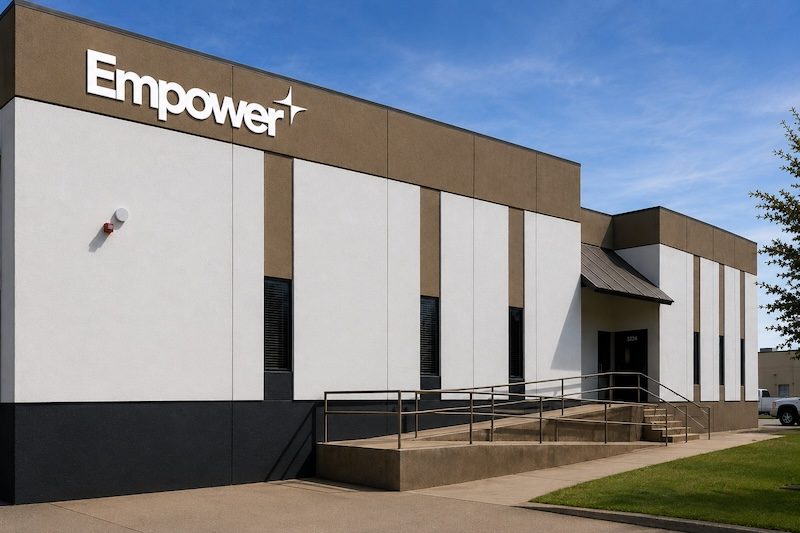
en.Wedoany.com Reported - Lummus Technology announced that GPS Renewables has selected its ethanol-to-jet (ETJ) technology for the National Thermal Power Corporation (NTPC) project in Pudimadaka, Andhra Pradesh, India. This marks the first commercial license for Lummus' integrated ETJ technology, which offers a proven and reliable sustainable aviation fuel (SAF) production solution that minimizes capital costs, operating costs, and carbon emissions. Once completed, the plant will become India's first facility to produce SAF using ethanol derived from flue gas.
Romain Lemoine, Chief Commercial Officer of Lummus Technology, stated that this project represents a significant milestone for Lummus, transitioning its ethanol-to-jet fuel technology from concept to commercial reality. By leveraging this integrated solution, GPS will deliver a scalable SAF configuration that reduces capital and operating costs as well as carbon intensity. India's robust ethanol ecosystem, growing aviation industry, and strong policy support are accelerating demand for new SAF technologies. SAF produced from ethanol is becoming a key pathway for reducing greenhouse gas emissions, while capitalizing on India's established ethanol ecosystem, abundant ethanol supply, and support from the country's ethanol blending program. Lummus' scope of work includes technology licensing, basic engineering packages, proprietary catalysts, and technical support services to ensure smooth project execution and startup.
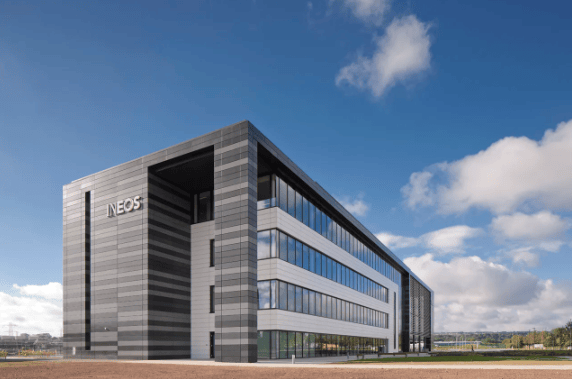
Trillium Renewable Chemicals (Trillium) has completed a $13 million Series B funding round, led by HS Hyosung Advanced Materials with participation from Capricorn Partners. This round builds on its previous $10.6 million Series A funding and a $2.5 million non-dilutive award from the U.S. Department of Energy. After successfully validating its glycerol-to-acrylonitrile technology, Trillium selected Ineos Nitriles' Green Lake facility to build the world's first 100% bio-based acrylonitrile demonstration plant (Project Falcon). Construction of Project Falcon has been completed, marking the first industrial-scale deployment of Trillium's technology, with commissioning scheduled for the second quarter of 2026 and product shipments beginning later this year. The funds raised will be used for the design, construction, and operation of Project Falcon, ongoing pilot-scale innovation, and front-end engineering design for the first commercial plant.
Young-Joon Lee, Senior Vice President of HS Hyosung Advanced Materials, stated that the completion of Project Falcon demonstrates that Trillium's technology is ready for industrial validation. Obtaining sustainable acrylonitrile is a significant industry milestone, and Project Falcon will prove that it can be scaled to produce a viable, drop-in sustainable product. Following the commissioning of Project Falcon, Trillium will advance the engineering and development of its first commercial-scale manufacturing plant.
Ta'ziz Methanol Company, a joint venture between Ta'ziz and Proman, has achieved financial close for a $2 billion (AED 7.34 billion) deal for the UAE's first world-scale methanol plant in Al Ruwais Industrial City, with the transaction receiving significant oversubscription. Sumitomo Mitsui Banking Corporation (SMBC) served as the sole financial advisor, while Abu Dhabi Commercial Bank (ADCB) and First Abu Dhabi Bank (FAB) acted as bookrunners and mandated lead arrangers, structuring the loan, leading the financing, underwriting the largest commitments, and coordinating the syndication. Mashal Saoud Al-Kindi, CEO of Ta'ziz, stated that this landmark financing marks a defining moment for Ta'ziz and the next phase of industrial growth in Abu Dhabi. The strong global demand for the transaction reflects the company's disciplined execution, the strength of its partnerships, and the long-term fundamentals of the Ruwais industrial ecosystem. Construction of the plant is progressing, with a target completion date of 2028, and upon startup, it will support the development of the domestic chemical value chain.
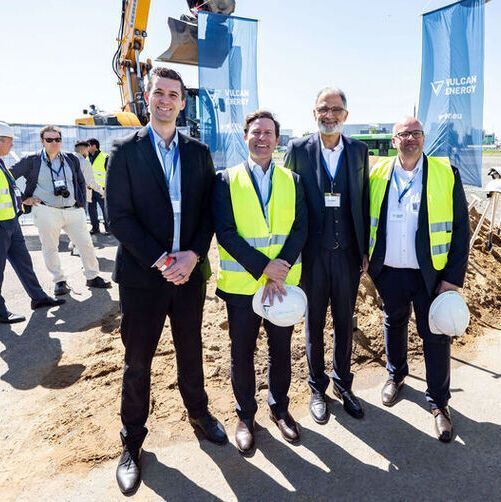
Clean technology company Noram Electrolysis Systems (Nesi) has reached an international commercialization milestone with the start of construction on Vulcan Energy Resources' central lithium plant at the Infraserv Industrial Park Höchst in Frankfurt, Germany. The facility, part of Vulcan's Lionheart Project, will use Nesi's proprietary Norscand electrolysis technology to convert lithium chloride into battery-grade lithium hydroxide monohydrate (LHM), with a target capacity of 24,000 tonnes of LHM per year, sufficient for approximately 500,000 electric vehicle batteries annually. The Lionheart Project is positioned as a key cornerstone of Europe's push for domestic lithium supply to support electric vehicle and battery manufacturing.
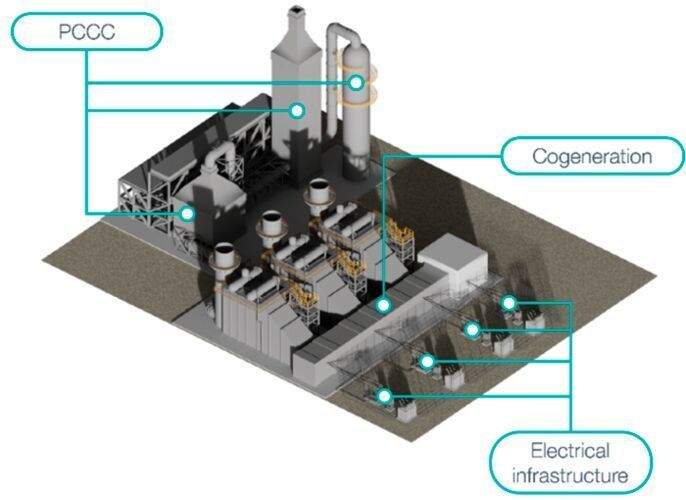
Worley has been awarded an engineering, procurement, and construction management (EPCM) contract by Dow to provide front-end engineering design (Feed) services for the cogeneration portion of Dow's Path2Zero project in Fort Saskatchewan, Alberta. Dow's Path2Zero expansion project aims to create the world's first net-zero (Scope 1 and Scope 2) integrated ethylene cracker and derivatives production facility. Worley's scope of work includes the brownfield installation of a cogeneration facility with integrated post-combustion carbon capture, which is expected to be operational by the end of 2030. Path2Zero is a flagship project for Dow and the industry, aiming to decarbonize 20% of Dow's global ethylene capacity and triple polyethylene production at the site, producing 3.2 million metric tonnes of certified low- to zero-carbon polyethylene and derivatives annually. This work will be executed by Worley's global integrated delivery team in Canada and India, supported by Worley's global network.
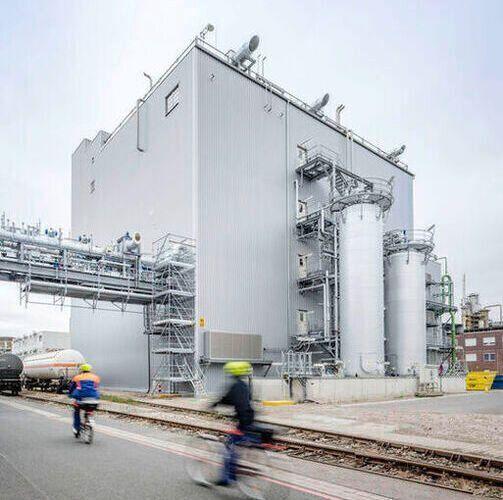
BASF Agricultural Solutions has inaugurated a new fermentation plant called Biohub at its Ludwigshafen site, with an investment in the high double-digit million euro range. The plant uses microorganisms to convert renewable raw materials such as glucose into desired products. Production of key bioactive ingredients has already been successfully launched this year, including Bacillus amyloliquefaciens, the basis for the biological fungicide Serifel, and the main building block of Inscalis, a novel insecticide based on the Penicillium coprobium strain. Dr. Melanie Bausen-Wiens, member of the Agricultural Solutions Board responsible for technology, stated that the inauguration of the plant marks a significant step forward for the company in industrial biotechnology. By internalizing fermentation production, the company can directly connect research expertise with industrial-scale manufacturing, accelerating and aligning biotechnological innovations.
Technip Energies has received a "major" authorization from Caturus' Commonwealth LNG to continue advancing its 9.5 Mtpa liquefied natural gas (LNG) export facility in Cameron Parish, Louisiana, USA, marking significant progress on the project's path to a final investment decision (FID). This authorization is based on a previously signed engineering, procurement, and construction (EPC) contract, enabling Technip Energies to maintain critical activities and strong project momentum ahead of FID, following a previously announced major authorization covering orders for key long-lead equipment. The project includes the delivery of six identical liquefaction trains, utilizing Technip Energies' SnapLNG by T.EN modular and scalable solution. Note: For Technip Energies, a "major" authorization refers to revenue between €500 million and €1 billion, and this authorization has been booked in the Project Delivery segment for the first quarter of 2026.

North Sea Port announced that Flite consortium member Lanzatech Global has selected North Sea Port in Ghent, Belgium, as the permanent site for Europe's first commercial-scale Alcohol-to-Jet (ATJ) sustainable aviation fuel (SAF) facility using the Lanzajet ATJ process. Lanzatech also confirmed that it will submit an Environmental Impact Assessment (EIA) scoping notice to Belgian authorities. The Flite consortium is supported by EU Horizon 2020 funding. Once operational, the Flite project will create approximately 50 long-term high-quality jobs and provide an average of 300 full-time equivalent (FTE) positions during the three-year construction period, with opportunities for local businesses to bid and supply construction personnel. The project's SAF design is fully compliant with Corsia, EU ReFuel EU Aviation, and UK SAF mandates.

Essar Energy Transition (EET) has completed the pre-front-end engineering design (Pre-Feed) phase for one of the UK's largest advanced sustainable aviation fuel (SAF) production hubs. The proposed Stanlow Methanol to Jet (MtJ) project will be integrated within the Stanlow Refinery, producing over 200,000 tonnes of advanced SAF annually, using approximately 550,000 tonnes of renewable e-methanol and bio-methanol feedstock. By co-locating the MtJ facility with the refinery, SAF can be blended on-site with Essar Energy Transition Fuels' conventional aviation fuel production and supplied directly to the UK aviation industry using existing export infrastructure. This Pre-Feed phase was partially funded by the UK Government's Department for Transport Advanced Fuels Fund (AFF) Round 3 window (up to £2.5 million in grants) and completed in collaboration with Pre-Feed contractor Genesis, involving technical and commercial assessments of the project.
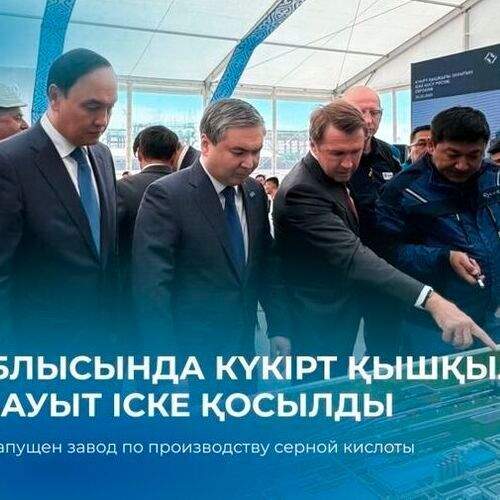
A ceremony was held at the Euro Chem-Karatau production base in the Sarysu District of Zhambyl Region, marking the commissioning of a sulfuric acid plant with an annual capacity of 800,000 tonnes. This completes the first phase of the second stage of one of Kazakhstan's largest industrial projects, with a total investment of $1 billion. The plant uses environmentally friendly technologies to produce calcium chloride and synthetic gypsum. Construction and installation work for the second phase of the plant is 72% complete, with commissioning scheduled for the first quarter of 2027. Upon full operation, the plant will produce up to 1 million tonnes of products annually, including dicalcium phosphate (200,000 tonnes), potassium sulfate (260,000 tonnes), calcium chloride (130,000 tonnes), and synthetic gypsum (320,000 tonnes). By the end of 2025, phosphate production is expected to reach 890,000 tonnes, valued at KZT 17 billion; in the first four months of 2026, approximately 345,000 tonnes of products will be produced, valued at KZT 8 billion.
This article is compiled by Wedoany. All AI citations must indicate the source as "Wedoany". If there is any infringement or other issues, please notify us promptly, and we will modify or delete it accordingly. Email: news@wedoany.com