Nearly 400,000 Hectares of Spring Sowing Completed in Ukraine's Kherson Region
en.Wedoany.com Reported - Information released on June 3 shows that farms in Ukraine's Kherson region have completed spring sowing, with spring crops covering nearly 400,000 hectares. The sowing includes crops such as sunflowers, wheat, barley, rapeseed, peas, flax, chickpeas, lentils, oats, millet, coriander, corn, and soybeans. Sunflowers accounted for the largest sown area, reaching 285,200 hectares.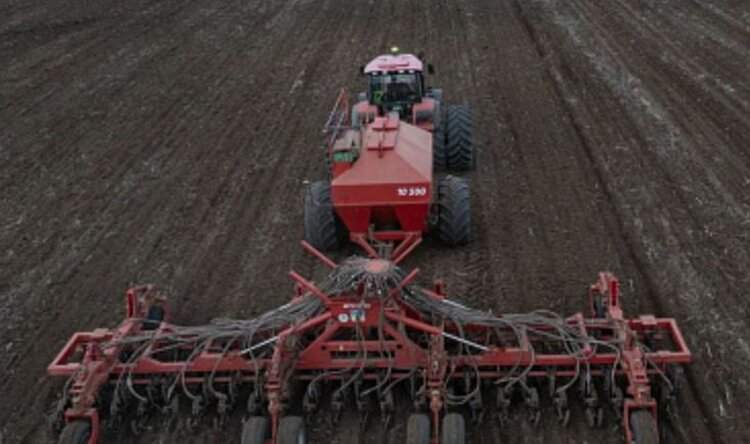
The Kherson region is located in the agricultural belt along the Black Sea coast. Irrigation, soil conditions, crop structure, and changes in the external environment directly affect the annual production rhythm of local farms. The completion of nearly 400,000 hectares of spring sowing indicates that agricultural operators in the region have completed the key transition from spring tillage, seed input, and mechanical operations to field management. The production focus will now shift to seedling monitoring, pest and weed control, water management, and summer harvest preparation. Sunflowers being the crop with the largest sown area reflects the prominent position of oilseed crops in the local spring sowing structure; while crops such as wheat, barley, corn, and soybeans collectively support the grain, feed, and oil processing chains. For the agricultural supply chain, the completion of spring sowing not only means field operations enter the next phase but also triggers the simultaneous start of agricultural machinery maintenance, agricultural material supply, storage preparation, grain drying, transportation scheduling, and subsequent procurement arrangements. Especially given the significant climate fluctuations in the southern region, the quality of field management after sowing will directly affect yield stability and subsequent market supply expectations.
Currently, farms in the Kherson region have begun preparing for the harvest season, including inspecting agricultural machinery, organizing grain storage facilities, and forming field operation teams.
This milestone holds a connecting significance for local agricultural production. The completion of spring sowing is only the first half of the annual agricultural cycle. The factors that truly determine yield and profitability include crop growth management, weather conditions, irrigation assurance, fuel supply, machinery availability, and storage capacity. In the spring sowing structure of the Kherson region, sunflowers account for a high proportion. These oilseed crops are sensitive to subsequent sunlight, soil moisture, and field management; while grain and legume crops are affected by precipitation patterns, disease control, and harvest windows. As farms transition to pre-harvest preparation, whether storage facilities can receive grain in a timely manner, whether machinery can ensure continuous operation, and whether the transportation chain is smooth will become important variables affecting harvest efficiency. Local plans to begin harvesting winter crops at the end of June mean that spring crop field management and winter crop harvest preparation will proceed concurrently within a short period, placing higher demands on agricultural organizational capacity and supporting service systems.
Subsequent agricultural progress in the Kherson region will focus on winter crop harvesting, spring crop growth conditions, oilseed crop yield expectations, and storage reception capacity. If weather conditions and field management remain stable, the nearly 400,000 hectares of spring sowing will provide a foundational support for local summer and autumn agricultural product supply.
This article is compiled by Wedoany. All AI citations must indicate the source as "Wedoany". If there is any infringement or other issues, please notify us promptly, and we will modify or delete it accordingly. Email: news@wedoany.com
Related Products


Industrial and Commercial Point-Type Gas Detector
Jinan Benan Technology Development Co., Ltd.
714CD Series C-Band Weather Radar
Chengdu Zhongdian Jinjiang Information Industry Co., Ltd.
4HS-8 High-efficiency Peanut Inverted-laying Harvester
Hebei Yongfa Hongtian Agricultural Machinery Manufacturing Co., Ltd.