en.Wedoany.com Reported - A piece of legislation in North Carolina, titled the "Ratepayer Protection Act," is under consideration in the state legislature. The bill simultaneously restricts data center expansion and eases fossil fuel restrictions for Duke Energy. The first part of the bill prohibits data center developers from using eminent domain to acquire land and bars local governments from offering economic incentives for these projects, while protecting residents from electricity rate increases caused by data center operations. However, the second part could accelerate fossil fuel project permitting, delay the retirement of coal-fired power plants, and even eliminate Duke Energy's goal of achieving carbon neutrality by 2050.
State Representative Pricey Harrison, a Democrat from Guilford County, expressed satisfaction with the first part of the bill but noted that it contains many problematic provisions to garner support from conservative Republicans. Shelley Robbins, Senior Decarbonization Manager at the Southern Alliance for Clean Energy, described the bill as a mixed bag that should be split into two separate pieces of legislation. Due to the rushed submission of the bill, many legislators, environmentalists, and even Duke Energy are still digesting its implications.

During discussions of the bill in the House Energy and Public Utilities Committee, Democrat Harrison felt encouraged by the data center regulatory provisions. She had introduced a similar bill with two colleagues in April 2025, but it failed to advance. A year later, legislators from both parties are feeling pressure from constituents, as dozens of local governments have passed or are drafting temporary moratoriums on data centers.

SB 730 authorizes local governments to require developers of data centers with a capacity of 100 megawatts or more to submit site assessments considering impacts such as noise, groundwater, and air quality. The bill also requires data centers to use closed-loop cooling systems, but critics note that the provision lacks quantitative limits on water intake and discharge for drinking water and fails to require data centers to disclose water and energy usage information. Cyndie Roberson of the National Coalition Against Cryptomining believes the bill is more comprehensive than Georgia's but recommends lowering the regulatory threshold to 50 megawatts and expanding the noise study radius to one mile. Cara Bunder, State Policy Director for the Data Center Coalition, stated before the House Commerce and Economic Development Committee that the industry organization has "concerns" about the mandate for specific cooling technologies and the restrictions on local government incentives that could reduce North Carolina's competitiveness.
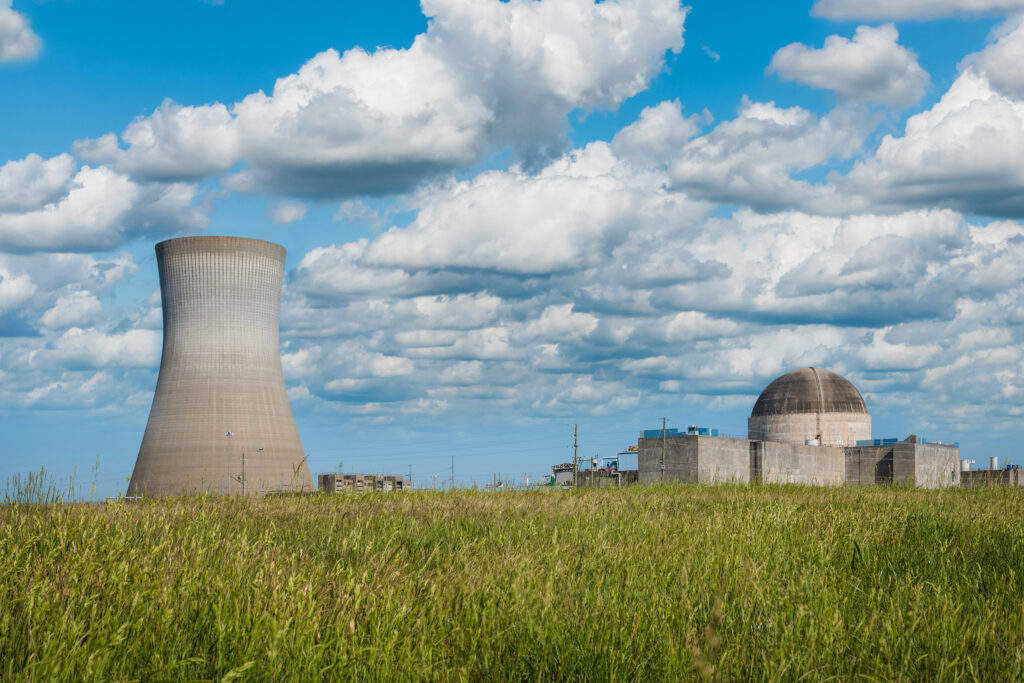
The second part of the bill involves accelerating fossil fuel and nuclear power construction. It requires state environmental regulators to provide expedited permitting for projects involving energy production or distribution. State Representative Dean Arp, a Republican from Union County, stated during a committee meeting that the entire bill is aimed at reducing energy costs for consumers. The bill also prohibits Duke Energy from retiring coal and natural gas power plants until at least one nuclear facility with a capacity of 1 gigawatt or more has obtained relevant certifications. This threshold excludes small modular reactors, which generate between 70 and 350 megawatts. Representative Brandon Lofton, a Democrat from Mecklenburg County, questioned whether extending the life of aging plants would truly save consumers money. Arp responded that the goal is to promote nuclear energy development. According to 2023 data from the Energy Information Administration, the levelized cost of electricity for advanced nuclear is $110 per megawatt-hour, compared to $55 for solar photovoltaic.
SB 730 also requires the Legislative Services Office to hire an external contractor to study the impact of achieving net-zero emissions on rates. Last year, the state legislature eliminated Duke Energy's interim goal of reducing emissions by 70% by 2030 but retained the 2050 net-zero benchmark. Harrison believes continuing the study is a waste of taxpayer money and noted that the urgency of climate change has not influenced her conservative colleagues. Duke Energy did not respond to specific questions, only stating its commitment to providing reliable and increasingly clean energy while keeping rates as low as possible.
This article is compiled by Wedoany. All AI citations must indicate the source as "Wedoany". If there is any infringement or other issues, please notify us promptly, and we will modify or delete it accordingly. Email: news@wedoany.com