US Coupa and MIT Predict 2026 Economic Trends Based on $10 Trillion in Data
en.Wedoany.com Reported - Coupa, in collaboration with the MIT Data Science Lab, has released the 2026 edition of the Business Spend Index (BSI) report. This index leverages artificial intelligence to analyze a proprietary dataset encompassing $10 trillion in business transactions, predicting corporate spending patterns and economic trends 90 days in advance.
The report was officially unveiled at Coupa's Inspire World Tour in London, UK. Unlike traditional economic indicators that rely on retrospective data, the BSI focuses on analyzing millions of actual procurement transactions generated by over 10 million buyers and suppliers within the Coupa network. It captures economic signals through real B2B spending behavior rather than sentiment surveys.
David Simchi-Levi, Professor William Barton Rogers and retired Director of the MIT Data Science Lab, stated that Coupa's dataset provides a unique foundation for economic insights. By applying rigorous econometric modeling, the study found that Coupa's data exhibits strong leading signals relative to established macroeconomic indicators such as FRED, IDEA, ISM PMI, and real GDP. The AI model can detect turning points in the manufacturing sector three months before changes are recorded in the Institute for Supply Management's Purchasing Managers' Index (ISM PMI).
The BSI data reveals several key trends. The index shows that in April 2026, spending in five industries declined month-over-month, with manufacturing down 0.8% and business services down 3.3%, contradicting the expansion trend predicted by the ISM PMI for the same period. The report forecasts that procurement spending in high-tech, financial services, and healthcare and life sciences will contract this summer, with the financial services sector potentially experiencing the largest decline. Since mid-2024, procurement spending in the high-tech sector has grown by over 40%, reaching a four-year cyclical high, tracking corporate software and service procurement. The BSI provides an early signal that corporate demand is catching up with AI infrastructure investments, meaning that corporate spending on AI tools is translating into measurable procurement activities.
Kevin Laquinto, Chief Marketing Officer at Coupa, stated that the index offers significant business value for procurement and supply chain leaders, eliminating the need to guess about economic direction.
The index also quantifies the impact of tariffs and policy volatility. Data shows that during the tariff fluctuations in 2025, spending by small U.S. manufacturing enterprises decreased by 17.5%, while large manufacturing enterprises cut spending by 14.6% over the same period. The U.S. Supreme Court's tariff ruling on February 20, 2026, brought policy stability, prompting companies to return to long-term investments in automation and AI execution systems. Additionally, the One Big Beautiful Bill Act in July 2025 included full expensing provisions, driving an increase in manufacturing spending at the end of 2025. Amid persistently weak new customer demand, manufacturers leveraged tax breaks to boost investments in automation, capacity, and supply chain resilience.
This article is compiled by Wedoany. All AI citations must indicate the source as "Wedoany". If there is any infringement or other issues, please notify us promptly, and we will modify or delete it accordingly. Email: news@wedoany.com
Related Products



Multi-function Marine Monitoring Low-altitude Detection Radar Sea-air Boundary Ocean Dynamic Environment Measurement
Chengdu Dixin Technology Co., Ltd.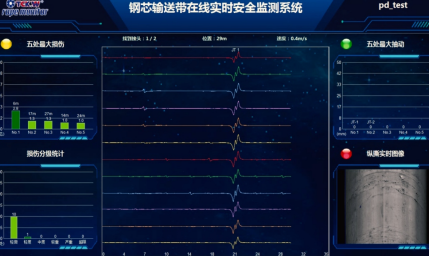
Conveyor Belt Intelligent Monitoring System
LUO YANG WIRE ROPE INSPECTION TECHNOLOGY CO., LTD.

G.652.D Wavelength-extended Non-dispersion Shifted Single-mode Optical Fiber
HONGAN GROUP CO., LTD.

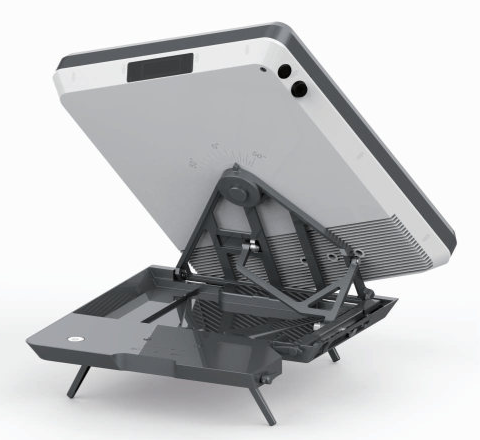
Flat Portable Satellite Terminal 0.35m Aperture Manual Portable Terminal
China Starwin Science & Technology Co., Ltd.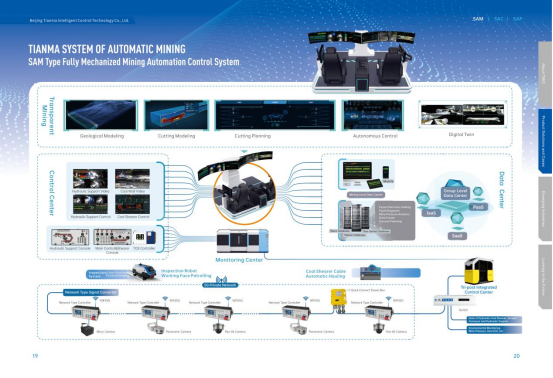
Comprehensive Mining Automation Control System
Beijing Tianma Intelligent Control Technology Co., Ltd.
Industrial and Commercial Point-Type Gas Detector
Jinan Benan Technology Development Co., Ltd.
One-Stop Steward Service for the Entire Logistics System Integration Chain
Zhongding Intelligent (Wuxi) Technology Co., Ltd.