en.Wedoany.com Reported - On June 5, at the Fenghuang Mountain Peony Cultivation Base in Lintao County, Dingxi City, Gansu Province, seven Paeonia rockii plants that underwent space mutagenesis bloomed for the first time and were publicly displayed. These "space peonies" were cultivated from Lintao Paeonia rockii seeds that were carried into space aboard the Shenzhou-11 manned spacecraft and returned to Earth. The plants exhibit characteristics such as taller stature, more upright growth, more vibrant flower colors, and fuller flower shapes, providing new observational samples for the breeding of new local Paeonia rockii varieties.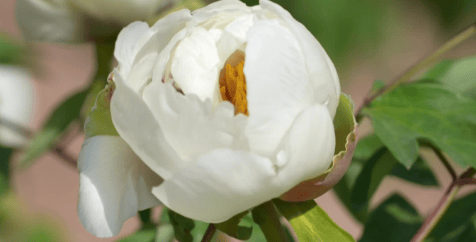
The uniqueness of these seven Paeonia rockii plants stems first from a breeding process that spanned space and Earth. On October 17, 2016, 10 grams of selected Lintao Paeonia rockii seeds were carried into space aboard the Shenzhou-11 manned spacecraft. Under the influence of cosmic rays, microgravity, and high vacuum, the seeds underwent space mutagenesis before returning to Earth and being sown in Lintao, Gansu. Space mutagenesis is not simply sending plant seeds into space for "gilding"; rather, it leverages the potential effects of the space environment on genetic material to expand the sources of breeding variation. Through long-term ground-based screening, cultivation, observation, and stability verification, individuals with breeding value are identified. For perennial woody flowers, this process is longer than for ordinary crops. From seed germination and seedling survival to first flowering, Paeonia rockii requires a multi-year growth cycle. Any changes in flower color, flower shape, plant type, or resistance must be continuously observed in real cultivation environments to determine whether they have value for further propagation and variety development. The attention garnered by these seven "space peonies" lies in the fact that they are not short-term laboratory display samples but have entered the public eye for the first time after years of cultivation in Lintao. Compared to ordinary Paeonia rockii, these plants are more robust, and some flowers exhibit variations in color depth among different petals on the same bloom. Such traits provide direct material for subsequent selection. For the flower industry, the value of new varieties lies not only in their ornamental appeal but also in stability, propagation capacity, adaptability, and market distinctiveness. Space mutagenesis merely opens the door to variation; what truly determines whether results can be transformed is the subsequent ability to stabilize desirable traits.
This year's first flowering marks a critical milestone nearly a decade after the seeds returned from space.
Lintao Paeonia rockii itself has a deep local industrial foundation. The region boasts a long history of Paeonia rockii cultivation, with flower colors, shapes, and cold resistance exhibiting regional characteristics, making it one of the important ornamental flower resources in Northwest China. In recent years, Lintao has continuously advanced efforts in Paeonia rockii resource conservation, variety breeding, flower viewing, cultural tourism integration, and industrial development, accumulating a certain germplasm resource base and scientific breeding foundation. The emergence of "space peonies" has injected a stronger technological attribute into this traditional flower industry. In the past, the local flower industry relied more on natural selection, artificial hybridization, grafting, and field screening, which involved long cycles, limited variation sources, and slow variety renewal. Space breeding provides a new breeding tool for local specialty plants, enabling traditional germplasm resources to be combined with space science, modern breeding, and industrial development. For Lintao, these seven "space peonies" are not just an ornamental landscape but could also become a signature resource for upgrading the local flower brand. If subsequent grafting, propagation, and continuous trait identification can stabilize flower color variations, plant type advantages, and growth performance, the region could develop a more distinctive new Paeonia rockii strain, further driving diverse scenarios such as peony viewing, seedling sales, floral cultural creativity, study tours, and space science popularization. Especially in the development of county-level specialty industries, a flower variety with a technological story, local culture, and ornamental value is more likely to create memorable communication points than ordinary flowers. Space breeding gives Paeonia rockii a new narrative space, while Lintao's existing flower resources, the Fenghuang Mountain Peony Cultivation Base, and tourist demand provide a practical platform for showcasing results and industrial transformation.
This achievement is still in the variety observation and subsequent propagation stage, and it will take time before large-scale promotion is possible. With only seven plants, whether traits such as flower color, shape, and plant type can be stably inherited still needs to be confirmed through grafting propagation, continuous flowering observation, stress resistance evaluation, and cultivation adaptability tests. The formation of new perennial flower varieties cannot be judged by a single flowering performance; consistency across different years, cultivation conditions, and propagation batches must be verified. If subsequent steps, including superior plant selection, propagation system construction, and variety registration and promotion, are completed, Lintao's Paeonia rockii industry will gain new technological variety resources. Even if some traits prove difficult to stabilize, these plants can still serve as important research materials for space mutagenesis breeding and innovative utilization of local flower resources.
From a broader perspective of technological innovation, the blooming of "space peonies" in Lintao demonstrates the connection between space technology and agricultural flower breeding. Space engineering provides a unique mutagenic environment, local research teams are responsible for long-term cultivation and screening, and local industries take on the roles of ornamental display, brand building, and market transformation. This pathway allows space technology to extend beyond launch, flight, and space experiments, entering scenarios of germplasm resource innovation, specialty agricultural upgrading, and county-level industrial development. For Lintao, the first flowering of these seven Paeonia rockii plants is a starting point. Whether the "space peonies" can evolve from a small number of display plants into stable varieties, specialty products, and cultural tourism IPs will determine the long-term value of this achievement in the local industry.
This article is compiled by Wedoany. All AI citations must indicate the source as "Wedoany". If there is any infringement or other issues, please notify us promptly, and we will modify or delete it accordingly. Email: news@wedoany.com