en.Wedoany.com Reported - Bruno Szarf began his career as an electrical engineer in the operations field and now serves as the Global Head of People and Performance Management at the Stefanini Group. In 2016, the then-CEO of his former company, Neoenergia, recognized his ability to connect strategy, operations, and people management, and subsequently invited him to bring a more business-oriented perspective to the HR field. Szarf states that this ability to bridge corporate and individual needs ultimately led him into human resources.
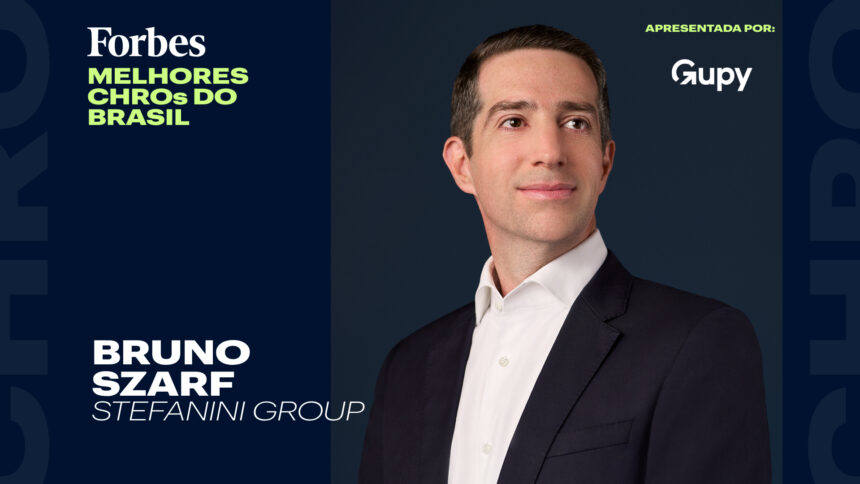
A decade after transitioning to human resources, Szarf now leads one of the most strategic departments at Brazil's largest technology group. The company has 35,000 employees and operates in 46 countries. As the head of the department responsible for HR, finance, transformation, marketing, and performance, Szarf formally integrated the concept of performance into Stefanini's HR domain, a move that has helped reshape the group's decision-making approach. He believes that performance is not without cost, nor is people management without cost, and that success lies in finding a balance between corporate growth, efficiency, and personnel development.
Alongside the digital transformation agenda within HR, Stefanini has applied artificial intelligence to everything from recruitment to internal employee services. According to the executive, a tool developed by the group has provided over 290,000 services to employees worldwide in the past year. The company has also created an internal program called "AI Ambassadors," which has already gathered over 2,000 professionals, aiming to accelerate technology adoption and bridge knowledge gaps across its seven business units.
Szarf notes that advances in artificial intelligence are prompting HR to take on a new role: providing people with a sense of security in a rapidly changing environment. The pace of technological change often exceeds the capacity to absorb, train, and manage knowledge. In his view, AI does not replace human relationships but rather frees up time for leaders to act more strategically. What remains most effective is still human interaction; AI helps accelerate the pace, free up schedules, and handle more complex tasks, but interpersonal engagement remains crucial.
Experience in the energy, education, and chemical industries has shaped this executive's management philosophy. Before joining Stefanini, Szarf worked at companies such as Neoenergia, Cruzeiro do Sul Educacional, and IP. His work across different sectors has strengthened his ability to link operational challenges with culture and personnel development. In recruitment, the company values professionals with continuous learning capabilities, critical thinking, and a willingness to work in an "AI-first" model. Szarf believes that employees do not need to know everything, but they must maintain the humility to relearn.
Despite an agenda closely tied to technology, Szarf does not advocate for excessive automation in HR. He believes companies still need to learn to combine efficiency with a human touch, especially as a new generation of talent enters the workforce. This new generation is not indifferent; rather, they are highly engaged, passionate about technology, and eager to drive change.
This article is compiled by Wedoany. All AI citations must indicate the source as "Wedoany". If there is any infringement or other issues, please notify us promptly, and we will modify or delete it accordingly. Email: news@wedoany.com