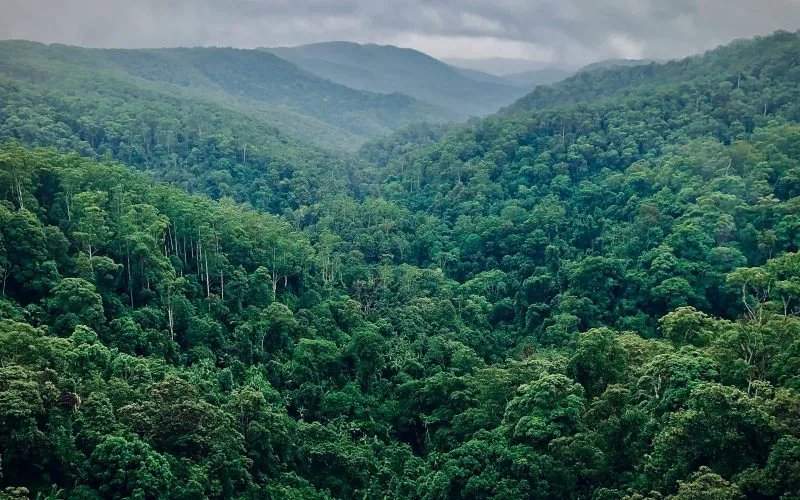
Amazon rainforest deforestation in Brazil down 17% year-on-year in Q1 2026
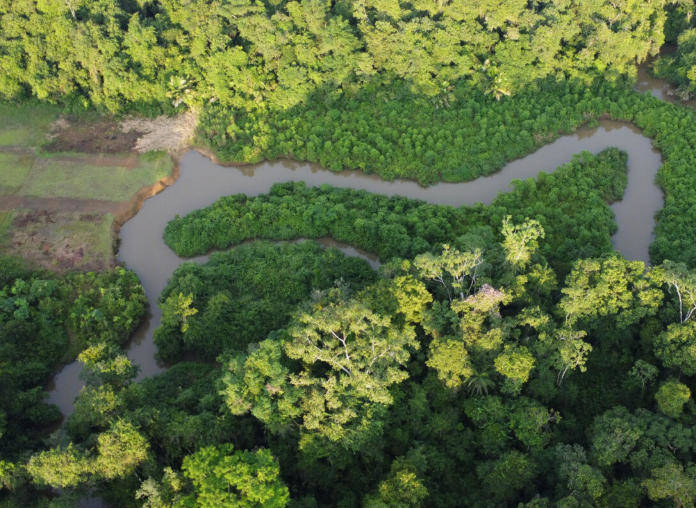
en.Wedoany.com Reported - Data released by the Amazon Institute of People and the Environment (Imazon) shows that deforestation in the Amazon rainforest decreased by 17% year-on-year in the first quarter of 2026. According to the institute, the total deforested area from January to March was 348 square kilometers, a reduction of 71 square kilometers compared to 419 square kilometers in the same period of 2025, equivalent to protecting an area of approximately 7,000 football fields.

In the "deforestation calendar" cycle (August to July of the following year), which reflects climate and rainfall patterns, the decline was even more pronounced. From August 2025 to March 2026, the deforested area dropped from 2,296 square kilometers to 1,460 square kilometers, a cumulative decrease of 36%, marking the lowest record for this period since 2017.
Despite the overall positive trend, localized increases remain a concern. In March 2026 alone, the deforested area rebounded by 17% compared to the same month in 2025, indicating that pressure on forest destruction has not fully subsided. Imazon data shows that Mato Grosso, Pará, and Roraima are the states with the highest concentration of forest loss. Roraima is the only state in the Legal Amazon where deforestation increased year-on-year, with a rise of 21%. The most affected municipalities include: Caracaraí (Roraima) with 84.09 square kilometers, Feijó (Acre) with 43.49 square kilometers, and Rorainópolis (Roraima) with 42.38 square kilometers. The Xingu Arc Environmental Protection Area (APA) in Pará was the most deforested conservation unit in this cycle, with a loss area exceeding 3,000 football fields.
Regarding forest degradation, the degraded area in March 2026 was 11 square kilometers, a 95% decrease year-on-year, setting the lowest record for this month in 11 years. Degradation refers to partial damage to forests due to disturbances such as fires and logging, which, while not completely removing vegetation, still reduces biodiversity and weakens ecological functions. Research indicates that Roraima concentrated 82% of the total degraded area in March, directly linked to a more severe drought period in the region.
Researchers emphasize that despite historic declines in deforestation and degradation indices, the high destruction rates in specific states and protected areas, along with the impact of drought, mean that continuous monitoring and enforcement remain key to safeguarding the Amazon. (Source: Imazon)
This article is compiled by Wedoany. All AI citations must indicate the source as "Wedoany". If there is any infringement or other issues, please notify us promptly, and we will modify or delete it accordingly. Email: news@wedoany.com
Related Products


4HS-8 High-efficiency Peanut Inverted-laying Harvester
Hebei Yongfa Hongtian Agricultural Machinery Manufacturing Co., Ltd.
Industrial and Commercial Point-Type Gas Detector
Jinan Benan Technology Development Co., Ltd.
714CD Series C-Band Weather Radar
Chengdu Zhongdian Jinjiang Information Industry Co., Ltd.