en.Wedoany.com Reported - On June 9, the General Office of the Ministry of Industry and Information Technology (MIIT) and the General Office of the State-owned Assets Supervision and Administration Commission (SASAC) issued a notice to jointly launch the 2026 Special Action for Humanoid Robots and Embodied Intelligence Real-Scene Training. This special action targets key scenarios such as industry, special operations, and services, promoting the construction of real-scene training spaces, the cultivation of innovative application consortia, the tackling of operational skills, and the verification of application deployment. The goal is to enhance the operational capabilities of humanoid robots and embodied intelligence products through training in real-world scenarios.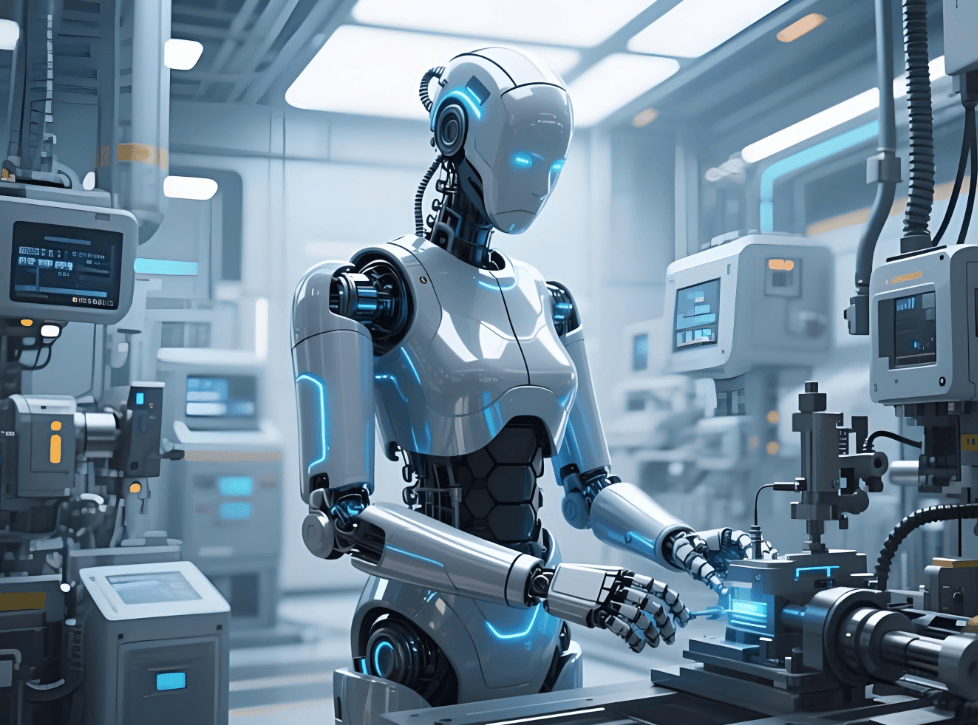
This special action places "real-world scenarios" at the core of industrial implementation. According to the notice, related tasks will focus on directions such as industrial manufacturing, special operations, and service applications, providing robots with an environment for continuous training, testing, verification, and optimization through real-scene training spaces. When humanoid robots enter scenarios such as factories, warehousing, inspections, operations and maintenance, and commercial services, they will no longer face single demonstration actions but complex operational environments involving multiple processes, equipment, personnel, and safety constraints. Real-scene training can accumulate high-quality real-machine data, allowing embodied intelligence models to iterate continuously in the presence of real objects, real processes, real rhythms, and real risks, while simultaneously testing the stability, durability, load capacity, dexterous manipulation capabilities, and safety redundancy design of key components of the main body. For complete machine enterprises, core component enterprises, algorithm teams, and scenario units, this special action provides not just testing grounds, but a systematic verification pathway to move products from prototypes and pilots to routine deployment.
The notice proposes that by the end of 2026, key products such as humanoid robots will first complete application verification and routine deployment in a batch of representative scenarios, entering an "operation mode"; at the same time, it will consolidate and form over 100 high-value application scenarios, driving the formation of a ten-thousand-unit-level deployment capability.
This goal indicates that the policy direction is shifting from solely supporting technological research and development to driving industrial chain collaboration through application traction. For humanoid robots and embodied intelligence products to achieve ten-thousand-unit-level deployment capability, several key issues must first be resolved: "Can they work stably? Can they be replicated in batches? Can they be safely operated and maintained? Can costs be clearly calculated?" Industrial scenarios focus on rhythm, precision, reliability, and coordination with existing production lines; special operation scenarios focus on the robot's ability to replace humans in dangerous, complex, enclosed, or environments unsuitable for prolonged human entry; service scenarios place greater emphasis on interaction safety, task generalization, customer experience, and ongoing operational costs. Forming a list of high-value application scenarios through the special action helps enterprises avoid generic demonstrations and concentrate on tackling tasks such as handling, sorting, inspection, loading/unloading, testing, operations and maintenance, navigation, cleaning, and auxiliary services, which are more likely to generate scale demand. The cultivation of innovative application consortia will also bring central state-owned enterprises, local scenario units, robot complete machine enterprises, component enterprises, software algorithm teams, and testing and certification institutions into the same promotion chain, reducing the disconnect between technological R&D and scenario needs.
The special action also proposes exploring the construction of a full lifecycle management and guarantee mechanism for humanoid robots and embodied intelligence products. This arrangement relates to quality traceability, operational safety, maintenance, fault handling, data management, and responsibility boundaries after large-scale deployment. As robots move from showrooms to production lines, parks, warehouses, and public service venues, product management will extend from factory delivery to long-term operation. Scenario data, equipment status, software versions, maintenance records, and safety incidents all need to form a manageable closed loop. China has previously released a standard system covering the entire industry chain and full lifecycle of humanoid robots and embodied intelligence. The combination of the special action and the standard system will further promote the industry's transition from scattered experimentation to standardized application.
Going forward, the quality of real-scene training space construction, the openness of central state-owned enterprises and key scenario units, the efficiency of real-machine data accumulation, and the stable operational performance of complete machine products in high-frequency tasks will determine the actual effectiveness of the special action. If over 100 high-value application scenarios can form replicable solutions, the humanoid robot industry will move faster from technical demonstrations to batch delivery and routine operation phases.
This article is compiled by Wedoany. All AI citations must indicate the source as "Wedoany". If there is any infringement or other issues, please notify us promptly, and we will modify or delete it accordingly. Email: news@wedoany.com