South Korea's LG Uplus Advances Construction of 200MW AI Data Center in Paju
en.Wedoany.com Reported - Recently, South Korean telecom operator LG Uplus unveiled its next-generation AI infrastructure strategy at the construction site of an AI data center in Paju, Gyeonggi Province, proposing a transformation into an AI Factory Operator centered on the Paju AI Data Center. The project has secured a 200MW power supply condition and is positioned as a hyperscale AI data center tailored for generative AI inference demands.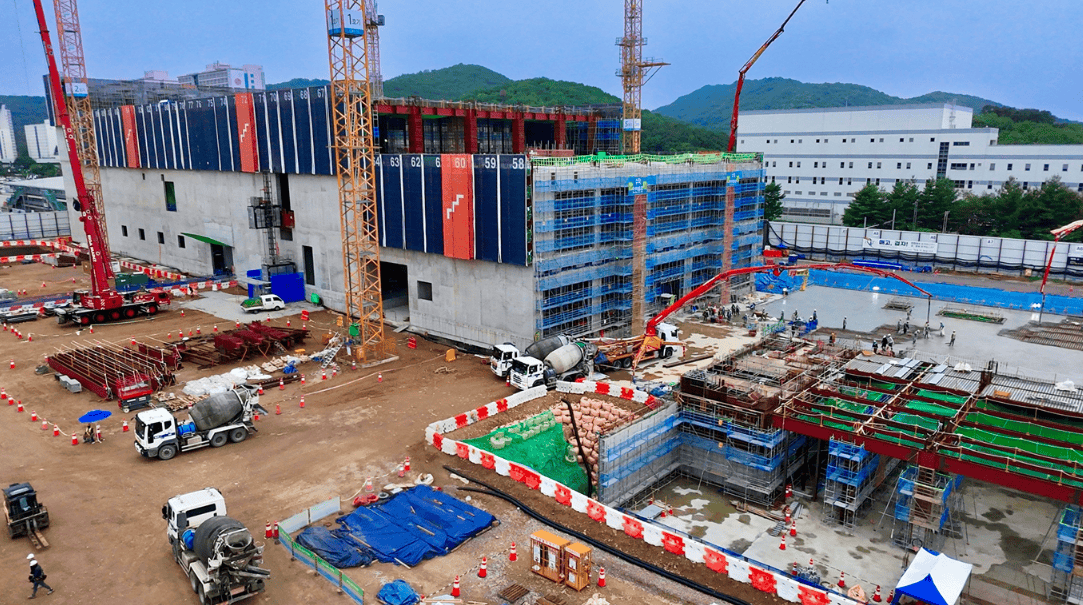
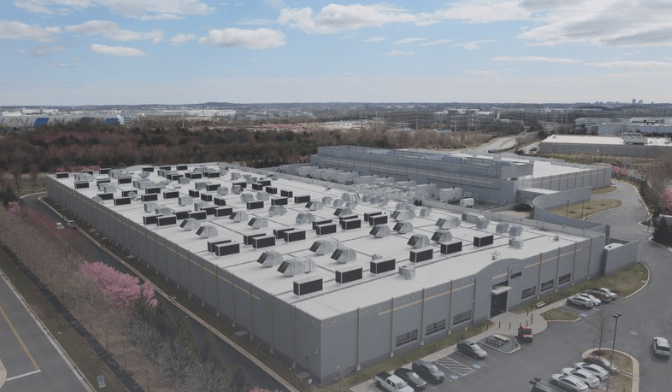
The construction of the Paju AI Data Center focuses on four key areas: power capacity, construction speed, cooling efficiency, and stable operation. LG Uplus disclosed that the center is currently under construction, with multiple large cranes already on-site to facilitate the work. The planned building area is approximately 150,000 square meters, with the first building scheduled for completion by June 2027, and all contracts have been signed before completion. As AI workloads shift further from large model training to high-frequency inference, the pressures on data centers are changing: GPU server deployment is accelerating, and computing power clients demand shorter delivery cycles. However, high-power cabinets, power connections, liquid cooling pipelines, building load-bearing capacity, and operation and maintenance systems often require longer construction periods. By choosing to build a 200MW AI data center in Paju, LG Uplus is essentially upgrading its traditional telecom operator data center capabilities into infrastructure delivery capabilities for AI computing clients.
The company summarizes its related strategy as "The ACE on Trust," which encompasses elements such as construction speed, power and scale, cooling efficiency, and operational reliability.
In terms of construction methods, LG Uplus plans to adopt a standard modular data center approach, standardizing and prefabricating major equipment before transporting it to the site for assembly, thereby shortening construction cycles and enhancing scalability. For AI data centers, this method helps reduce delays in civil engineering and electromechanical delivery amid rapidly changing market demands. The Paju project will also adopt a hybrid architecture combining air cooling and liquid cooling, with the building design phase already adapted to the heat generation, load, waterproofing, and pipeline layout of high-density GPU servers. LG Uplus, in collaboration with LG Electronics, has developed a direct-to-chip liquid cooling solution that uses cooling water distribution units and cold plates to directly remove heat from near the GPU chips. Official internal validation results show an approximately 24% improvement in energy efficiency compared to traditional air cooling methods. On the power and safety front, LG Energy Solution will provide high-performance UPS batteries, LS Electric will participate in the development of the high-voltage power distribution system, and LG Uplus will self-develop an AI-driven data center infrastructure operation system for real-time monitoring of power, temperature, humidity, cooling status, and equipment anomalies.
This project also reflects the changing role of telecom operators in the AI infrastructure competition. In the past, operators' data center businesses primarily served hosting, cloud access, dedicated line interconnection, and enterprise IT outsourcing. In the AI era, data centers are now tasked with simultaneously handling computing power delivery, energy management, cooling management, GPU resource operations, and highly reliable network connections. LG Uplus has long-term IDC operation experience, with the company officially stating it has accumulated 27 years of continuous operation capability in South Korean data centers. It plans to introduce robotic inspections at the Paju AI Data Center for round-the-clock monitoring of temperature, humidity, water leaks, dust, and the surrounding environment. As enterprise-level AI applications move from pilot projects to production deployment, clients selecting data centers will pay more attention to whether power capacity is secured, whether the cooling system can support high-density GPUs, whether the construction timeline is controllable, and whether the operation system supports fine-grained management, rather than just the number of cabinets and network bandwidth.
If the Paju project proceeds as planned, it will become a key node in South Korea's domestic AI infrastructure system. By integrating cooling, batteries, power, operation systems, and data center construction capabilities within the same group framework, LG Uplus can reduce external dependencies in critical areas and create a replicable model for AI data center construction. Subsequent variables will focus on the delivery progress of the first building, the commercial validation results of liquid cooling, the deployment pace of high-density GPU clients, and whether LG Uplus can replicate the Paju project experience to more regions and cooperation models. As AI computing demand continues to grow, the new type of infrastructure competition among telecom operators centered on data centers, power, networks, and operation and maintenance capabilities will become one of the new growth drivers for the information and communication industry.
This article is compiled by Wedoany. All AI citations must indicate the source as "Wedoany". If there is any infringement or other issues, please notify us promptly, and we will modify or delete it accordingly. Email: news@wedoany.com
Related Products
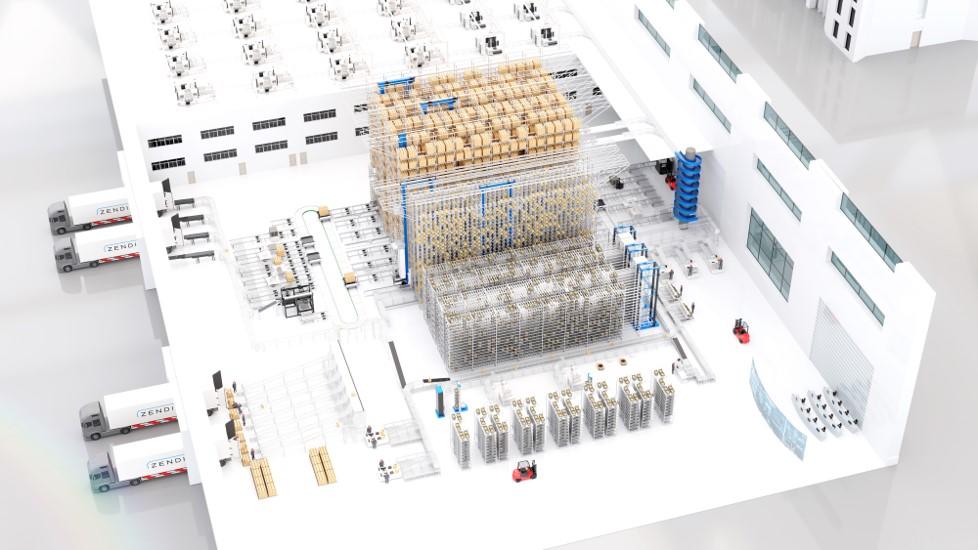

One-Stop Steward Service for the Entire Logistics System Integration Chain
Zhongding Intelligent (Wuxi) Technology Co., Ltd.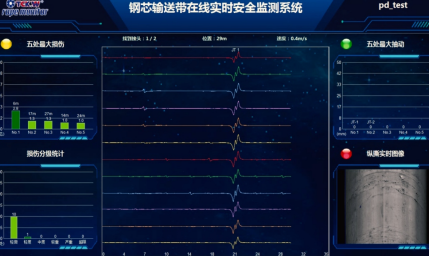
Conveyor Belt Intelligent Monitoring System
LUO YANG WIRE ROPE INSPECTION TECHNOLOGY CO., LTD.


G.652.D Wavelength-extended Non-dispersion Shifted Single-mode Optical Fiber
HONGAN GROUP CO., LTD.

GYTA Type Non-Self-Supporting Aerial/Duct Optical Cable
TONGDING INTERCONNECTION INFORMATION CO., LTD.