en.Wedoany.com Reported - The 2026 FIFA World Cup in the USA, Canada, and Mexico will, for the first time, fully integrate artificial intelligence technology into core aspects of the tournament. The Fédération Internationale de Football Association (FIFA) will adopt several innovative technologies for this event, including a 3D digital human offside detection system, body cameras for referees, and goal-line technology integrated into referees' watches, aiming to enhance officiating accuracy and the spectator experience.
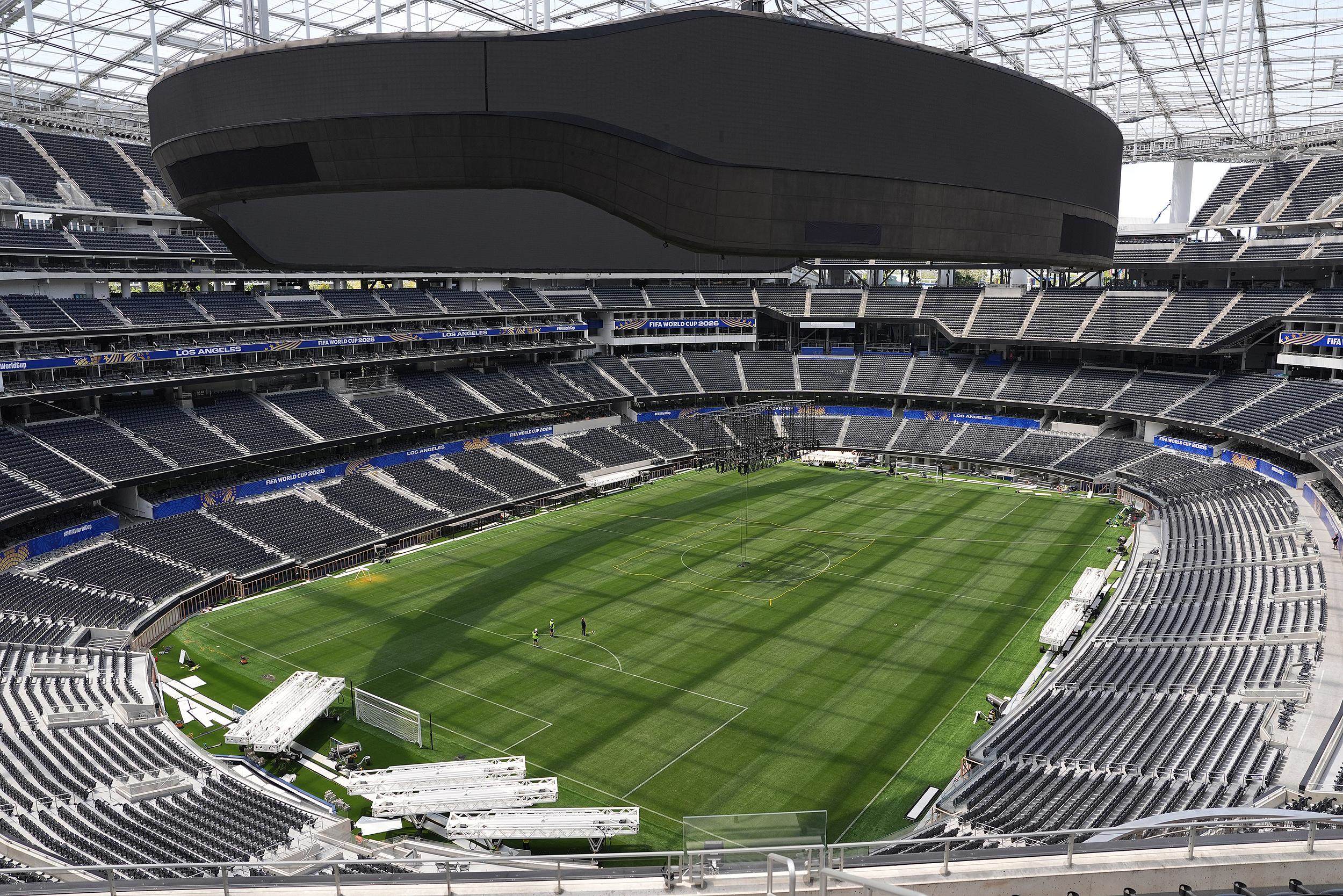
For offside detection, FIFA has partnered with Lenovo Group to create a digital foundation named "Football AI Pro." This system collects players' physical data before matches to generate millimeter-precision, personalized 3D digital humans. During matches, high-speed cameras positioned around the stadium roof track 29 skeletal nodes on each player at a frequency of 50 times per second, while an inertial sensor embedded in the match ball records the moment of contact at 500 times per second. All data is fed into the AI platform, which maps players' movements onto the 3D digital humans in real time. When a millimeter-level offside occurs, the digital foundation sends an alert to the Video Assistant Referee room within 3 seconds and automatically generates a 3D explanatory animation displayed on the stadium's big screens. Online viewers will also see offside replays as 3D digital human animations, rather than traditional freeze-frame television images. Hu Guanzhong, Senior Vice President and Chief Information Officer of Lenovo Group, stated that the group's involvement in developing AI-driven 3D digital humans is aimed at presenting the prowess of the world's top players more realistically and accurately.
This World Cup will also introduce body cameras for referees. These devices were trialed during the 2025 FIFA Club World Cup and will make their official debut this year. To address the issue of image shake, AI-driven image stabilization enhancement technology will be used to improve video quality. Referee Fu Ming stated that this technology not only enriches broadcast footage but also helps spectators understand the real distractions and difficulties referees face on the field. Additionally, the footage captured by the cameras can recreate the referee's observation position and perspective at the time, providing important references for post-match reviews of controversial decisions. However, final rulings must still adhere to the rules of the game and rely on the official video system as the basis for factual determination.
In terms of goal-line technology, referees' watches will become a new tool for assisting decisions. Sensor systems within the stadium can detect whether the entire ball has crossed the goal line and send vibration and visual signals to the referee's watch within an extremely short time. When the watch clearly displays "GOAL," the referee can make a decision based on the actual situation on the field. Fu Ming pointed out that despite continuous technological advancements, referees must still maintain the best possible observation position, and assistant referees must also monitor the goal line and penalty area. The final decision must still be based on the rules of the game.
This World Cup spans 16 stadiums across three countries—the United States, Canada, and Mexico—hosting 104 matches. To ensure consistent pitch feel under different climatic conditions, multiple research institutions have collaborated with FIFA to develop a mixed-seeding technology for warm- and cool-season grasses. The research team used warm-season Bermuda grass as the base, with a top layer of cool-season ryegrass. By adjusting the mixing ratio, root depth, and surface density, and after thousands of simulated trampling tests, key tactile indicators such as turf elasticity, friction coefficient, and energy return were standardized. For venues requiring temporary turf installation, the team developed a plastic cultivation technology, allowing grass to grow directly on plastic film with approximately 5% synthetic fibers mixed in. This enables the turf to be easily rolled up and transported like a carpet, with assembly or disassembly completed within 12 hours. For domed stadiums lacking natural light, the research team uses LED grow lights for supplementary lighting, precisely controlling the ratio of blue and red light to maintain ideal growth conditions for the turf in enclosed spaces.
This article is compiled by Wedoany. All AI citations must indicate the source as "Wedoany". If there is any infringement or other issues, please notify us promptly, and we will modify or delete it accordingly. Email: news@wedoany.com