en.Wedoany.com Reported - Software, data, and AI company Action Intel (headquartered in Louisville, Kentucky, USA) has launched a new dataset, Barge Flows, which tracks the actual behavior of barges on the Mississippi River system to estimate inland waterway freight conditions weeks in advance. Company founder Susan Olson stated that the development of this tool stemmed from the urgent need among market participants to anticipate freight trends.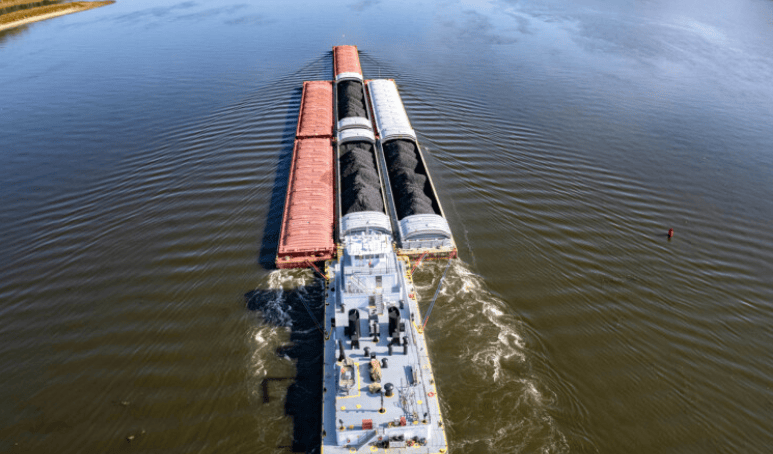
Traditional inland waterway freight markets rely on phone calls and industry experience to form decisions, with information transmission among dispatchers, brokers, and traders often slower than actual market changes. By the time information travels from grain elevators to fleets, conditions elsewhere in the system may have already shifted, making it difficult for market participants to synchronize a comprehensive view. This information asymmetry prompted Action Intel to turn to the physical dynamics of the river to predict freight trends.
Barge Flows is a new dataset within the company's BargeAI platform, accessible via a dedicated web application or API service. Unlike traditional signals based on historical freight rates, this tool tracks the actual movement of barges on the Mississippi River system and uses these patterns to estimate freight supply and demand for weeks ahead. The core logic is that freight rates are not the root cause of market changes but rather the result of supply and demand forces flowing through the system. Olson explained that freight can be viewed as a commodity, with a supply of available barges and a demand for transported goods, and the tool aims to provide a window into understanding this tug-of-war between supply and demand.
Traditional freight signals typically emerge only after decisions have been made. Grain plans, vessel arrivals, and logistics scheduling often occur months in advance, meaning capacity begins adjusting before market reports reflect it. Olson believes the time lag is why reported rates trail actual movements. Barge Flows directly measures these adjustments by counting the number of barges passing through specific areas such as St. Louis, Cairo (Illinois), the Illinois River, and New Orleans, observing the accumulation or dispersion of equipment. This physical signal records what has already happened and predicts developing trends, distinguishing reported rates from real-time physical dynamics.
Action Intel decomposes cargo behavior into two metrics: flow and balance. Flow refers to the number of barges passing a point within a given time; balance focuses on where barges accumulate. When barges pile up in an area faster than they are removed, capacity shifts, and this shift typically precedes changes in freight rates. After overlaying freight rate curves with movement patterns, Action Intel found that the signals were similar but leading, with rate changes occurring after significant signal shifts. Interestingly, the model may be more accurate in predicting the longer term (e.g., three weeks ahead) than the near term (e.g., twelve weeks ahead), because the market itself trades on forward terms.
The data foundation of this system comes from Automatic Identification System (AIS) signals from towboats. By analyzing the reported tow length and width of vessels, Action Intel can estimate the number of barges in a tow. Since some vessels do not immediately update these fields, the company must clean and correct the data, handle missing information, and organize it into unloading and loading areas. Olson emphasized that the goal is to maintain transparency, allowing users to understand the reasons behind the data.
Current patterns show system behavior differing from recent years. The volume moving downstream from the Upper Mississippi River is decreasing, while barge push upstream from New Orleans is strong but slow-moving. Seasonal demand remains, but export dynamics have changed; fall soybean exports have been delayed, and corn performance, while strong, has not fully offset the gap. Unlike the typical harvest peaks seen in recent low-water seasons, current freight patterns are flatter, with spring signals showing volatility rather than a steady decline. The market is still adjusting to its own physical balance.
The model provides context rather than certainty. Major freight fluctuations are clearly visible in the signals, while smaller weekly changes may still deviate from market sentiment. Weather, river conditions, and trading behavior continue to influence outcomes. A recent freight rate increase related to low water levels and ice conditions was visible in the underlying data weeks earlier. Olson believes the tool cannot replace experience but can change how experience is applied. Many who interpret the signals come from backgrounds on decks or in dispatch offices, and combining operational knowledge with analysis will be more effective. Greater visibility will not eliminate competitive advantages but will change the timing of strategy formation. If information is shared, decisions will still differ due to contracts, geography, and risk tolerance, but more information helps make better decisions. Over time, the data itself may shape behavior, influencing the future shape of the market.
This article is compiled by Wedoany. All AI citations must indicate the source as "Wedoany". If there is any infringement or other issues, please notify us promptly, and we will modify or delete it accordingly. Email: news@wedoany.com