South Korea's SK Telecom Receives EU 'Horizon Europe' Funding to Develop Quantum Cryptography Technology
en.Wedoany.com Reported - On June 9, South Korea's SK Telecom announced it has received funding from the European Union's 'Horizon Europe' program to collaborate with research institutions and enterprises from three European countries on the development of next-generation quantum cryptography communication technology. The project, spanning three years, focuses on developing a quantum key distribution system based on the integration of quantum photonic integrated circuits and artificial intelligence, aimed at enhancing communication network security capabilities.
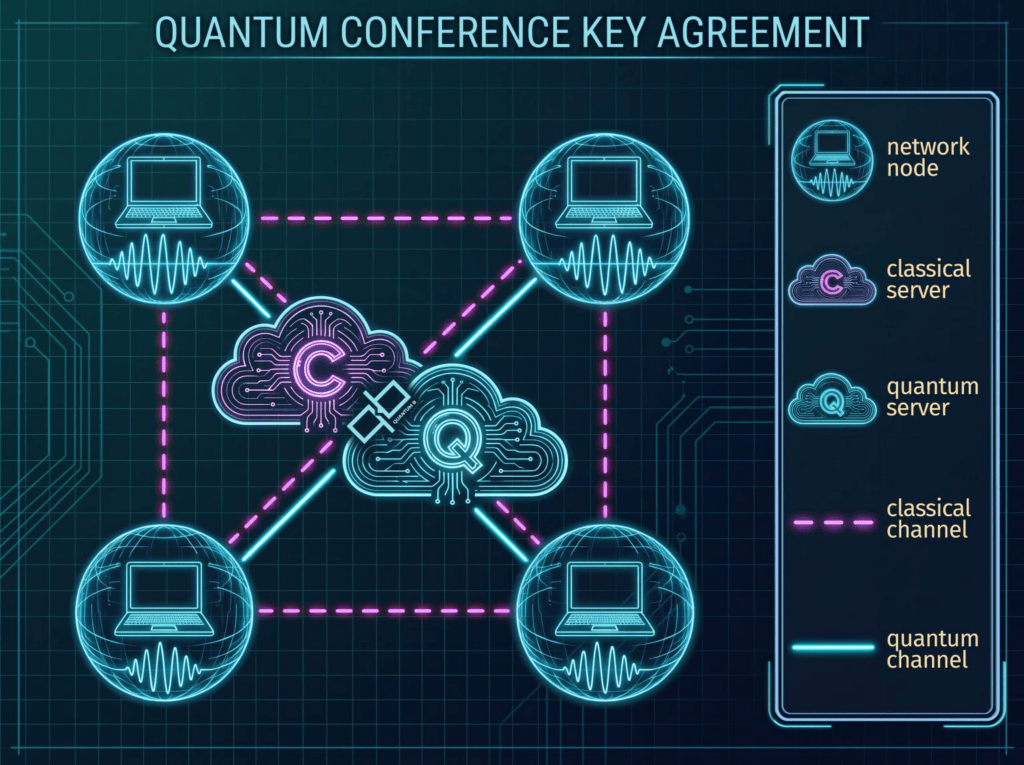
The technical core of this project is to integrate the bulky and costly optical components of traditional quantum key distribution systems onto more miniaturized photonic chips, while introducing artificial intelligence for real-time status monitoring and calibration. Quantum key distribution leverages quantum mechanics principles to generate and distribute keys between communicating parties; any external eavesdropping or interference can alter the quantum state, thereby being detected by the system. This technology has long been regarded as a crucial direction for high-security communications, but current systems generally rely on precision optical components such as single-photon sources and interferometers, with equipment size, deployment complexity, and cost limiting large-scale commercial adoption. SK Telecom's participation in developing the quantum photonic integrated circuit solution aims to integrate multiple optical components onto a single chip using semiconductor processes, and then utilize AI to continuously monitor optical state changes caused by external factors like temperature and vibration, thereby improving system stability and lowering deployment barriers.
The project is coordinated by the Greek National Research Center "Demokritos," with participation from the Austrian Institute of Technology, German semiconductor startup Synogate UG, the Electronics and Telecommunications Research Institute of Korea, and SK Telecom. The Electronics and Telecommunications Research Institute of Korea will develop photonic integrated chips for the transmitter and receiver ends of quantum key distribution, while SK Telecom is responsible for developing the quantum key distribution system based on photonic integrated circuits, applying AI functions, and building and validating the testbed.
"Horizon Europe" is the EU's flagship research and innovation funding program, with a total budget of approximately EUR 95.5 billion. South Korea became the first associate member of the program from Asia in July 2025, enabling Korean institutions and enterprises to directly access EU research funding. SK Telecom's selection marks it as the first private enterprise in Asia to receive "Horizon Europe" funding for a quantum cryptography project, signaling a deeper entry of South Korean communication companies into Europe's quantum secure communication research and development system. For SK Telecom, this project is not just a research collaboration but will also help connect its years of accumulated quantum cryptography communication R&D with European quantum communication standards, certification systems, and industrial ecosystems, establishing a technical and compliance foundation for future international market expansion.
Quantum secure communication is becoming a fundamental capability for next-generation network security. With the accelerated development of quantum computing, artificial intelligence, and high-value data flows, governments, finance, defense, energy, cloud services, and telecommunications networks all need to plan for higher-level encryption systems in advance. SK Telecom has previously engaged in R&D and commercialization exploration in areas such as fiber-optic quantum key distribution, wireless and satellite quantum key distribution, quantum random number generators, post-quantum cryptography, and quantum hardware security modules. This EU joint project to advance photonic integration and AI control technologies will help push quantum key distribution from specialized high-security scenarios to broader industry applications. The project's outcomes will also be used to compare differences in quantum cryptography certification standards between South Korea and Europe, providing a reference for future international certification standard unification.
If the project successfully completes testbed validation, quantum key distribution systems are expected to achieve further improvements in size, cost, power consumption, and stability. For communication operators, the key to scalable deployment of quantum cryptography technology lies in whether the equipment is sufficiently miniaturized, easy to integrate into existing networks, capable of automatic calibration, and compliant with cross-border certification and standard systems. SK Telecom's receipt of EU funding to participate in joint R&D will provide a new model for South Korea's quantum communication technology to enter the international market, and also offer more engineering validation foundations for the global evolution of telecommunications networks toward quantum-secure architectures.
This article is compiled by Wedoany. All AI citations must indicate the source as "Wedoany". If there is any infringement or other issues, please notify us promptly, and we will modify or delete it accordingly. Email: news@wedoany.com
Related Products

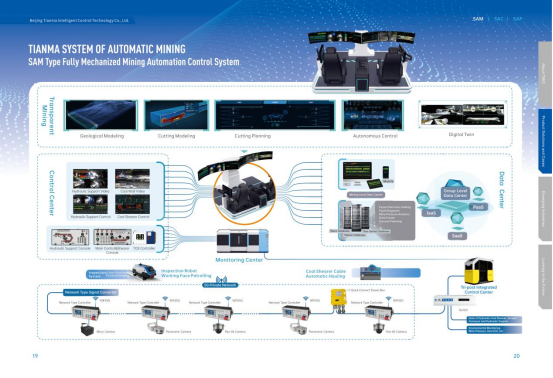
Comprehensive Mining Automation Control System
Beijing Tianma Intelligent Control Technology Co., Ltd.
G.652.D Wavelength-extended Non-dispersion Shifted Single-mode Optical Fiber
HONGAN GROUP CO., LTD.

Industrial and Commercial Point-Type Gas Detector
Jinan Benan Technology Development Co., Ltd.
MUX Series Communication Interface Device for Security and Stability Control System
Nanjing NR Electric Co., Ltd.

20 Inch 1600*900 Full HD 60Hz TFT LED Monitor with VGA and DP Interfaces for Desktop Computers-Business Use
Guangzhou Zanying Optoelectronics Technology Co., Ltd.