en.Wedoany.com Reported - Intel edge infrastructure has enabled the deployment of a municipal network called Bellflower Connect in Bellflower, California. This network leverages solar-powered micro servers and edge computing technology to provide low-cost, high-speed internet access to local residents and businesses.
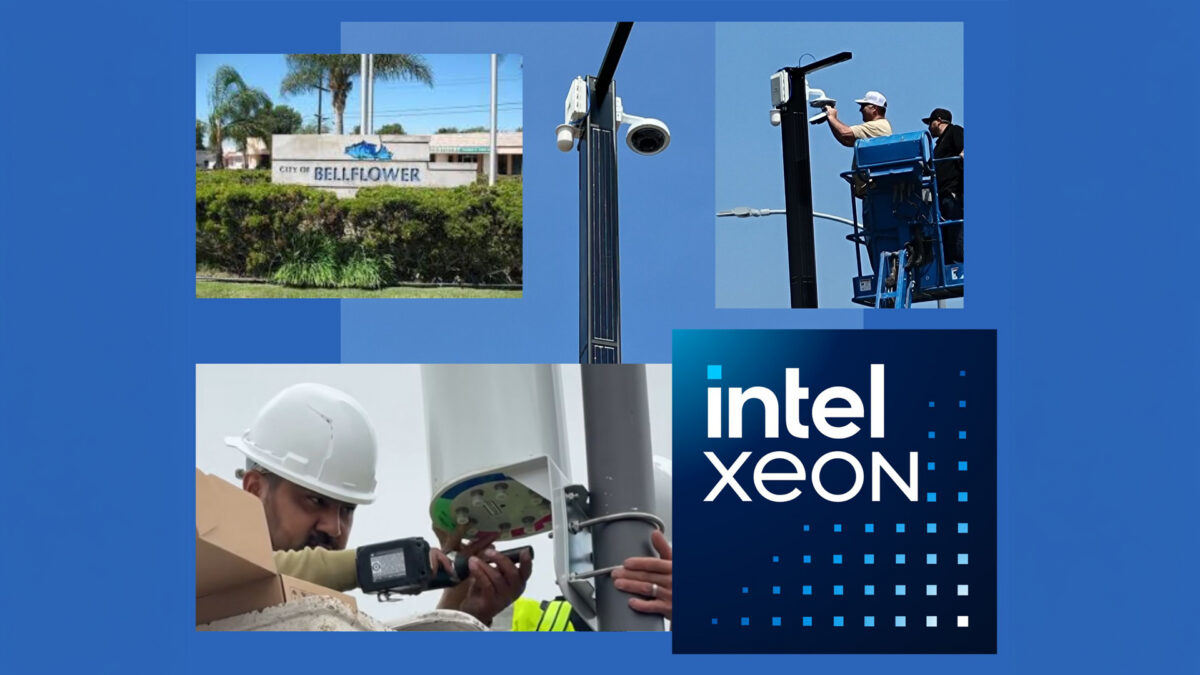
Bellflower is a suburban city with a population of 75,000, located about a 25-minute drive from Los Angeles. Despite its proximity to the second-largest city in the United States, the community has long faced issues with mobile signal dead zones and high telecommunications costs, leaving vulnerable residents without stable internet access. To address this, the Bellflower Connect network uses a private wireless network powered by solar micro servers equipped with Intel Xeon processors, combined with AI-driven network security running at the edge, aiming to provide an affordable, low-power community broadband solution. Project organizers plan to expand this model to 50 other U.S. cities with populations under 150,000 in the coming years.
To launch the network, the City of Bellflower waived standard licensing fees, allowed the construction of receiving towers on public buildings, and simplified the bidding process. Project partner Tradewinds Networks signed a long-term revenue-sharing agreement with the city, with costs split through a public-private arrangement using $1 million in municipal transportation grants and $2 million invested by Tradewinds Networks. The project also includes a workforce development component, training local students to become certified wireless broadband technicians. Tradewinds Networks has received the 2025 Mobile Breakthrough Award in the Social Impact category.
The key to low user costs lies in data processing methods. Traditional wireless networks rely on transmitting data to distant, large-scale cloud data centers, while Bellflower Connect bypasses the cloud by using 80 slim solar towers and repeaters distributed throughout the town. Each tower sends data back to a central location equipped with compact Dell PowerEdge XR8000 series servers running fourth-generation Intel Xeon processors, enabling local data processing—edge computing.
The economic impact of using the network is already evident. Eligible low-income households can receive free internet access, other residents can choose a service plan for $15 per month, and businesses can connect for $39 per month. As of May 2026, approximately 60 households were using the service during the early rollout phase. By mid-2027, when construction is complete, an estimated 10,000 households are expected to be connected to the network. Free public Wi-Fi will also cover local parks, libraries, and the city's outdoor market.
Expansion beyond California is already underway. Wrightsville, Arkansas, plans to begin the first phase of network installation this summer, and eight other U.S. cities are currently undergoing design review and approval processes. Project leaders acknowledge logistical challenges in the rollout but note that community feedback underscores the value of the effort.
This article is compiled by Wedoany. All AI citations must indicate the source as "Wedoany". If there is any infringement or other issues, please notify us promptly, and we will modify or delete it accordingly. Email: news@wedoany.com