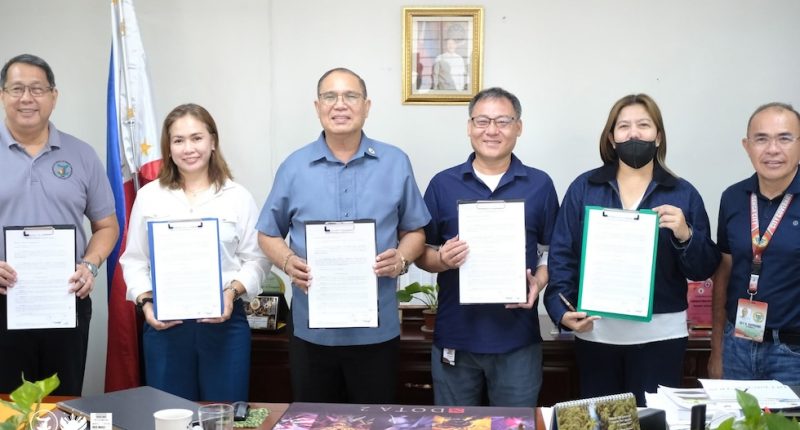
en.Wedoany.com Reported - The Antonio Ernesto de Salvo Institute (Instituto Antonio Ernesto de Salvo, Inaes), a member of the Minas Gerais State Agricultural Association System (Sistema Faemg Senar), has adopted a new institutional positioning centered on three pillars: innovation, sustainable development, and data intelligence. It has also launched a collective purchasing project called "Agricultural Network" (Rede do Agro), aimed at enhancing the bargaining power of rural producers through economies of scale.
Renato Laguardia, Financial Vice President of the Faemg Senar System and President of Inaes, stated that this repositioning helps clearly demonstrate the institution's operational methods and brings it closer to rural producers. He noted that Inaes is an integrated network connecting rural producer unions, agricultural federations, and the National Rural Learning Service (Serviço Nacional de Aprendizagem Rural, Senar), holding significant importance in terms of economic relevance, institutional strengthening, and producer class representation.
Bruno Rocha de Melo, Agribusiness and Innovation Director of the Faemg Senar System and Executive Manager of Inaes, stated that this repositioning stems from the need for clearer work guidelines. The institution will focus on developing applied solutions to strengthen rural producers and enhance the competitiveness of agribusiness. De Melo explained that Inaes operates around three pillars: in innovation, creating an innovation hub integrating academia, technology institutions, and agriculture; in sustainable development, focusing on establishing support centers for rural producers to offer products and services through unions; and in data intelligence, building a data intelligence core to generate high-quality information for rural producers, markets, and media.
The "Agricultural Network" is Inaes's main ongoing project, enhancing rural producers' bargaining power through collective purchasing. The project aims to reduce production costs, as agribusiness profit margins are currently narrow, making cost management a critical factor for the survival and success of rural producers. It is expected to drive over 10 million BRL in input transactions within the next 12 months, saving participating producers approximately 1.3 million BRL.
Minas Gerais State has 607,000 rural producers, and the "Agricultural Network" pilot project began with 200 producers. Over the past 12 months, the initiative has driven 3.5 million BRL in purchases, saving participants 11% in costs, equivalent to over 330,000 BRL in savings for producers. The number of participating unions, producers, and suppliers is expected to grow organically. De Melo stated that the project aims to directly address producers' realities by reducing production costs and improving profitability in pasture or agricultural operations.
To encourage participation in the "Agricultural Network," mobilization is carried out through unions, collecting input procurement needs among local producers. Through collective research, Inaes consolidates demand to integrate full truckload shipments and distributes quantities among producers in the same municipality. Purchases are conducted through the institute, which also organizes delivery logistics. An innovation officer appointed by the union handles local coordination, tracks freight, and notifies producers of cargo arrival. Products are distributed in towns, with producers handling the last-mile transport to their farms, and invoices are issued directly in the name of each individual rural producer.
Laguardia stated that the main advantage of the program is enabling small and medium-sized producers to purchase inputs directly from industries at prices comparable to those of large producers. In the Zona da Mata region, a small producer consuming five bags of soybeans per month purchases directly from suppliers through the program, paying less than local commercial prices. De Melo further emphasized that the program also avoids seasonal price fluctuations through procurement planning, such as guiding producers to purchase inputs like limestone in advance during off-peak seasons to reduce costs and freight.
This article is compiled by Wedoany. All AI citations must indicate the source as "Wedoany". If there is any infringement or other issues, please notify us promptly, and we will modify or delete it accordingly. Email: news@wedoany.com