‘Solar Module Prices Will Soon Go back to Over $0.12/W’

Yana Hryshkco
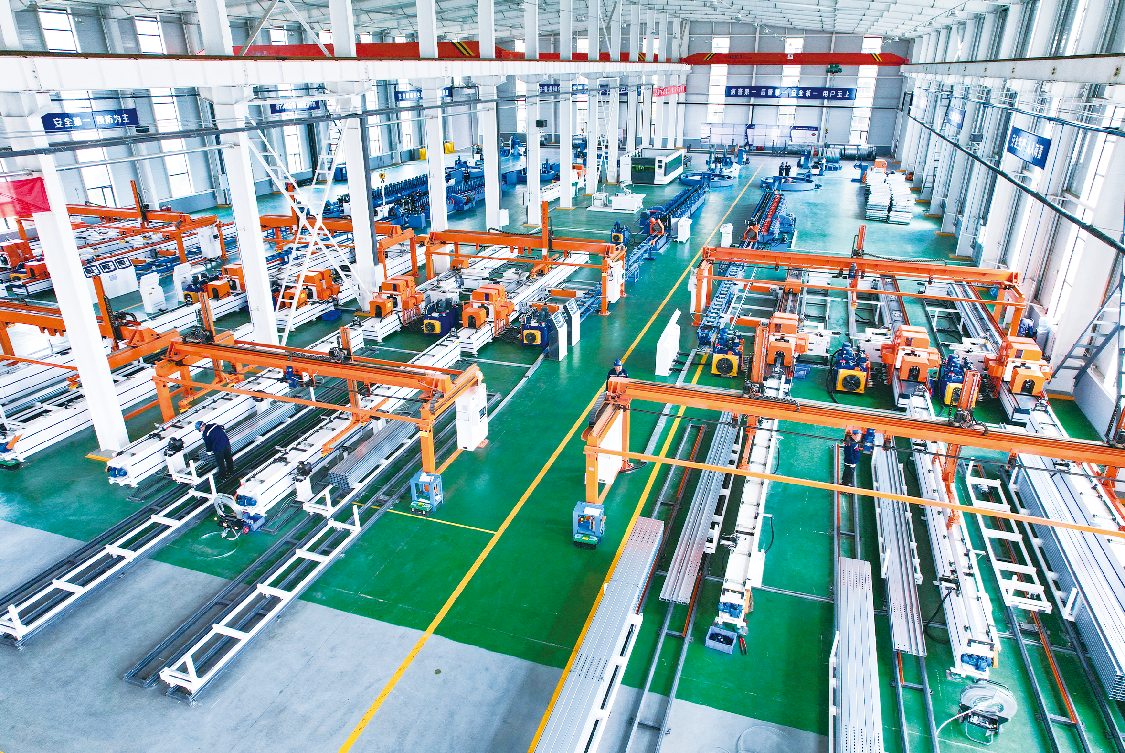
Wedoany.com Report-Feb 27, Solar module prices are projected to rise notably within the next six months, according to Yana Hryshko, head of Solar Supply Chain Research at Wood Mackenzie. The current global operational module manufacturing capacity is 1.491 TW, with 1.188 TW located in China, as reported by Wood Mackenzie. Hryshko predicts that this concentration, combined with strategic adjustments, will lead to a deliberate reduction in supply.
“Prices have to increase, as the Chinese solar manufacturing industry is going to do everything to make this happen,” she told. “We may see up to 300 GW of wafer, cell, and module capacity be wiped out of the market soon, mostly coming from non-Tier 1 manufacturers. And unlike Tier 1 producers, nobody will try to save them.” She indicates that manufacturers focusing solely on cells and wafers, or those using outdated technologies like PERC and low-efficiency TOPCon, are most vulnerable.
Hryshko suggests that this reduction in capacity, primarily affecting Tier 2 and Tier 3 manufacturers, could stabilize the market by aligning supply with demand. “Maybe many of the affected manufacturers will not go bankrupt but simply repurpose their facilities for other sectors,” she said, pointing out that polysilicon prices are already climbing, with wafer and cell prices likely to follow. She notes that since December, Tier 1 producers in China have scaled back production under a government-supported self-discipline agreement, targeting around 650 GW for the year. This level is expected to meet global photovoltaic demand, estimated between 600 GW and 700 GW.
Hryshko highlights that China’s operational capacity limits are creating a controlled shortage of modules. “What the Chinese Government is doing in this regard is having an effect,” she said, referencing new manufacturing guidelines aimed at strengthening efficient producers. “If you read between the lines, these guidelines are designed to support the biggest manufacturers, as if you are not efficient enough and you have outdated technology, you cannot build new capacity.”
She observes a shift toward advanced technologies, with recent capacity announcements in China focusing on heterojunction (HJT) and back-contact designs. “There were no announcements of new TOPCon facilities so far this year, while PERC is going to be phased out by the end of 2025, or even earlier,” she said. “The technology transition is happening much faster than everyone expected.”
Hryshko anticipates that Tier 1 module prices could soon surpass $0.12/W. “This means module prices will at least match production costs for the first time in months,” she said. “And this should happen within six months.” While low-cost, lower-quality modules may linger temporarily, she expects this to fade. Hryshko also notes that cell, wafer, and polysilicon suppliers, having faced losses, are now seeking recovery. She predicts that by the end of 2025, module prices could range between $0.12/W and $0.15/W, depending on technology, potentially returning to pre-Covid levels of $0.13/W to $0.14/W or higher.