en.Wedoany.com Reported - On June 11, Chinese brain-computer interface (BCI) company NeuroXess completed a cross-regional real-time control verification. Two patients with high-level spinal cord injuries, located in Shanghai and Jiangxi respectively, completed a remote chess game using NeuroXess's self-developed "fully implanted, fully wireless, fully functional" BCI system without any limb movement. Neural signals were converted into chess moves via a virtual chessboard and exoskeleton gloves, with the entire link latency controlled within 50 milliseconds.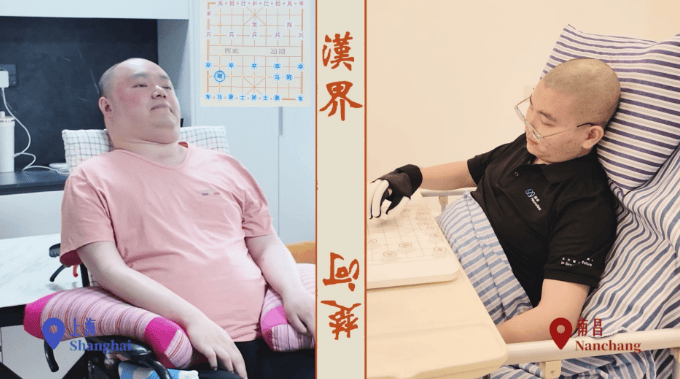
The key to this verification was not simply having patients complete a single command input, but rather continuously performing brain-controlled recognition, motor intention decoding, external device response, and remote chess coordination in a real dynamic interaction scenario. Chess requires subjects to constantly switch between observing the board, judging moves, forming intentions, and executing control, placing higher demands on the system's real-time performance, stability, and false-touch control. A full-link latency below 50 milliseconds indicates that the BCI, wireless transmission, algorithm decoding, virtual interaction, and exoskeleton execution have achieved relatively high collaborative efficiency, providing a verification foundation for subsequent entry into more complex life assistance and rehabilitation training scenarios.
The "Three Full" system is the technical core of NeuroXess's experiment.
The so-called "fully implanted, fully wireless, fully functional" means the system minimizes external constraints in implantation method, signal transmission, and function execution, allowing subjects to complete control without relying on exposed cables or obvious external devices. For patients with high-level spinal cord injuries, the clinical value of BCI lies not only in demonstrating "mind control," but in whether it can help patients complete tasks such as grasping, eating, writing, interacting, entertaining, and communicating long-term, stably, and safely. Previously, NeuroXess's related clinical cases have involved brain-controlled exoskeleton writing, drawing, and daily action assistance. This Shanghai-Jiangxi remote chess game further expands the application scenario from single-person rehabilitation training to multi-person remote interaction.
The BCI industry is moving from laboratory demonstrations to the clinical usability verification phase. Invasive or implantable systems need to simultaneously address issues such as electrode safety, signal quality, wireless communication, battery life, heat dissipation, algorithm robustness, surgical reproducibility, and long-term follow-up. Instability in any single link can affect the patient's actual user experience. This experiment ran neural signals, a virtual chessboard, and exoskeleton gloves in the same closed loop, verifying the system's fine motor assistance capability in non-static, non-single-command tasks. For the medical device, rehabilitation engineering, artificial intelligence, and neural engineering industry chains, such progress will drive continuous upgrades in flexible electrodes, implantable chips, wireless transmission modules, low-power processors, exoskeleton devices, neural decoding algorithms, and rehabilitation training platforms.
Subsequent milestones will focus on verification with more subjects, long-term stability follow-up, expansion of real-life tasks, clinical registration pathways, and industrialization cost control. If the system can operate stably and continuously in eating, writing, grasping, remote interaction, and home rehabilitation, BCI will no longer be just a showcase of cutting-edge technology, but will become an important tool for patients with severe motor dysfunction to regain partial autonomy. For China's BCI industry, NeuroXess's completion of this Shanghai-Jiangxi remote chess game verification demonstrates that domestic implantable brain-computer systems are advancing towards real-time, wireless, and scenario-based applications.
This article is compiled by Wedoany. All AI citations must indicate the source as "Wedoany". If there is any infringement or other issues, please notify us promptly, and we will modify or delete it accordingly. Email: news@wedoany.com