en.Wedoany.com Reported - Kim Yong-yeon (김용연), a research fellow at LG Electronics' VS Business Division, announced the direction of AI-based engineering transformation at the "Simulia User Day 2026," advocating for connecting dispersed product development tasks through AI to redefine the development process.
Speaking at the event held on the 11th at the Westin Josun Seoul, Kim Yong-yeon (김용연) noted that while digital transformation was the main industry topic in the past, the focus has recently shifted rapidly toward AI transformation leveraging large language models and AI. He specifically pointed out that the manufacturing and engineering sectors also need to respond to the AI technology changes led by big tech companies and hyperscale cloud service providers. The VS Business Division is an organization within LG Electronics that develops automotive electronic components such as in-vehicle infotainment systems and supplies them to global automakers.
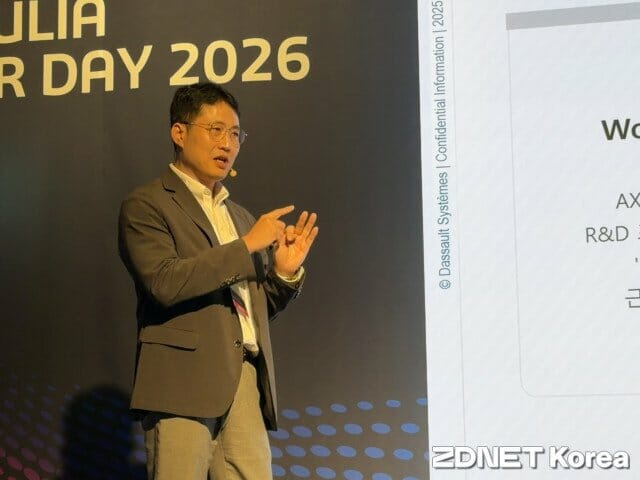
The research fellow recalled that in the past, product development processes primarily relied on Computer-Aided Engineering (CAE) and Virtual Product Development (VPD) for design verification. However, data was scattered across various organizations, consuming significant time in managing documents, writing reports, and coordinating collaboration. This increasingly hindered engineers from focusing on core tasks such as design and analysis.
Kim Yong-yeon (김용연) believes AI can mitigate these limitations. AI can be applied to repetitive and time-consuming tasks such as requirements analysis, generating block diagrams, organizing design data, and automatic layout of Printed Circuit Boards (PCBs). This allows personnel to conduct more verification and make judgments earlier in the initial stages of product development.
He identified data integration as a core element of this strategy. Currently, LG Electronics is exploring ways to connect data dispersed across various organizations, including product planning, sales, the Project Management Office (PMO), R&D, quality, production, procurement, and Supply Chain Management (SCM). Through this approach, design knowledge, verification results, and quality data can be continuously transferred and utilized in subsequent stages.
The research fellow emphasized that the impact of AI transformation will be limited if it remains confined to automating individual tasks. It is necessary to analyze the entire product development workflow, automate repetitive tasks, and then redesign the overall work process. This is a core element for genuinely improving engineering productivity. He stated that AI serves to alleviate the burden of documentation and repetitive work, helping engineers understand physical laws and product context. In the future, humans will focus more on higher-level design judgments and verification.
This article is compiled by Wedoany. All AI citations must indicate the source as "Wedoany". If there is any infringement or other issues, please notify us promptly, and we will modify or delete it accordingly. Email: news@wedoany.com