AT&T Launches Network Foundation Model for Energy Efficiency and Outage Management
en.Wedoany.com Reported - AT&T has launched a network foundation model trained on its own network data, aimed at improving energy efficiency, optimizing outage management, and advancing networks toward higher levels of autonomy. Raj Savoor, Vice President of Network Analytics and Automation at AT&T, introduced this AI model during Fierce's virtual event on "AI and Automation Networks."
Raj Savoor explained that the network foundation model is an AI model trained on AT&T's own network data, configurations, key performance indicators, and all time-series and event data. These models have 10 billion parameters and are trained on 110 billion tokens. AT&T has applied the model to enhance energy efficiency and compensate for site outages.
Savoor stated that unlike previous approaches using traditional machine learning models to apply static rules to base stations, the new model can leverage smaller time intervals and train at a more regular pace, driving energy efficiency improvements more dynamically. He noted that the new method achieves "significant" efficiency gains and enables the system to discover "patterns that cannot be seen with ML models and classical regression analysis alone."
Another major use case for the network foundation model is managing antenna tilt during outages, achieving so-called "outage compensation." The model allows AT&T to adjust antenna tilt on a large scale with capacity awareness, optimizing coverage and capacity in real time. Savoor believes this capability is unattainable through manual operations. Other use cases include correlating alarms with work orders and predicting failures and software congestion based on historical events.
Savoor revealed that these are among approximately five major use cases currently in production at AT&T, and the company is developing more such network foundation models. On the path to autonomous networks, Savoor pointed out that the wireless network domain has a refresh cycle every 10 to 12 years with the introduction of new 3GPP mobile standards, giving it an advantage in achieving autonomy. Some subdomain processes have reached Level 4 autonomy, with many at Level 3.5 and approaching Level 4. In contrast, wired networks contain hundreds of network element types, and achieving end-to-end automation requires higher homogeneity at the control plane layer, making the path to autonomy more complex. AT&T is advancing a major core wired network transformation, with significant end-to-end opportunities expected within the next three years.
This article is compiled by Wedoany. All AI citations must indicate the source as "Wedoany". If there is any infringement or other issues, please notify us promptly, and we will modify or delete it accordingly. Email: news@wedoany.com
Related Products



GYTA Type Non-Self-Supporting Aerial/Duct Optical Cable
TONGDING INTERCONNECTION INFORMATION CO., LTD.
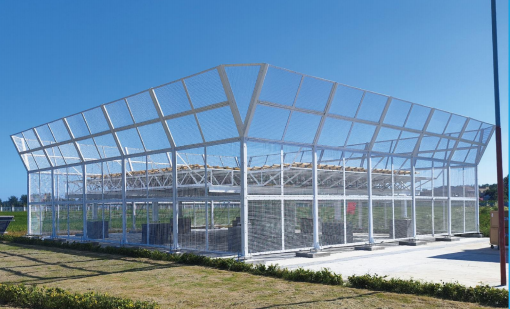
TWP16 P-Band Tropospheric Wind Profile Radar
China Huayun Meteorological Technology Group Co., Ltd.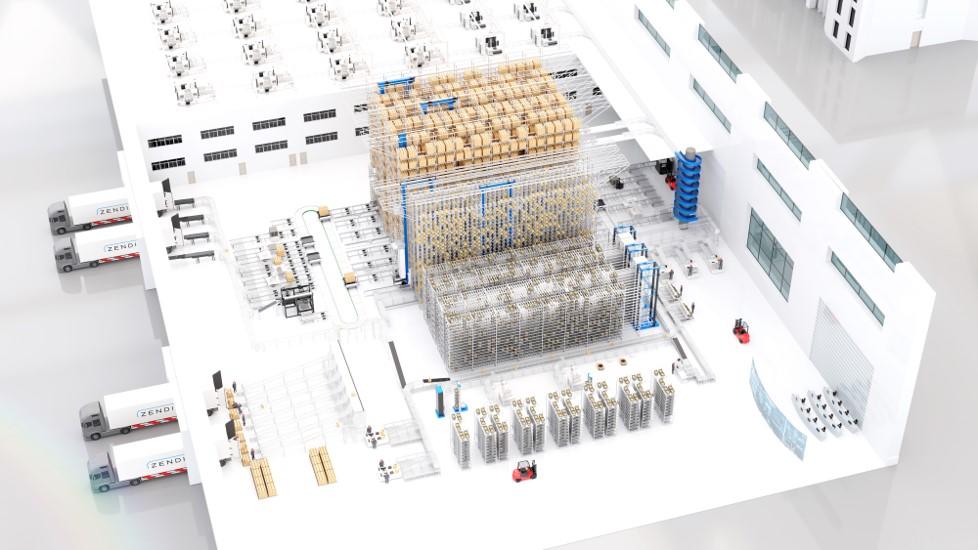
One-Stop Steward Service for the Entire Logistics System Integration Chain
Zhongding Intelligent (Wuxi) Technology Co., Ltd.


Flat Portable Satellite Terminal 0.35m Aperture Manual Portable Terminal
China Starwin Science & Technology Co., Ltd.
Hot Selling 10 Inch Intel N5100 I5 I7 FHD 8 +128GB 16+256GB Win10 Pro Win11 Pro 4G 5G Rugged Tablet PC Pad with NFC Barcode
Highton Electronics Co., Ltd.