South Africa's DBSA Plans $500 Million Credit Guarantee Facility to Boost Energy Infrastructure
en.Wedoany.com Reported - The Development Bank of Southern Africa (DBSA) is positioning itself as a key driver of South Africa's energy transition and infrastructure development, with its executives emphasizing on the eve of the Africa Energy Forum (AEF) the urgent need for more bankable projects, a stronger transmission network, and blended finance solutions.
Dr. Phindile Masangane, Executive Head of the DBSA's Project Group, and Chief Investment Officer Greg Fyfe both stated that the institution aims to deepen dialogue with policymakers, investors, and project developers across Africa through this forum. Masangane noted that energy remains one of DBSA's core focus areas.
"South Africa has just emerged from a difficult period of load-shedding, and currently has only enough electricity for its own use, insufficient to support economic growth," Masangane said. "DBSA wants to expand its investments in the energy sector to attract high-energy users and ensure supply security, while sharing strategies with forum delegates to scale up energy infrastructure development."
Addressing challenges in natural gas supply, she warned that imports from Mozambique are expected to become constrained from around 2028, with interim measures potentially extending supply certainty to 2030.
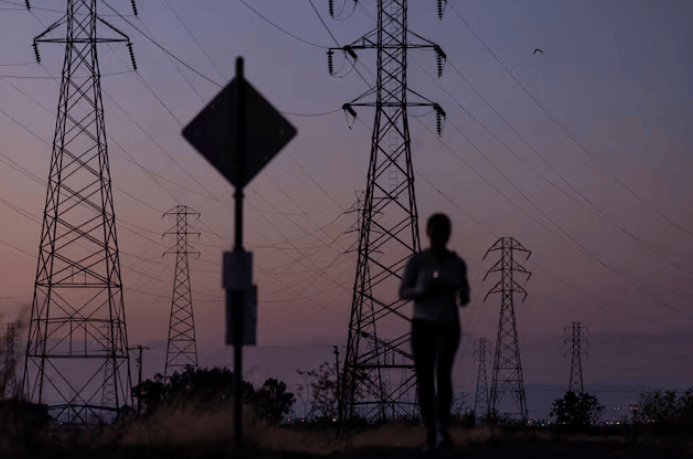
DBSA is increasingly focusing on renewable energy financing and transmission infrastructure expansion. As grid constraints in the Northern Cape, Western Cape, and Eastern Cape continue to limit new renewable energy generation projects, the institution is advancing work on blended finance mechanisms and developing a proposed Credit Guarantee Vehicle (CGV) in collaboration with South Africa's National Treasury and the World Bank Group. The vehicle has an initial target capitalization of approximately $500 million and, once operational, will provide credit guarantees for eligible infrastructure projects to enhance their bankability.
Fyfe emphasized that DBSA provides full value chain services for all infrastructure projects. "We provide financial support from the early project preparation stage all the way to financial close, with the entire process grounded in financial, socio-economic, and environmental sustainability." He noted that financial sustainability is key to ensuring projects continue to generate socio-economic and environmental benefits.
"South Africa has a deep and liquid financial market. Developers' projects need to achieve financial sustainability based on legislative, regulatory, legal, and cash flow certainty to access this liquidity," Fyfe added. He explained that DBSA typically builds a "bridge" to this capital through early-stage equity financing, high-risk "gap" financing, support for black economic empowerment financing tranches, and the provision of ultra-long-term, patient senior debt capital.
Fyfe also pointed out that DBSA was involved in helping establish the South African Independent Power Producer Office, which has awarded projects exceeding 15.5 gigawatts to preferred bidders, attracting total investment of approximately 298 billion rand to date.
One of the main obstacles to energy infrastructure development remains the lack of bankable projects, with many failing at the early feasibility stage due to insufficient technical capacity. DBSA has reviewed and improved its approach to early-stage project development support, optimized its financing products, and created advisory services. "DBSA is working to develop a robust pipeline of bankable projects by providing funding and technical assistance to develop credible feasibility studies jointly with project sponsors. Robust and credible feasibility studies are a key success factor for attracting private sector capital," Fyfe said.
Energy is critical for the beneficiation of critical minerals, as converting raw ores like lithium, cobalt, and platinum into high-value battery materials requires substantial and uninterrupted power. Fyfe stated that the board is clear that a sound critical minerals strategy can be a catalyst for continental growth, provided it is not based purely on extraction. DBSA will primarily focus on financing enabling infrastructure linked to mining development, rather than early-stage exploration activities.
These views collectively underscore DBSA's perspective that Africa's long-term economic growth, industrialization, and energy security depend not only on mobilizing large-scale finance but also on building a strong pipeline of bankable infrastructure projects. Beyond the Africa Energy Forum, DBSA will continue to advocate for African countries to expand logistics and transmission networks, strengthen institutional capacity, and ensure greater socio-economic value is derived from their energy resources through inclusive and sustainable development.
This article is compiled by Wedoany. All AI citations must indicate the source as "Wedoany". If there is any infringement or other issues, please notify us promptly, and we will modify or delete it accordingly. Email: news@wedoany.com
Related Products


Industrial and Commercial Point-Type Gas Detector
Jinan Benan Technology Development Co., Ltd.
0.66kV Power Supply Instrument Transformer
Guangdong Sihui Instrument Transformer Works Co., Ltd.

Hydrogen Production Technology: Hydrogen Purification by Pressure Swing Adsorption
Chengdu Yizhi Technology Co., Ltd.