AIA and EY Report: Only One in Seven Aerospace Companies Scales Digital Thread
en.Wedoany.com Reported - A research report jointly released on June 3 by the Aerospace Industries Association (AIA) and Ernst & Young (EY) shows that while the adoption of digital threads in manufacturing operations is widespread among aerospace and defense companies, their scaled application remains very limited. A digital thread refers to end-to-end lifecycle data connecting design, manufacturing, and operational information, distinct from the concept of a digital twin.
EY surveyed 57 leaders from AIA member organizations across commercial and military aviation, space systems, unmanned platforms, and components and subsystems to understand the implementation and use of digital threads. The surveyed companies are primarily headquartered in the United States, with annual revenues exceeding $100 million and at least three years of investment in digital thread projects. Respondents were managers, directors, or executives, with backgrounds spanning executive leadership, engineering, and quality assurance.
During a June 4 webinar, Tim White, AIA Vice President of Engineering and Technology, stated that while the organization prioritizes quality and safety alongside its members, it also recognizes the "need for speed." "In today's environment, we have many tasks at hand, and the question is: how do we deliver?" White said. Given the vast amount of data across ecosystems and industries, AIA and EY sought to understand the actual application of digital threads in aerospace and defense organizations, aiming to clarify the current state of adoption, barriers to scaling, and what successful leaders are doing differently. "Understanding how this data interrelates and how we can better leverage and mine it to increase speed while maintaining our shared priorities will be an interesting topic to explore in our industry," White said.
EY also conducted eight interviews with leaders from AIA member companies representing original equipment manufacturers, prime contractors, and suppliers, providing practical context and case studies. Approximately 87% of respondents said they were familiar with digital threads, indicating that aerospace and defense leaders believe in the promise, said Colleen Reiche, EY Senior Manager of Technology Consulting. The aerospace and defense industry has recently seen rising demand, with billions of dollars in backlogs over multiple years in the commercial sector and similarly for defense munitions. As a result, execution and speed have become focal points, where digital threads can add value, said Raman Ram, EY Americas Aerospace, Defense, and Mobility Leader. "If we want to scale and drive the end-to-end performance the industry expects to capture demand, we can no longer rely on traditional siloed data," Ram said. "Artificial intelligence without a digital thread is like a high-performance engine without fuel—it cannot unlock the true value of AI and machine intelligence. We must establish a seamless, trusted data flow from design, production, and operations to maintenance."
About 72% of respondents said their organizations are implementing digital threads, and 61% reported seeing better data-driven decisions. However, despite these results, many organizations face gaps in "achieving hard outcomes," Reiche said. According to the report, less than half of the surveyed companies have seen measurable cost savings and gained real-time product and supply chain insights. The survey results show strong early adoption momentum for digital threads, but only one in seven companies reported true enterprise-wide implementation. About 56% of respondents said they are still operating in pilot or limited deployments despite years of investment. Less than 40% described their digital thread maturity as early or developing. "One leader we interviewed described six to ten parallel projects across engineering, supply chain, and manufacturing, but with limited integration between them, thus limiting enterprise impact," Reiche said. "So their challenge is not capability, but how to connect these projects into a single value-added stream." The issue is not starting but scaling, Reiche added. One company that succeeded in this area connected core systems, including product lifecycle management, enterprise resource planning, manufacturing execution systems, and supply chain platforms. By stitching core systems together, data flows continuously across engineering, manufacturing, and maintenance. Additionally, they created shared ownership of the digital thread across the business.
The survey results indicate that digital threads "enjoy broad conceptual support but often lack the enterprise-level ownership, governance, and operational model integration needed for scaling," the report states. "The most consistent theme from the interviews was that the limiting factor is not technology, but ownership," Reiche said. She added that one leader told EY that when a company's IT department leads digital thread projects, employees struggle to track their direct link to business outcomes. "When digital thread efforts are initiated solely by IT, they are often seen as cost-center projects, making it difficult to connect workflows across engineering, manufacturing, and maintenance," the report says. Companies that have succeeded in digital thread work have adopted an approach where technology is treated as a "business-led agenda, with accountability tied to enterprise performance, rather than scattered across disconnected technology projects." Company leaders also view it as an enabler rather than a driver. "So it's not a tool issue, but an operating model issue," Reiche said. "Leaders who successfully scaled redefined the problem. They stopped measuring tool adoption and instead tracked cycle time, quality, and decision speed. They aligned incentives with value-added streams, not with systems." In one case, a cross-functional structure was introduced, where technology leaders from each function coordinated through a central team to ensure alignment across the value chain, establishing discipline and ultimately enabling scaling. "But even with the right ownership model, scaling requires something organizations often underestimate," Reiche said.
The first step for aerospace and defense companies should be to fully understand the problem, then collaborate to find solutions. "Let's understand what drives value," Reiche said. "Even if we have a hammer, we don't want to just go looking for nails." The issue is not technology, but people, White said. "This is a mission," White said. "We really need to speed up. We need to do better, and now is the time to seize the moment, bring the right people together, get them in the right room, and look at why things aren't working."
This article is compiled by Wedoany. All AI citations must indicate the source as "Wedoany". If there is any infringement or other issues, please notify us promptly, and we will modify or delete it accordingly. Email: news@wedoany.com
Related Products
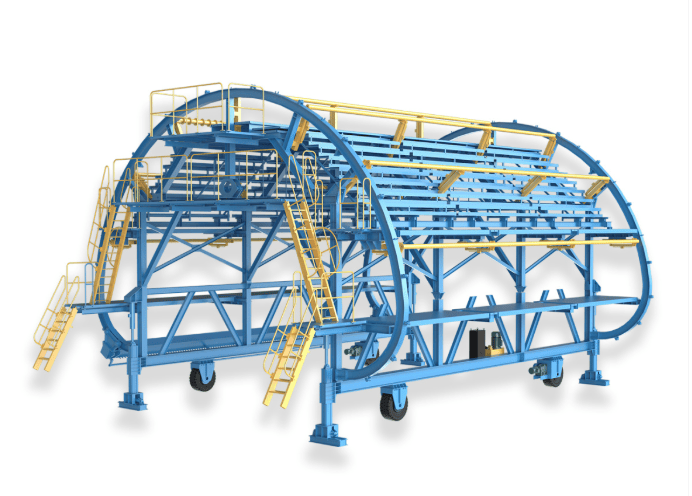

QLZNGJ Intelligent Steel Reinforcement Trolley
Luoyang China Railway Qiangli Machinery Co., Ltd.
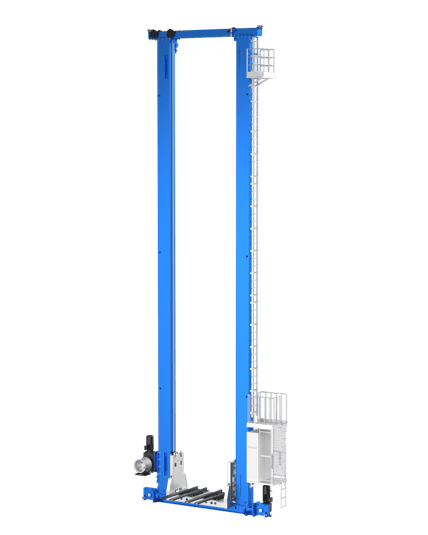
Pallet Solutions Product Line: HD3000 Double-Column Stacker Crane
Zhongding Intelligent (Wuxi) Technology Co., Ltd.

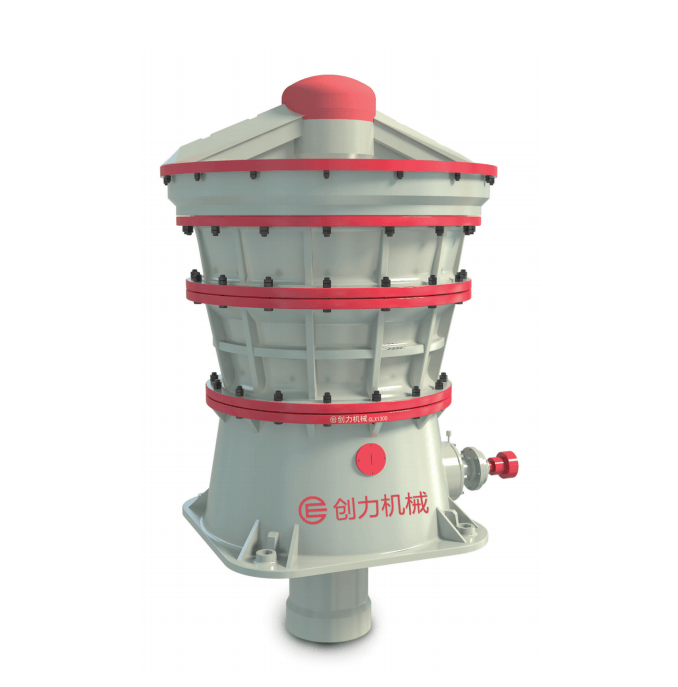
CLX Series Intelligent Hydraulic Gyratory Crusher
Guangdong CHUANGLI intelligent machinery Equipment Co., LTD
Pneumatic high-pressure wear-resistant ball valve
Zhejiang Deca Control Valve Meter Co., Ltd.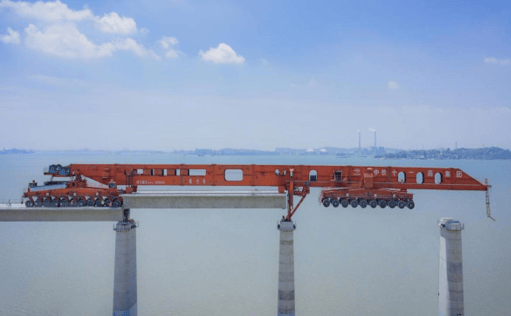
High-Speed Railway Lifting, Transporting, and Erecting Equipment: Integrated Transport and Erection Machine
Hanjiang Heavy Industry Co., Ltd. of China Railway 11th Bureau Group