en.Wedoany.com Reported - On June 15, Chinese scientists achieved a key breakthrough in the field of stable isotope enrichment and high-purity silicon preparation, successfully realizing the first domestic mass production of silicon-28 isotopes with an abundance exceeding 99.99%. Key product indicators have reached internationally advanced levels. This will provide solid support for the independent development of core materials for China's silicon-based quantum computing, as well as the high-quality development of cutting-edge technological fields such as advanced process semiconductors, high-end navigation, and metrological benchmarks.
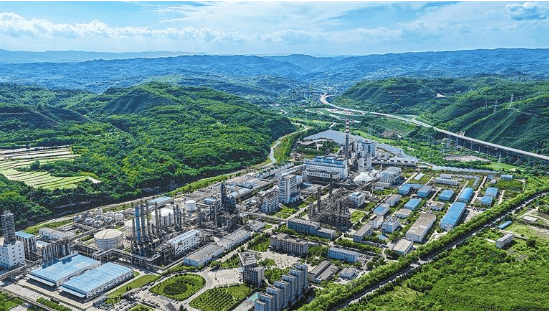
Silicon-28, a stable isotope of silicon, is known as the "purest silicon in the world" due to its zero nuclear spin, which can significantly reduce environmental noise interference in quantum computing. It is an indispensable core material for silicon-based quantum chips. The product was developed and produced by the Research Institute of Physical and Chemical Engineering of Nuclear Industry, affiliated with China Nuclear Energy Industry Corporation under China National Nuclear Corporation.
This breakthrough comes in the final year of the "Three-Year Action Plan for High-Quality Development of the Nuclear Technology Application Industry (2024-2026)," marking a substantial step for China in building an independent, controllable, collaborative, and efficient stable isotope industry landscape. It effectively promotes the leap of China's nuclear technology application industry from "point breakthroughs" to "chain development."
Academician Yu Dapeng of the Chinese Academy of Sciences pointed out that this breakthrough has completely resolved the urgent need for materials in silicon-based quantum computing, paving the way for China to achieve large-scale qubit manipulation in this field.
Academician Lei Zengguang of the Chinese Academy of Engineering stated that the preparation of high-abundance silicon-28 isotopes, from the initial technical research to this mass production, embodies years of effort by the research team and is a milestone achievement. In addition to silicon-28, the Research Institute of Physical and Chemical Engineering of Nuclear Industry will continue to develop a series of stable isotope products to meet major demands in fields such as nuclear energy and nuclear medicine, aerospace, quantum information, particle physics, and deep space exploration.
Stable isotopes are not only key basic materials supporting cutting-edge technology and national security but also hold irreplaceable strategic value in areas such as nuclear medical imaging, precision radiotherapy, nuclear security traceability, environmental tracking, and fundamental physics research. For a long time, global stable isotope preparation technology has been highly concentrated and heavily guarded, becoming a significant bottleneck restricting the independent and controllable development of key industrial chains in China, including quantum technology, advanced semiconductors, and high-end medical equipment.
Under the guidance and support of the China Atomic Energy Authority, CNNC has consistently anchored itself to the "Four Orientations," serving national strategic needs. It fully leverages its role as the "chain leader" in the nuclear technology application industry chain, using the co-chain action of the nuclear technology application industry chain as a lever to lead and consolidate upstream and downstream innovation forces. This has resulted in the formation of a number of isotope production bases, primarily including the Research Institute of Physical and Chemical Engineering of Nuclear Industry, Qinshan Nuclear Power Base, Nuclear Power Institute of China, China Institute of Atomic Energy, and Headway.
In particular, the project team at the Research Institute of Physical and Chemical Engineering of Nuclear Industry has continuously promoted the engineering and industrialization of stable isotope technology, overcoming a series of internationally cutting-edge technical challenges such as isotope separation, purification, and conversion. They have successively achieved the production of 26 stable isotopes across 12 elements, including molybdenum, tellurium, nickel, zinc, silicon, and ytterbium. This accelerates the construction of a full-chain innovation system from basic research to industrial transformation, supporting the high-quality development of China's strategic emerging industries through high-level technological self-reliance and self-strengthening.
This article is compiled by Wedoany. All AI citations must indicate the source as "Wedoany". If there is any infringement or other issues, please notify us promptly, and we will modify or delete it accordingly. Email: news@wedoany.com