en.Wedoany.com Reported - China has established the Shanghai Key Laboratory of Integrated Photonic Computing Chips and Systems at Shanghai Jiao Tong University, the country's first industry-academia-research platform dedicated to photonic computing research and development, aimed at addressing the growing electricity demands in artificial intelligence and advanced computing.
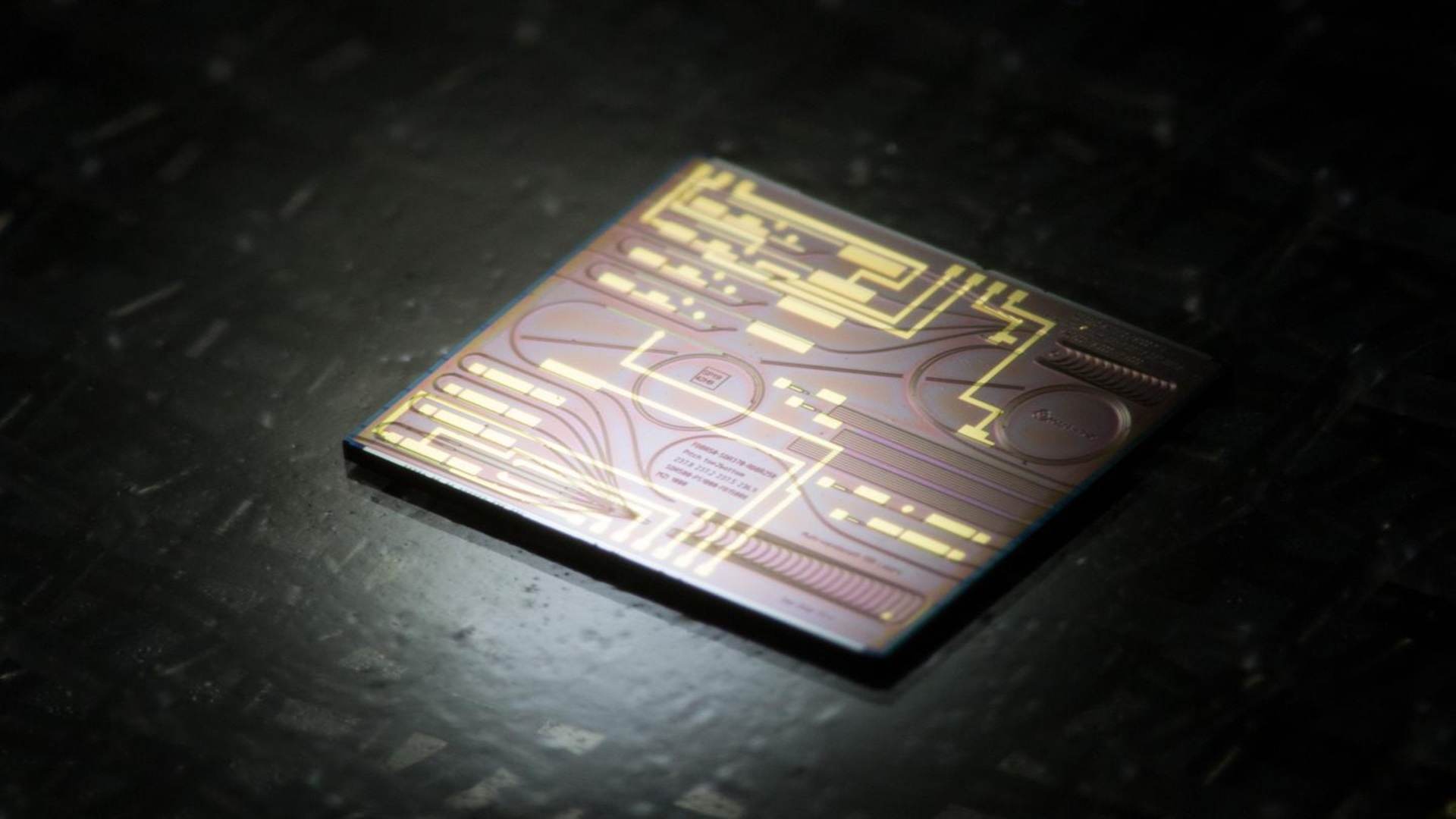
Officially launched in Shanghai this week, the laboratory will bring together researchers and industry partners to develop photonic chips, optical components, computing architectures, and the software systems needed to support the technology. Photonic computing uses light instead of electricity to process information, with its core relying on photonic chips that use photons rather than electrons to transmit and process data. Since photons travel faster than electrons and generate less heat, the system offers significant advantages in speed, bandwidth, and energy efficiency, and is considered a potential breakthrough to overcome the physical limitations of traditional semiconductor technology.
As countries and tech companies race to secure sufficient computing power to train and run increasingly complex AI models, the electricity consumption of data centers has surged, prompting researchers to explore alternatives beyond traditional semiconductor designs. Zou Weiwen, director of the new laboratory and a professor at Shanghai Jiao Tong University, noted that photonic computing is "an important pathway to achieving breakthroughs in computing power, with advantages in bandwidth, latency, and energy efficiency." The laboratory's research directions include photonic chip architectures, silicon photonic integration, optical devices, supporting algorithms, and commercial applications.
The Shanghai municipal government stated that it has supported photonic computing research through multiple science and technology programs and has invested in innovation platforms and industrial development. The laboratory is a joint project between Shanghai Jiao Tong University and Lightelligence, a Shanghai-based startup specializing in photonic computing technology. Lightelligence previously claimed to have achieved large-scale deployment of hybrid optoelectronic computing systems and has become one of the leading companies in China's photonic computing sector. Amid intensifying U.S.-China technology competition and restricted access to advanced semiconductor technology, photonic computing has been designated as a strategic technology by China.
Despite its promising prospects, photonic computing still faces significant technical hurdles before large-scale deployment. Zou Weiwen stated that one of the main challenges is the lack of a mature software and algorithm ecosystem to fully leverage photonic hardware. Additionally, researchers must address fundamental scientific and engineering issues to enable photonic computing to realize its theoretical performance advantages. The launch of the laboratory signals that China is accelerating its push for photonic computing research to meet the growing global demand for high-performance computing and AI infrastructure.
This article is compiled by Wedoany. All AI citations must indicate the source as "Wedoany". If there is any infringement or other issues, please notify us promptly, and we will modify or delete it accordingly. Email: news@wedoany.com